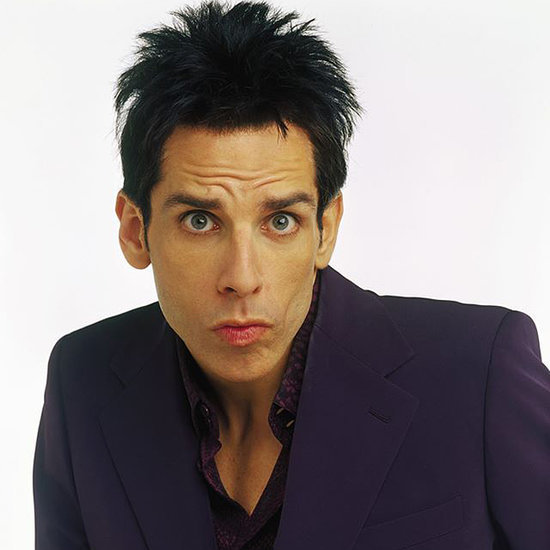
Christian male modelling

Zoolander

Some love him.  Some hate him.  It doesn’t change the fact that he was still “ridiculously good looking”.

Zoolander was one of those cult movies that polarised people into “absolutely love it” or “absolutely loathe it” camps.  I admit, I’m one of the former.  (“Moisture is the essence of wetness, and wetness is the essence of beauty”  … It still cracks me up!)

For those who aren’t familiar with the story, Derek Zoolander was a top male model who was famous for his different looks: “Blue Steel”, “Ferrari”, “Le Tigre” and the famous “Magnum”. They were all the same pose, of course, but everyone thought they were different. Except for evil fashion designer, Mugatu, who in a burst of rage at the climax of the movie, yells, “Who cares about Derek Zoolander anyway? The man has only one look … Blue Steel? Ferrari? Le Tigra? They’re the same face! Doesn’t anybody notice this? I feel like I’m taking crazy pills!”

There are times when I read Dr Leaf’s social media posts, and I feel the same as Mugatu.

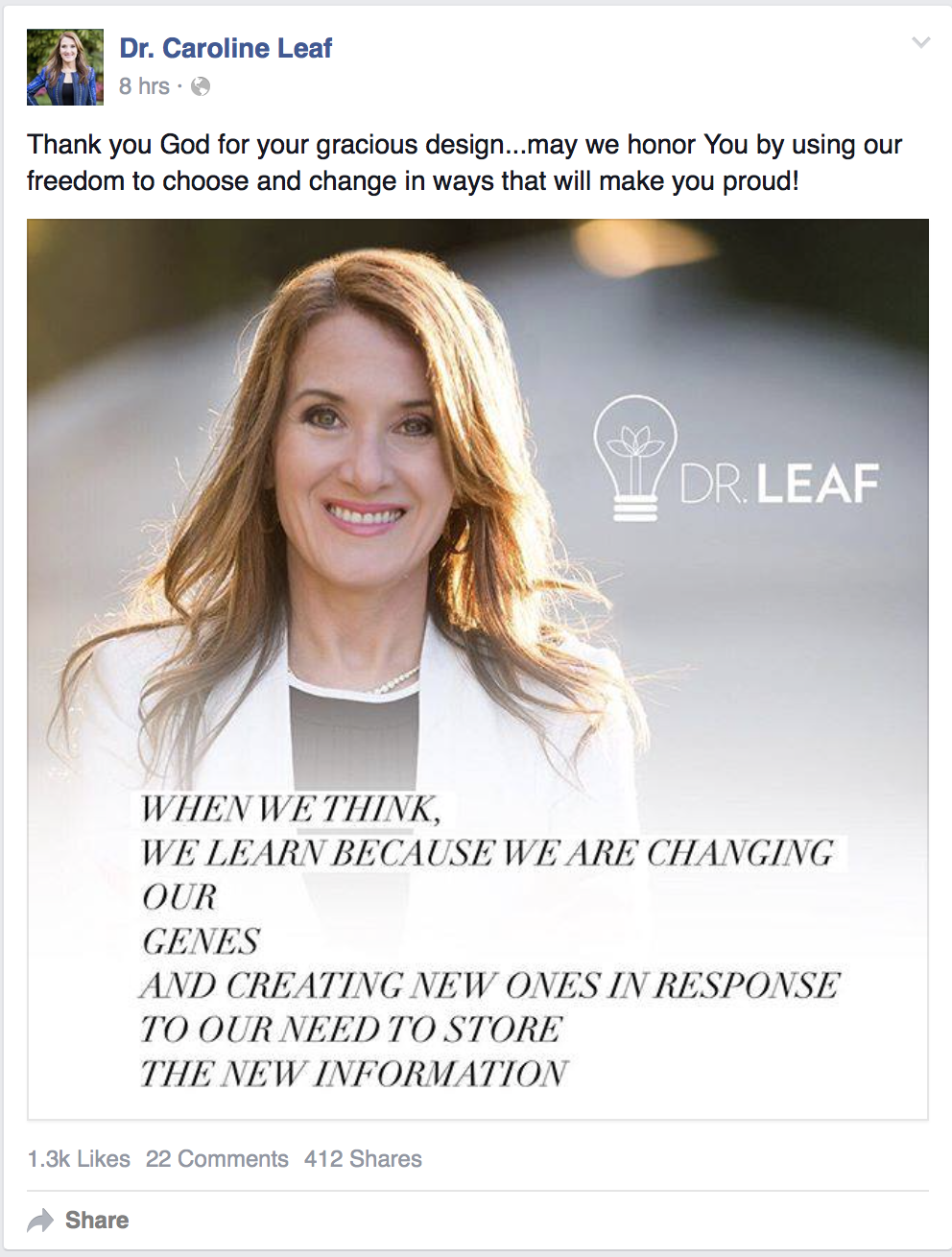
“Dr Leaf isn’t a scientific expert … ‘When we think, we learn because we are changing our genes and creating new ones’ … That’s not scientifically possible! Doesn’t anybody notice this? I feel like I’m taking crazy pills!”

Screen Shot 2016-01-28 at 9.57.06 PM

Dr Caroline Leaf is a communication pathologist and a self-titled cognitive neuroscientist.  If Dr Leaf was a legitimate scientist, she would know that our genes do not change when we process new information. Our genes are stable. They do not change unless there’s a mutation, which occurs in one out of every 30 million or so genes. We do not make new genes at will. Last year, scientists at MIT were reported to have shown that DNA breaks when new things are learnt, but in a normal nerve cell, these breaks are quickly repaired. That’s certainly interesting, but that’s not changing the DNA or making new genes. Making claims that we make new genes to hold new information is like saying that pigs fly.

Dr Leaf’s supporters would likely make a counter-argument that she probably didn’t mean that genes really change, or we make new genes, she’s just not worded her meme properly. Well, there are two responses to that, neither of which are any better for Dr Leaf. Because scientists who really are experts don’t make errors so large that you can spelunk through them. And, this isn’t the first time that Dr Leaf has made claims about how our genes fluctuate. She made a similar claim back in September 2014. Saying the same thing several times isn’t a mistake, it shows she really believes that we change our DNA code by the power of our thoughts.

Whether someone thinks DNA is changeable isn’t likely to cause any great harm to that person, but what is concerning is that Dr Leaf has been given her own show on the Christian cable TV network TBN to discuss mental health. She’s already proven that her knowledge of psychiatric medications is dangerously flawed. If Dr Leaf doesn’t know the basics of DNA, then giving her a platform to preach something that can effect whether a person might live or die is particularly perilous.

Dr Leaf’s rise is also a worrying symptom of a Christian church that is intellectually imploding. In a 2013 blog for the Huffington Post, Charles Reid wrote,

“Christians must provide effective witness against both extremes. But before Christianity can engage atheism it must first address the scientific illiteracy in its own house. For the greatest danger Christianity confronts at the present moment is not incipient persecution, but increasing marginalization and irrelevance. If Christians cannot engage reasonably and responsibly with science, there will be no place for them in the public life of advanced societies.”

Reid was paying particular attention to Ken Ham in this blog, but the principle remains the same. Scientifically illiterate Christians quickly lose credibility with people. We can’t meaningfully engage with a person who has a rudimentary understanding of biology by proudly tell them that we create new genes with the power of thought. That makes us sound like a male model.

For the sake of other Christians health and well-being, and for the sake of our credibility and our witness, we need to critically assess Dr Leaf’s work, not promote it as another gospel.

Dr Caroline Leaf and the can of worms – UPDATE

Yesterday, Dr Leaf opened a proverbial can of worms with her quote from Gøtzsche, that “Psychiatric Drugs are the third leading cause of death, after heart disease and cancer.”

Dr Caroline Leaf is a communication pathologist and a cognitive neuroscientist. Clearly scrambling, she attempted to placate her growing number of detractors with an unprecedented explanatory statement. But rather than distancing herself from her comments, she still chose to portray psychiatric medications as harmful and ungodly.

Instead of quelling the fire, this seems to have thrown fuel on it. Dr Leaf has continued to try and justify her comments with a further two statements today. Neither of them contain a retraction or an apology.

Earlier today, she wrote:
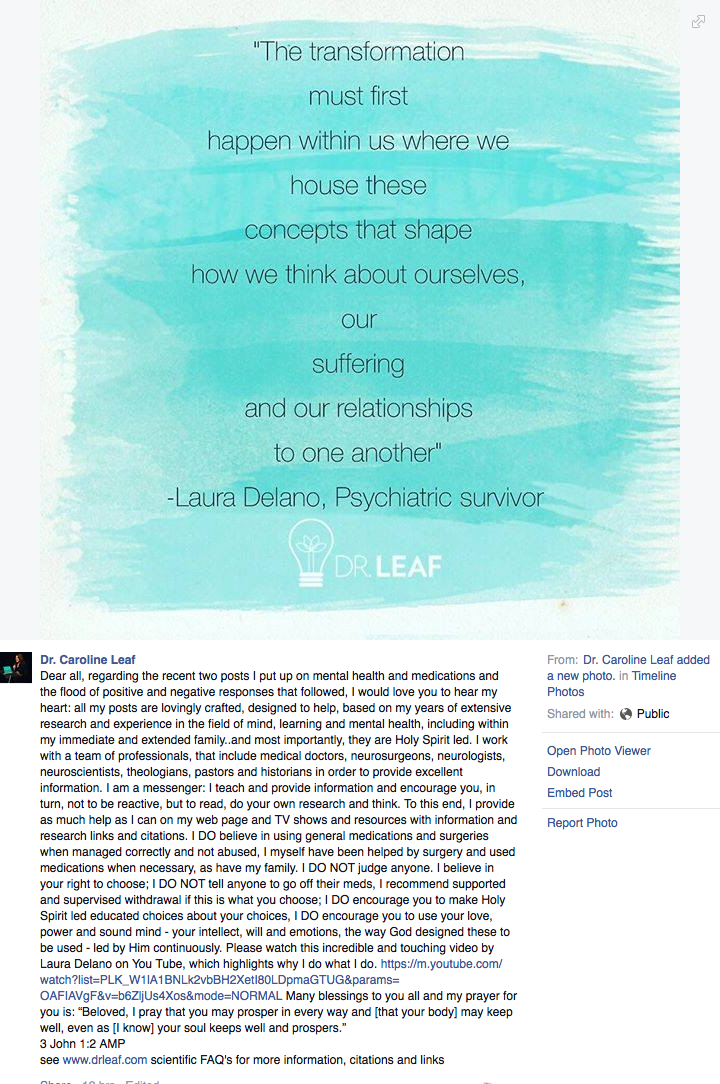
Screen Shot 2015-10-19 at 7.02.14 pm

Dear all, regarding the recent two posts I put up on mental health and medications and the flood of positive and negative responses that followed, I would love you to hear my heart: all my posts are lovingly crafted, designed to help, based on my years of extensive research and experience in the field of mind, learning and mental health, including within my immediate and extended family..and {sic} most importantly, they are Holy Spirit led. I work with a team of professionals, that include medical doctors, neurosurgeons, neurologists, neuroscientists, theologians, pastors and historians in order to provide excellent information. I am a messenger: I teach and provide information and encourage you, in turn, not to be reactive, but to read, do your own research and think. To this end, I provide as much help as I can on my web page and TV shows and resources with information and research links and citations. I DO believe in using general medications and surgeries when managed correctly and not abused, I myself have been helped by surgery and used medications when necessary, as have my family. I DO NOT judge anyone. I believe in your right to choose; I DO NOT tell anyone to go off their meds, I recommend supported and supervised withdrawal if this is what you choose; I DO encourage you to make Holy Spirit led educated choices about your choices, I DO encourage you to use your love, power and sound mind – your intellect, will and emotions, the way God designed these to be used – led by Him continuously. Please watch this incredible and touching video by Laura Delano on You Tube, which highlights why I do what I do. https://m.youtube.com/watch?list=PLK_W1lA1BNLk2vbBH2XetI80LDpmaGTUG&params=OAFIAVgF&v=b6ZljUs4Xos&mode=NORMAL Many blessings to you all and my prayer for you is: “Beloved, I pray that you may prosper in every way and [that your body) may keep well, even as [I know) your soul keeps well and prospers.” 3 John 1:2 AMP see http://www.drleaf.com scientific FAQ’s for more information, citations and links

then later in the day:

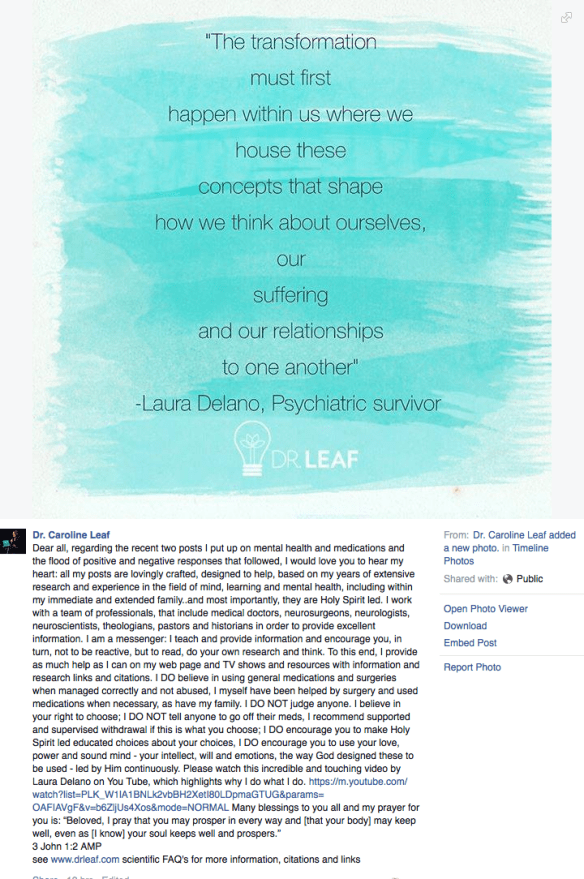
Screen Shot 2015-10-19 at 7.02.56 pm

Dear all, some of you have questioned whether or not I have ever dealt with people experiencing severe mental health issues. As someone who has specialized in the mind over the past 30 years, I have been given the opportunity to work, first hand, with people experiencing mental and physical pain in the most terrible life situations, from severe traumatic brain injuries to rape, murder and abysmal poverty. I have seen these individuals choose with their minds not to allow their life circumstances to take control over their identity… through the power of God, love and community they overcame what life threw their way. But, on a more personal level, my eldest daughter (@therascalcook) was severely bulimic, suicidal and depressed for most of her early years due to a chronic illness and traumatic bullying. I have been in hospitals, crying beside her bed when she nearly died. I have experienced her pain…I am crying as I write this. But as a family we supported her and loved her through it, as did her friends and many of our loved ones, (it was not easy but it was worth it!). She never took a single medication nor was she institutionalized, even though doctors were telling me she would never recover if she didn’t. Yet today, after rejecting God and life for many years, she is a graduate student in historical theology, whose life goal is to bring a piece of heaven to earth through sustainable farming communities in disadvantaged areas. There is hope, God is greater than anything, and magic bullets are never the answer. You are not a label or a faulty biological machine. You are a child of God, as we all are. Unless all of us realize what it truly means to be the church, to bring heaven to earth as we love our God and people, to be the community of love that this world is so desperately crying out for, people will continue to have mental health issues, be labeled {sic}, face stigma and suffer. We all have this responsibility, and none of us can do it alone. We were created by God to help each other. Jessica used to call me her Sam. We all need a Sam, because we all know what it is like to be Frodo.

Kudos to Dr Leaf for the bravery and vulnerability that sharing such a personal story took. I’m genuinely happy that Jessica found her way through those dark and distressing days and has once again found peace and success. I have been through the same dank and destructive times of depression, and I know what it feels like. I wouldn’t wish it on anyone. When I hear stories of people who have overcome, I truly appreciate their joy.

I also recovered from my depression without ever using medications. What helped me enormously was a psychologist who listened to me without judgement as I unloaded years of emotional turmoil and distress. To this day, I don’t remember what we actually talked about in my first session with him. All I remember is getting ten minutes in and then crying almost uncontrollably for the next forty. Thankfully, I did more talking and less crying over the few months as my mood lifted and I grew to accept my brokenness, just like God does.

Clearly, the story of Jessica Leaf is heart-warming and uplifting. Dr Leaf clearly understands the pain and distress that severe mental illness brings to those who suffer with it, and their families. But all emotions aside, Dr Leaf has still left important issues unresolved. Indeed, those who are more cynical might see such an emotional recollection as a play for sympathy and a distraction from the lingering questions surrounding Dr Leaf’s handling of this issue, and of her expertise in mental health.

Dr Leaf’s expertise, revisited.

Dr Leaf’s experience during those darkest of times may give her a legitimate platform to discuss what worked for her daughter and her family, but however moving, it does not qualify her as an expert in mental health more broadly. Science isn’t about generalising from your personal experience. It’s about looking at the evidence from a number of rigorously designed trials with a minimum of bias, conducted across a broad range of participants.

When women come to see me in the few weeks after giving birth, they’re usually confused. Nearly every woman that’s ever given birth sometime in the last century believes their experience automatically qualifies them as experts in breast feeding and infant health. But their ‘helpful’ advice, given with the best of intentions, often conflicts with the opinion of every other self-proclaimed motherhood expert. By the time the poor new mother comes to see me, they’ve been given so many pieces of conflicting advice that they’re completely lost.

Just living through an experience doesn’t qualify you as an expert. So I don’t claim to be an expert in mental health just because I’ve lived through prolonged periods of anxiety and depression. Nor should Dr Leaf.

Dr Leaf can’t use the fact that she has worked with people who have mental health problems as a claim to expertise either. She may been given the opportunity to work, first hand, with “people experiencing mental and physical pain in the most terrible life situations, from severe traumatic brain injuries to rape, murder and abysmal poverty.” That doesn’t make her an expert in mental health any more than seeing female patients makes me a gynaecologist.

That’s because expertise in medical fields requires specific training. You can read surgical textbooks for thirty years but that doesn’t quality you as a surgeon. You can learn a bit of anatomy and physiology in the same lab as some medical students, but that doesn’t make you equivalent to a medical doctor. You might do some research involving some neurobiology, but that doesn’t make you a neuroscientist.

Dr Leaf is a communication pathologist who completed a PhD which included some educational psychology. She is not a counsellor, she is not a psychologist, she is not a medical doctor and she isn’t even a cognitive neuroscientist. Dr Leaf is not qualified to provide an expert opinion on the risks and harms of psychiatric medication.

Dr Leaf’s heart

Coming back to Dr Leaf’s first statement today, Dr Leaf said that she wanted to share her heart:

all my posts are lovingly crafted, designed to help, based on my years of extensive research and experience in the field of mind, learning and mental health, including within my immediate and extended family..and {sic} most importantly, they are Holy Spirit led

If I were Dr Leaf, I’d be careful about blaming the Holy Spirit for her posts. I have rebutted and debunked scores of Dr Leaf’s memes over the last couple of years. The Holy Spirit is the ‘Spirit of all truth’, not of half-baked facts and misquotes.

Dr Leaf goes on to say

I teach and provide information and encourage you, in turn, not to be reactive, but to read, do your own research and think. To this end, I provide as much help as I can on my web page and TV shows and resources with information and research links and citations.

I respectfully disagree. Dr Leaf rarely references her social media memes, and until recently, her website was bereft of citations. I have never seen her encourage critical thinking before. And if Dr Leaf really wanted to encourage thinking amongst her followers, then why does her team actively block people on social media who dare to disagree with her? That’s not encouraging free thinking, that’s presenting an illusion of conformity.

Dr Leaf’s Do’s and Don’ts

To clarify her position on several issues, Dr Leaf stated:

I DO believe in using general medications and surgeries when managed correctly and not abused, I myself have been helped by surgery and used medications when necessary, as have my family. I DO NOT judge anyone. I believe in your right to choose; I DO NOT tell anyone to go off their meds, I recommend supported and supervised withdrawal if this is what you choose; I DO encourage you to make Holy Spirit led educated choices about your choices, I DO encourage you to use your love, power and sound mind – your intellect, will and emotions, the way God designed these to be used – led by Him continuously.

Dr Leaf may say that she doesn’t tell anyone to go off their meds, but I think that’s a little disingenuous.

Sure, Dr Leaf never directly said to stop taking their medications. She just said that psychiatric medications were unscientific and unbiblical [1: p31-32], that psychiatric medications are the third most common cause of death after heart disease and cancer, and admonished her followers to “Take all thoughts into captivity, not drug all thoughts into captivity.” And just yesterday, she also linked psychiatric medications with evolutionary theory and said that they strip 15-25 years off your lifespan.

So it’s more like, “I DO NOT tell anyone to go off their meds, I just scare them by telling them the drugs are unholy poison”.

That’s not encouraging “Holy Spirit led educated choices”, it’s encouraging fear-driven poor choices.

Dr Leaf’s support team

One last point. Dr Leaf stated,

I work with a team of professionals, that include medical doctors, neurosurgeons, neurologists, neuroscientists, theologians, pastors and historians in order to provide excellent information.

Really? Dr Leaf’s work consistently conflicts with basic medical and psychological science, and she regularly misquotes scripture. Would they be willing to be named? Because either they’re providing Dr Leaf with terrible oversight or Dr Leaf is ignoring everything they say.

Dr Leaf still hasn’t apologised for, or retracted her statements

It’s no secret that I disagree with Dr Leaf’s teaching, and I have outlined why I think some of her statements today are disingenuous. You may agree with me, or not. I don’t mind. Hey, I could be wrong.

Though when you get down to brass tacks, the most important issue is that Dr Leaf remains legally vulnerable.

Since she opened up the can of worms with her Gøtzsche quote, she has made three separate statements, none of which apologise for potentially misleading nearly 150,000 people about the true risks and benefits of psychiatric medications. Nor has she issued any retraction or taken the posts down.

When Dr Leaf says that psychiatric medications are unbiblical and poisonous, people on psychiatric medications will want to come off them. She may not have said the words “Stop your medications”, but people will still want to come off them because they’re afraid, or because of the stigma, or because of their desire to live true to God. And as I discussed yesterday, there is a very real chance that some of those people who were stable on their medications but who unnecessarily cease them because Dr Leaf told them to, may harm themselves or take their own life, since that’s what the studies tell us [2, 3]. At the very least, they are likely to have a shorter life expectancy because of it [4, 5]. This may open Dr Leaf to law suits, as well as the possibility of having someone’s death on her conscience.

No one wants that scenario. But the only way to avoid it is to:

  1. Take the offending posts down
  2. Issue an apology
  3. Specifically direct those of her followers on psychiatric medications to stay on them until they have spoken to their doctors,
  4. In future, provide a balanced view of the benefits of psychiatric medications as well as their harms.
  5. Better yet, unless Dr Leaf gets a medical degree, it may be better not to publically discuss psychiatric medication at all.

Again, I implore Dr Leaf, for her sake and for the sake of her ministry and those who follow her, please unequivocally apologise, retract your statement, and encourage people to see their doctors if they have concerns about their medication, or their mental health.

This is not a game: people’s lives are at stake. I hope that Dr Leaf sees this before it’s too late.

References
[1]        Leaf CM. Switch On Your Brain : The Key to Peak Happiness, Thinking, and Health. Grand Rapids, Michigan: Baker Books, 2013.
[2]        Correll CU, Detraux J, De Lepeleire J, De Hert M. Effects of antipsychotics, antidepressants and mood stabilizers on risk for physical diseases in people with schizophrenia, depression and bipolar disorder. World psychiatry : official journal of the World Psychiatric Association 2015 Jun;14(2):119-36.
[3]        Tiihonen J, Suokas JT, Suvisaari JM, Haukka J, Korhonen P. Polypharmacy with antipsychotics, antidepressants, or benzodiazepines and mortality in schizophrenia. Archives of general psychiatry 2012 May;69(5):476-83.
[4]        Tiihonen J, Lonnqvist J, Wahlbeck K, et al. 11-year follow-up of mortality in patients with schizophrenia: a population-based cohort study (FIN11 study). Lancet 2009 Aug 22;374(9690):620-7.
[5]        Torniainen M, Mittendorfer-Rutz E, Tanskanen A, et al. Antipsychotic treatment and mortality in schizophrenia. Schizophrenia bulletin 2015 May;41(3):656-63.

Remember: This article is a rebuttal of Dr Leaf’s opinion regarding psychiatric medication.  This blog doesn’t constitute individual medical advice.  If you do not like your medication or think you should come off it, please talk to your own GP or psychiatrist.  Do not stop it abruptly or without adequate medical advice.

Dr Caroline Leaf and the Mental Monopoly Myth

Screen Shot 2015-09-23 at 7.37.23 pm

What’s more important to a person’s health and well being?

Is it their physical attributes – their genes, their fitness, their diet? Is it their psychological state – their mind, their emotional balance? Is it their social context – how they relate and contribute to the communities that they’re a part of? Or is it their spirituality – the depth of their connections to faith and the supernatural?

According to Dr Caroline Leaf, communication pathologist and self-titled cognitive neuroscientist, it’s the mind that dominates. This is a common theme of her books [1: especially chapter 1] and her social media memes.

Take today’s gem: “Mind action is the predominant element in well being and mental health.”

In other words, it doesn’t really matter what your genes are, where you were born or the depth of your acceptance in your community. It doesn’t matter whether you have a deep faith either. The psychological dominates the physical, the social and the spiritual. As she said in her books,

“Thoughts influence every decision, word, action and physical reaction we make.” [2: p13]
“Our mind is designed to control the body, of which the brain is a part, not the other way around. Matter does not control us; we control matter through our thinking and choosing.” [1: p33]
“Research shows that 75 to 98 percent of mental, physical, and behavioural illness comes from ones thought life.” [1: p33]

Dr Leaf’s philosophy of our wellbeing can be pictured like a pyramid, with our ‘mind action’ (read, ‘choices’) dominating every other facet of our lives.

Leaf Mental Monopoly Model

The problem with this philosophy is that it doesn’t fit with science, scripture, or even common sense.

You don’t have to be a rocket scientist to recognise that Dr Leaf’s assertion doesn’t fit with every day experience. Where you were born and raised, and where you live, significantly impact a persons overall wellbeing, independent of their thoughts and choices.

Does Dr Leaf honestly believe that the wellbeing of a ten year old boy living in rural Sedan, with no access to running water and sewerage systems, living on a subsistence diet and drinking contaminated water from the only well in his village, has the same wellbeing as a ten year old in rural Ohio, who has access to clean water, plentiful food, and an education?

Does Dr Leaf think that the wellbeing of a pregnant woman in Afghanistan, with poor nutrition and limited access to meaningful antenatal care or a trained midwife to deliver her baby, is the same as the wellbeing of a pregnant woman in London, who has access to fresh food, vitamin supplements, GP’s, midwives, and specialist obstetricians in big city hospitals?

These are just two simple examples which demonstrate that the action of your mind has very little to do with your overall wellbeing.

But if you want to be more scientific about it, then look no further than the biopsychosocial model. Modern health professionals moved beyond the idea that only one facet of human existence was responsible for all of your wellbeing way back in the 1980’s. The biopsychosocial model proposes that the overall health of a person was equally dependent not just on the physical, but was part of a broader system of the medical, mental and the social [3]. The model recognised that a person’s overall wellbeing was made worse by social disadvantage as well as physical illness or poor coping skills, and so often, the physical, social and psychological would affect each other in loops – physical illness would often reduce a persons ability to mentally cope, which strained their social connections, making them lonely and reduced the care given to them, which then made them sicker.

Most Christian would recognise that one element is still missing, which is the spiritual. Our faith is a realm beyond rational thinking, and isn’t fairly grouped with the mental, although they are both housed in our brain. Still, faith influences our social interactions, our psychology, and our physical health, as much as each mutually influences our faith.

Putting it altogether, we don’t have a pyramid, but a collection of ponds. Our mind action does not dominate our health and our wellbeing, but is simply one part of a much larger whole, with our health and wellbeing at the centre.

Biopsychosocial spiritual coloured

It’s interesting that a woman with as much influence amongst the western Christian church as Dr Leaf would suggest that the mind is more influential to our wellbeing than our faith. This makes her teaching seem more humanist than holy, more secular than spiritual. It may invite questions about the deepest influences of her ministry – is it humanistic philosophy with a garnish of scripture, or does the Bible really promote thinking over faith? Ultimately, it’s up to each individual to examine the evidence for themselves and make up their own mind.

Irrespective of Dr Leaf’s philosophical foundations, I’d suggest that her hypothesis of the mental monopoly falls down at the level of common sense and good science. Medical science moved beyond the idea of the single dominant facet of humanity more than three decades ago.

It’s time for Dr Leaf to do the same.

References

[1]        Leaf CM. Switch On Your Brain : The Key to Peak Happiness, Thinking, and Health. Grand Rapids, Michigan: Baker Books, 2013.
[2]        Leaf C. Who Switched Off My Brain? Controlling toxic thoughts and emotions. 2nd ed. Southlake, TX, USA: Inprov, Ltd, 2009.
[3]        Borrell-Carrio F, Suchman AL, Epstein RM. The biopsychosocial model 25 years later: principles, practice, and scientific inquiry. Ann Fam Med 2004 Nov-Dec;2(6):576-82.

Seven Elements of Good Mental Health: 7. Create social networks – The Prospering Soul

Life shouldn’t just be about avoiding poor health, but also enjoying good health. Our psychological health is no different.

Before we take a look at poor mental health, let’s look at some of the ways that people can enjoy good mental health and wellbeing. This next series of posts will discuss seven elements that are Biblically and scientifically recognised as important to people living richer and more fulfilling lives.

These aren’t the only ways that a person can find fulfilment, nor are they sure-fire ways of preventing all mental health problems either. They’re not seven steps to enlightenment or happiness either.   But applying these principles can improve psychosocial wellbeing, and encourage good mental health.

7. Create social networks

Before 2004, everyone knew what social networks were. Now when you talk about ‘social networks’, people assume you’re referring to Facebook. It seems like virtual social networking has been around forever, whereas in contrast, real social networking actually has.

We know this, because we’re wired for social interaction, with specific areas of the brain devoted to social behaviour, such as the orbitofrontal cortex, and there are neurotransmitters and hormones that are strongly associated with bonding and maintenance of social relationships, like oxytocin and β-endorphins. Research has also shown that both humans and other primates find social stimuli intrinsically rewarding – babies look longer at faces than at non-face stimuli, for example [1].

People who engage in social relationships are more likely to live longer, some estimate by an extra 50% [2]. Certainly it appears that the opposite is true. Loneliness predicts depressive symptoms, impaired sleep and daytime dysfunction, reductions in physical activity, and impaired mental health and cognition. At the biological level, loneliness is associated with altered blood pressure, increased stress hormone secretion, a shift in the balance of cytokines towards inflammation and altered immunity. Loneliness may predict mortality [3].

So what is loneliness, and conversely, what defines good social relationships? Fundamentally, good or bad social relationships are related to the quality of the social interaction. This rule applies equally to real social networks [3] and their on-line equivalents [4]. So quality is fundamentally more important than quantity in terms of friendships, with that quality strongly determined by the connection within those social relationships. For example, loneliness “can be thought of as perceived isolation and is more accurately defined as the distressing feeling that accompanies discrepancies between one’s desired and actual social relationships” [3].

The corollary is that friendship can be thought of as perceived connection within social relationships, or the comforting feeling that accompanies the match between one’s desired and actual social relationships.

So healthy social relationships aren’t defined by the size of your network, but by the strength of the connections that your network contains, relative to what’s important to you. Just because you’re not a vivacious extrovert who’s friends with everyone doesn’t mean that your social network is lacking. It also means that you can have meaningful connections to friends through social media, just as much as you can have meaningful connections through face to face interactions. It’s not the way you interact, but the quality of the connection that counts.

What is it about other people that makes us more likely to be their friends? Connection between friends is often the result of attraction to individuals of similar personalities or skills, although recent research suggests that friendship may be related to a much deeper level. Brent et al notes that “Humans are especially predisposed toward homophily, with recent evidence suggesting this even extends to the genetic level; people are more likely to be friends if they have similar genotypes. Taken together, these findings advocate the need to consider not only an individual’s genome, but also their metagenome, when asking questions about the causes of friendship biases … Unrelated friends are more likely to be genetically similar, equivalent to the level of fourth cousins, compared to unrelated strangers.” [1]

As Christians, we’re encouraged to engage with other Christians on a regular basis, which in our modern world, is through regular church attendance. As the Bible says in Hebrews 10:23-25, “Let us hold unswervingly to the hope we profess, for he who promised is faithful. And let us consider how we may spur one another on towards love and good deeds, not giving up meeting together, as some are in the habit of doing, but encouraging one another – and all the more as you see the Day approaching.” But as the research has shown, it’s not just being part of the crowd, but connecting with those in the church in a meaningful way. It’s very easy to be lonely in a crowded church.

Always remember: “Befriend, and be a friend” – that’s how you’ll find benefit to your spirit, soul and body.

References

[1]        Brent LJ, Chang SW, Gariepy JF, Platt ML. The neuroethology of friendship. Annals of the New York Academy of Sciences 2014 May;1316:1-17.
[2]        Holt-Lunstad J, Smith TB, Layton JB. Social relationships and mortality risk: a meta-analytic review. PLoS medicine 2010 Jul;7(7):e1000316.
[3]        Luo Y, Hawkley LC, Waite LJ, Cacioppo JT. Loneliness, health, and mortality in old age: a national longitudinal study. Social science & medicine 2012 Mar;74(6):907-14.
[4]        Oh HJ, Ozkaya E, LaRose R. How does online social networking enhance life satisfaction? The relationships among online supportive interaction, affect, perceived social support, sense of community, and life satisfaction. Computers in Human Behavior 2014;30:69-78.

Seven Elements of Good Mental Health: 4. Show some SSAS – The Prospering Soul

Life shouldn’t just be about avoiding poor health, but also enjoying good health. Our psychological health is no different.

Before we take a look at poor mental health, let’s look at some of the ways that people can enjoy good mental health and wellbeing. This next series of posts will discuss seven elements that are Biblically and scientifically recognised as important to people living richer and more fulfilling lives.

These aren’t the only ways that a person can find fulfilment, nor are they sure-fire ways of preventing all mental health problems either. They’re not seven steps to enlightenment or happiness either.   But applying these principles can improve psychosocial wellbeing, and encourage good mental health.

4. Show some SSAS

SSAS stands for Supple, Strong and Skilful. This applies physically and mentally.

Physical fitness is good for us. This isn’t the main point of the blog, but I have never seen a study that shows exercise to be a bad thing. Ultimately, it’s not how fat you are that’s important for your longevity, it’s how fit you are [1, 2]. And the way to get fit is to exercise.

Physical exercise is not just good for the body but good for the brain as well. While the exact pathways are still being determined, there’s good evidence that moderate regular physical activity improves the balance of pro- and anti-inflammatory mediators in the body and in the brain. In the brain, this improves the overall function of our brain cells and their ability to form new pathways, which in turn, has been shown to improve mood disorders like anxiety and depression [3].

But being SSAS isn’t just about what being physically fit and active can do for your mood, but it also relates to being psychologically flexible and using psychological skills to leverage your strengths rather than just fighting with your weaknesses. One of the keys here is acceptance. Remembering your values that we spoke about in key 1 as your guide, exploit the things that you’re good at, using them to gain some self-confidence and momentum. Accept the things that can’t be changed in your life. Then when you have some momentum, learn some new skills to increase your resilience and strengthen your weaknesses.

I say this because sometimes we spend so much time focussing on all the bad things in our lives that we forget about the good things that we already have or can already do. It would be like an athlete spending all their time in the gym, getting really fit and strong, but never getting onto the field or court. It’s important that we courageously challenge ourselves to turn our weak points into strong points, but it’s more important to do what we can to help others around us.

References

[1]        Barry VW, Baruth M, Beets MW, Durstine JL, Liu J, Blair SN. Fitness vs. fatness on all-cause mortality: a meta-analysis. Progress in cardiovascular diseases 2014 Jan-Feb;56(4):382-90.
[2]        Lavie CJ, McAuley PA, Church TS, Milani RV, Blair SN. Obesity and cardiovascular diseases: implications regarding fitness, fatness, and severity in the obesity paradox. Journal of the American College of Cardiology 2014 Apr 15;63(14):1345-54.
[3]        Moylan S, Eyre HA, Maes M, Baune BT, Jacka FN, Berk M. Exercising the worry away: how inflammation, oxidative and nitrogen stress mediates the beneficial effect of physical activity on anxiety disorder symptoms and behaviours. Neuroscience and biobehavioral reviews 2013 May;37(4):573-84.

Seven Elements of Good Mental Health: 2. Be Kind – The Prospering Soul

Life shouldn’t just be about avoiding poor health, but also enjoying good health.  Our psychological health is no different.

Before we take a look at poor mental health, let’s look at some of the ways that people can enjoy good mental health and wellbeing. This next series of posts will discuss seven elements that are Biblically and scientifically recognised as important to people living richer and more fulfilling lives.

These aren’t the only ways that a person can find fulfilment, nor are they sure-fire ways of preventing all mental health problems either. They’re not seven steps to enlightenment or happiness either.   But applying these principles can improve psychosocial wellbeing, and encourage good mental health.

2. Be kind

One of the best things you can do for your health and happiness is to be kind to other people. In their review of studies on altruism, Lozada et al (2011) showed that altruism activates rewarding neural networks, essentially the same brain regions as those activated when receiving rewards or experiencing pleasure. They also described studies showing that both hormones and the neurotransmitters in the brain involved in helping behaviour and social bonding can lessen stress levels and anxiety. Also, the immune and autonomous nervous systems are positively affected by the quality and extent of social networks, and increased sociability and concern for others’ wellbeing can improve immune system and stress responses [1].

The Bible has always encouraged us to show other people kindness. In Ephesians 4:31-32, Paul tells the church at Ephesus, “Get rid of all bitterness, rage and anger, brawling and slander, along with every form of malice. Be kind and compassionate to one another, forgiving each other, just as in Christ God forgave you.”

And that kindness wasn’t just for other people in the church, but to anyone in need (Matthew 25:34-40).

There are infinite ways to show kindness, but the thing that links them together is unselfishness, the “disinterested and selfless concern for the well-being of others”, or in less formal language, simply giving with no strings attached.

If you’re looking for some ideas on some new ways to show kindness, the Random Acts of Kindness Foundation has plenty of them. Check out https://www.randomactsofkindness.org/kindness-ideas

References

[1]        Lozada M, D’Adamo P, Fuentes MA. Beneficial effects of human altruism. Journal of theoretical biology 2011 Nov 21;289:12-6.

Seven Elements of Good Mental Health: 1. Temet Nosce – The Prospering Soul

Life shouldn’t just be about avoiding poor health, but also enjoying good health. Our psychological health is no different.

Before we take a look at poor mental health, let’s look at some of the ways that people can enjoy good mental health and wellbeing. This next series of posts will discuss seven elements that are Biblically and scientifically recognised as important to people living richer and more fulfilling lives.

These aren’t the only ways that a person can find fulfilment, nor are they sure-fire ways of preventing all mental health problems either. They’re not seven steps to enlightenment or happiness either.   But applying these principles can improve psychosocial wellbeing, and encourage good mental health.

1. Temet nosce – “Know thyself”

Generally speaking, there are two ways that a person can live their lives, as a boat or as a buoy – those who set out to find life or to let life find them.

Some people are quite content to be buoys – to stay in the same place and let the social currents and tides bring different elements to them. They’re more passive in their approach, content to just accept that life will just come and go as it will.

Then there are those who don’t want to stay in the one place, but want to chart their own course, discover what life is for themselves. Whose to say what’s best for each individual person? We all have our own choices to make.

For those people who are boats, who want to set their course and discover life, it helps a lot in the journey to know where you’re going.

This may seem obvious enough. In fact, it seems too obvious – we often think we know where we’re going when in reality, we haven’t a clue where we really want to go or how to get there.

For starters, it helps to know where you want to go. Some of us are gifted with an amazing confidence, self-assurance and motivation, and have the ten year plan all mapped out, but those people are the minority. It’s fine if we don’t know where exactly we want to go, but what would help every since person is to at least know the direction you wish to sail in, which are our values.

The word ‘values’ can mean different things to different people, but in the Acceptance and Commitment framework, values refer to “Leading principles that can guide us and motivate us as we move through life”, “Our heart’s deepest desires: how we want to be, what we want to stand for and how we want to relate to the world around us.” [1] Values help define us, and living by our values is an ongoing process that never really reaches an end. Living according to your values is like sailing due west. No matter how far you travel, there is always further west you can go. While travelling west, there will be stops a long the way, stop-overs along our direction of travel like islands or reefs. These are like our goals in life.

The difference between goals and values is important. You could set yourself a whole list of different goals, and achieve every one of them, but not necessarily find meaning or fulfilment in their accomplishment if they’re all against the underlying values that you have. So goals are empty and unfulfilling if they aren’t undergirded by your deeper values.

How can you understand your values? There are a couple of ways. Ask yourself: “What do I find myself really passionate about? What things irk me? If I could do anything I wanted, and money was no object, what would I do?” Is there a recurrent theme running through your answers? I have always found myself irritated by mass-marketing, and more recently by disingenuous social media memes and unscientific health messages. The theme – ‘truth’. I know, it sounds a bit trite, like some second-rate comic book hero, but I’ve mulled over this a lot, and for me, ‘truth’ is one of my deepest values.

There are other ways to discover what your values are. Some people have suggested writing your own eulogy (the speech someone gives about you at your funeral). It sounds a bit morbid, and it’s only a figurative exercise, but it tends to sharply clarify what you want your life to be like. What do you want your legacy to be? Think about the things that you want to be known for at the end of your life, and see if there is a word that best describes those desires.

If that’s a bit too confronting, there are some on-line tools that can also give you an idea. There is only so much a long list of questions can discover about you, but results of the survey can provide a starting point for further thought. There is a couple of free resources that may be helpful (though you will have to register):
* https://www.authentichappiness.sas.upenn.edu – and click on the drop-down menu in the “Questionnaires” section, and select “Brief strengths test”
* http://www.viacharacter.org/Survey/Account/Register

One final note on the buoys and the boats – whether you’re a buoy or a boat, you’re still going to encounter large waves, strong currents, and wild storms, as well as peaceful weather. As a buoy, those adverse conditions will simply find you where you are. You can’t escape from them. You’re also going to experience those same large waves, strong currents and wild storms as a boat. The difference is that buoys have no choice but to ride out the adverse conditions. Boats, on the other hand, can use the power of the difficult circumstances to power them to their destinations if they can harness them correctly. Boats can’t outrun bad weather all the time. Adversity is inevitable. Happiness, contentment, enlightenment, or whatever you’re seeking, isn’t found in avoiding or controlling our adverse circumstances, but about learning how to follow our values in the midst of the calm weather or the wild.

As Christians, one of our primary values is our love for God and our desire to follow Jesus. Scripture teaches that each of us has our own unique path to follow. Ephesians 2:10, “For we are God’s workmanship, created in Christ Jesus to do good works, which God prepared in advance for us to do.” ‘Workmanship’ in the Greek is ‘poiema’ from which we get our English word ‘poem’. We are not a meaningless jumble of letters that makes no sense. We are a beautifully crafted blend of rhythm, harmony and meaning. You are a sonnet from the mouth of God. I believe that our individual purpose stems from our common purpose and values, like leaves are dependant on the branches, trunk and roots of the tree. I heard a brilliant summary of the purpose of the Christian life, which was simply “To know Christ, and to make Christ known.” I believe that it’s from this common value, shared by all Christians, that our direction in life stems from.

In knowing our values, we can know ourselves, and engage in life in it’s fullness.

References

[1]        Harris R. The happiness trap : how to stop struggling and start living. Boston: Trumpeter, 2008.

The Prospering Soul – Just what is mental health?

When Paul wrote to the church at Thessalonica a couple of thousands years ago, he said, “May God himself, the God who makes everything holy and whole, make you holy and whole, put you together—spirit, soul, and body—and keep you fit for the coming of our Master, Jesus Christ.” (1 Thessalonians 5:23 -The Message)

The modern western church has two out of three. As modern Christians, we have the fitness of the Spirit pretty well down, and we’re not too shabby on our physical fitness either. Unfortunately, we still have a way to go on the Soul thing.

In 2013, Rick Warren stood in front of his church after the suicide of his son, and promised he would work to reduce the stigma of mental illness in the Christian church (http://swampland.time.com/2013/07/28/rick-warren-preaches-first-sermon-since-his-sons-suicide/). Rick Warren experienced the stigma and destruction of poor mental health first hand. So have many others in the church, as have I.

It’s my passion to help the Christian church prosper, our bodies, our spirits, AND our souls.   Over the next few months, I’ll be doing a series of blogs on mental health, to encourage and help those in the church battling mental illness, and everyone else in the church to know how to assist them in their battle.

Together, we can help to eliminate the stigma and destruction that mental health can bring into the lives of Christians, and that we may prosper in all things and be in health, just as our soul prospers (3 John 1:2).

To start with, it would help if we knew what it meant to be in good mental health, and what separates mental health from mental illness. The distinction isn’t always so obvious. There are a few ways to define or conceptualise mental health and illness, but to cut through the thousands of words of medical and scientific jargon, the difference between good mental health and bad mental health is often to do with changes to our thinking, mood, or behaviour, combined with distress and/or impaired functioning. [1] Our mental health is intimately linked with our physical health, and often physical illness will lead to changes to our thinking, mood, or behaviour, combined with distress and/or impaired functioning too, although strictly speaking, that’s not a pure mental health disorder.

What IS important for the average church goer to understand is that we all experience some changes to our mental health at different times in our lives. For example, we all experience grief and loss at some time in our lives, and at that time, it’s normal to experience extreme sadness, sleeplessness, anger, or guilt. What differentiates grief from depression is the trigger, and the time the symptoms take to resolve. In general, how we perceive our thoughts and behaviours, and how much any signs and symptoms affect our daily activities can help determine what’s normal for us.

There are some common signs that can help in knowing if professional help may be needed. This isn’t an exhaustive list, but if you or a loved one experiences:

  • Marked change in personality, eating or sleeping patterns
  • Inability to cope with problems or daily activities
  • Strange or grandiose ideas
  • Excessive anxiety
  • Prolonged depression or apathy
  • Thinking or talking about suicide
  • Drinking alcohol to excess or taking illicit drugs
  • Extreme mood swings or excessive anger, hostility or violent behaviour

then consult your family doctor or psychologist, or encourage your loved one to seek help. With appropriate support, you can identify mental health conditions and explore treatment options, such as medications or counselling.

Many people who have mental health conditions consider their signs and symptoms a normal part of life or avoid treatment out of shame or fear. If you’re concerned about your mental health or a loved one’s mental health, don’t hesitate to seek advice.

If you or a loved one have, or still struggle with, mental illness, I welcome your comments.

I can’t give specific counselling or advice in this forum, but if you are suffering from mental health problems and need help, see your GP or a psychologist, or if you’re in Australia, 24 hour telephone counselling is available through:

Lifeline = 13 11 14 – or – Beyond Blue = 1300 22 4636

References

  1. National Institute of Mental Health, Mental Health: A Report of the Surgeon General, U.S. Department of Health and Human Services, Editor 1999, U.S. Department of Health and Human Services, Substance Abuse and Mental Health Services Administration, Center for Mental Health Services: Rockville, MD.

Labels – the good, the bad, and the ugly

Yesterday, I wrote a rebuttal to Dr Caroline Leaf’s social media post, that “Psychiatric labels lock people into mental ill-health.” In my rebuttal, I suggested that psychiatric labels don’t lock anyone into mental ill-health any more than a medical diagnosis locks people into physical ill-health.

In the feedback I received, one intelligent young lady commented that, “I understand your point completely, but I took her words differently. I have often seen people who use their diagnosis as an excuse. For example, a kid gets diagnosed with Autism or ADHD, and suddenly the parents are using that as an excuse for their bad behaviour instead of teaching and helping them to deal with it. Another example, an adult is diagnosed with something mild, but uses it as an excuse to no longer care about trying to get a job or trying to get treatment and make an effort to get better”.

I certainly understand where she’s coming from. I’ve seen it too. A diagnosis is used as an excuse for someone’s avoidance, or a tool to milk every drop of sympathy from another. Giving someone a label seems to hinder some people more than help them.

Thankfully, there’s more than one side to the label story. I wanted to use today’s post to discuss the good, the bad, and the ugly side of diagnostic labels.

First, lets look at the ugly side of a diagnostic label. There will always be emotional and social connotations to every diagnosis that a person receives. Sometimes that’s sympathy, and sometimes that’s stigma. If a young woman told her friends that she had breast cancer, I’m sure that news would be met with an outpouring of care and support. If the same young woman told the same friends that she had chlamydia or genital herpes, I’d bet that most of the responses would be blaming or shaming, which is one reason why no one tells other people they’ve got chlamydia or herpes.

The same goes for mental health. The media often portrays people with mental illness as either homicidal or weak [1]. So the general response to mental health diagnoses is either fear or contempt. Even those who are neutral towards mental health often don’t understand it, so it’s difficult for those with mental health issues to receive true empathy for their plight.

Then, there is the bad side of a label. Labels can be misused, intentionally or unintentionally, for all sorts of reasons. They can also be wrongly applied. It might be that someone uses their diagnosis to draw sympathy from people, or money, or help when they don’t really need it. They might use their label as an excuse to avoid certain things they don’t like. There are innumerable ways that people can milk secondary gain from their problems.

However, appropriate diagnosis can bring many benefits. For example, correct labelling brings with it understanding and empowerment.

A diagnosis can help us understand more about ourselves, or the person with the diagnosis. That child with ADHD isn’t just being naughty, but has difficulty regulating their behaviour. That person with Asperger’s isn’t being intentionally rude, but has trouble with social cues, understanding body language, and communicating in an empathic way. A correct diagnosis also helps us understand our own strengths and weaknesses. They help us recognise what it is about ourselves that we can’t change, what we can change, and what we need to change.

Once you understand what it is you can change and what you can’t change, it empowers you to change what you can for the better, and accept and adapt to what you can’t change. You stop wasting precious strength and time fighting what you can’t change. Instead, all of the effort that would have been needlessly spent on the unchangeable can be effectively spent on improving what needs to be, and can be, changed.

In fairness, I should point out that a diagnosis isn’t always needed to make positive change. Acceptance and Commitment Therapy is a form of psychological therapy that encourages flexibility to accept those parts of our lives that are uncomfortable, whether they have a label or not, and allow our values to shape our life direction. Sometimes we can spend so much energy looking for a diagnosis that we stagnate, forgoing the forward momentum of what we value to focus on having a label for the symptoms.

But where a diagnosis can be made without undue effort, it can provide clarity to what often seems to be a jumbled mess of dysfunctional traits.

So, sure, sometimes labels can be used for the wrong things. That doesn’t mean they’re not useful or we should stop using them. There may be a stigma to a diagnosis of herpes or depression, but there are also good treatments available. The diagnosis may provide a way of changing a life of ongoing suffering to a life fulfilled.

More often than not, a good diagnosis helps bring clarity to a situation, enabling understanding, acceptance and empowerment. Rather than locking people in, a correct label usually unlocks a person’s potential to grow despite the problems they face.

References

  1. Corrigan, P.W. and Watson, A.C., Understanding the impact of stigma on people with mental illness. World Psychiatry, 2002. 1(1): 16-20 http://www.ncbi.nlm.nih.gov/pubmed/16946807

Dr Caroline Leaf – Exacerbating the Stigma of Mental Illness

Screen Shot 2014-10-18 at 12.44.33 pm

It was late in the afternoon, you know, that time when the caffeine level has hit critical and the only way you can concentrate on the rest of the day is the promise you’ll be going home soon.

The person sitting in front of me was a new patient, a professional young woman in her late 20’s, of Pakistani descent. She wasn’t keen to discuss her problems, but she didn’t know what else to do. After talking to her for a few minutes, it was fairly obvious that she was suffering from Generalised Anxiety Disorder, and I literally mean suffering. She was always fearful but without any reason to be so. She couldn’t eat, she couldn’t sleep, her heart raced all the time.

I was actually really worried for her. She let me do some basic tests to rule out any physical cause that was contributing to her symptoms, but that was as far as she let me help her. Despite talking at length about her diagnosis, she could not accept the fact that she had a psychiatric condition, and did not accept any treatment for it. She chose not to follow up with me either. I only saw her twice.

Perhaps it was fear for her job, social isolation, or a cultural factor. Perhaps it was the anxiety itself. Whatever the reason, despite having severe ongoing symptoms, she could not accept that she was mentally ill. She was a victim twice over, suffering from both mental illness, and its stigma.

Unfortunately, this young lady is not an isolated case. Stigma follows mental illness like a shadow, an extra layer of unnecessary suffering, delaying proper diagnosis and treatment of diseases that respond best to early intervention.

What contributes to the stigma of mental illness? Fundamentally, the stigma of mental illness is based on ignorance. Ignorance breeds stereotypes, stereotypes give rise to prejudice, and prejudice results in discrimination. This ignorance usually takes three main forms; people with mental illness are homicidal maniacs who need to be feared; they have childlike perceptions of the world that should be marveled; or they are responsible for their illness because they have weak character [1].

Poor information from people who claim to be experts doesn’t help either. For example, on her social media feed today, Dr Caroline Leaf said, “Psychiatric labels lock people into mental ill-health; recognizing the mind can lead us into trouble and that our mind is powerful enough to lead us out frees us! 2 Timothy1:7 Teaching on mental health @TrinaEJenkins 1st Baptist Glenardin.”

Dr Caroline Leaf is a communication pathologist and self-titled cognitive neuroscientist. It’s disturbing enough that Dr Leaf, who did not train in cognitive neuroscience, medicine or psychology, can stand up in front of people and lecture as an “expert” in mental health. It’s even more disturbing when her views on mental health are antiquated and inane.

Today’s post, for example. Suggesting that psychiatric labels lock people in to mental ill-health is like saying that a medical diagnosis locks them into physical ill-health. It’s a nonsense. Does diagnosing someone with cancer lock them into cancer? It’s the opposite, isn’t it? Once the correct diagnosis is made, a person with cancer can receive the correct treatment. Failing to label the symptoms correctly simply allows the disease to continue unabated.

Mental illness is no different. A correct label opens the door to the correct treatment. Avoiding a label only results in an untreated illness, and more unnecessary suffering.

Dr Leaf’s suggestion that psychiatric labels lock people in to their illness is born out of a misguided belief about the power of words over our thoughts and our health in general, an echo of the pseudo-science of neuro-linguistic programming.

The second part of her post, that “recognizing the mind can lead us into trouble and that our mind is powerful enough to lead us out frees us” is also baseless. Her assumptions, that thought is the main driving force that controls our lives, and that fixing our thought patterns fixes our physical and psychological health, are fundamental to all of her teaching. I won’t go into it again here, but further information on how Dr Leaf’s theory of toxic thinking contradicts basic neuroscience can be found in a number of my blogs, and in the second half of my book [2].

I’ve also written on 2 Timothy 1:7 before, another of Dr Leaf’s favourite scriptures, a verse whose meaning has nothing to do with mental health, but seized upon by Dr Leaf because one English translation of the original Greek uses the words “a sound mind”.

So Dr Leaf believes that labelling someone as having a mental illness will lock them into that illness, an outdated, unscientific and purely illogical notion that is only going to increase the stigma of mental illness. If I were @TrinaEJenkins and the good parishioners of 1st Baptist Glenardin, I would be asking for my money back.

With due respect, and in all seriousness, the stigma of mental illness is already disproportionate. Mental illness can cause insurmountable suffering, and sometimes death, to those who are afflicted by it. The Christian church does not need misinformation compounding the suffering for those affected by poor mental health. Dr Leaf should not be lecturing anyone on mental health until she has been properly credentialed.

References

  1. Corrigan, P.W. and Watson, A.C., Understanding the impact of stigma on people with mental illness. World Psychiatry, 2002. 1(1): 16-20 http://www.ncbi.nlm.nih.gov/pubmed/16946807
  2. Pitt, C.E., Hold That Thought: Reappraising the work of Dr Caroline Leaf, 2014 Pitt Medical Trust, Brisbane, Australia, URL http://www.smashwords.com/books/view/466848