I recently heard a great quote, “If you take the text out of context, all you’re left with is a con.” It’s a quote that seems to describe Dr Leaf’s social media pings quite nicely over the last twenty-four hours.
Dr Caroline Leaf is a communication pathologist and a self-titled cognitive neuroscientist. She is also a self-titled theologian.
Today she posted, “3 John 2 = Mental Health ‘Beloved, I wish above all things that thou may prosper and be in health, even as your soul prospers.’ Everything relies on your soul, which is your mind, prospering” (original emphasis).
Except that her statement is blatantly false. The soul isn’t just the mind. A simple search of an on-line Bible dictionary reveals that there are a number of ways in which the word ‘soul’ is used, but more specifically to the meaning in 3 John 2, “the (human) soul in so far as it is constituted that by the right use of the aids offered it by God it can attain its highest end and secure eternal blessedness, the soul regarded as a moral being designed for everlasting life”. (http://goo.gl/AjhvNO)
It should also be noted that the two words used in ancient Greek that referred to our inner reality were pneuma (‘spirit’) and psyche (‘soul’). According to Thayer’s Greek Lexicon, the words pneuma (‘spirit’) and psyche (‘soul’) were often used indiscriminately. The Apostle Paul distinctly used the word pneuma separately to the word psyche in 1 Thessalonians 5:23, but nearly every other New Testament writer wasn’t so precise.
Thus, John wasn’t referring to the mind at all, but probably our spirit, or at the very least, our generic soul, not specifically to our mental faculties or our thoughts. The scripture in 3 John 2 doesn’t have anything to do with our mental health.
Yesterday, Dr Leaf tried to merge one of her favourite authors views with scripture. She posted a quote from Dr Bruce Lipton, “Genes cannot turn themselves on or off. In more scientific terms, genes are not ‘self-emergent’. Something in the environment has to trigger gene activity.” Dr Leaf added, “That ‘something’ is your thoughts! Read Proverbs 23:7”.
So I did. Proverbs 23:7 in the King James Version says, “For as he thinketh in his heart, so is he: Eat and drink, saith he to thee; but his heart is not with thee.”
So what is it with the second half of the verse? If this scripture is all about our thought life, then what’s the eating and drinking half of the verse got to do with our thought life?
The explanation is that this verse has nothing to do with our thought life at all. Dr Leaf has simply been misquoting it for years, and no one checked to see if she’s right. According to the Pulpit commentary found on the Bible Hub website, “The verb here used is שָׁעַר (shaar), ‘to estimate … to calculate’, and the clause is best rendered, ‘For as one that calculates with himself, so is he’. The meaning is that this niggardly host watches every morsel which his guest eats, and grudges what he appears to offer so liberally … He professes to make you welcome, and with seeming cordiality invites you to partake of the food upon his table. But his heart is not with thee. He is not glad to see you enjoy yourself, and his pressing invitation is empty verbiage with no heart in it.” (http://goo.gl/nvSYUh)
The other half of her meme comes from Dr Bruce Lipton, an agnostic pseudoscientist who was a cell biologist before he flamed out, and now teaches chiropractic in New Zealand. He believes that there is a metaphysical link between our thoughts and our cell function [1]. He’s ignored by real scientists (http://goo.gl/cX7Aeg).
As for his quote, it’s a misdirection. Sure, genes aren’t self-emergent – they don’t think for themselves. DNA is just a long chemical string which just carries a code, the biological equivalent to your DVD discs. Like a DVD, DNA isn’t worth anything if it doesn’t have a machine to read it. In every cell, there are hundreds of proteins that read and translate DNA. Those machines respond to the external environment, but they also respond to the cells internal environment, and to other genes themselves. Simply put, DNA is decoded by intracellular proteins, but intracellular proteins are only made by the expression of DNA, which happens all the time. A single-celled embryo becomes a baby because of DNA self-copying and expression that happens a trillion times over by the end of pregnancy. So while a single gene can’t turn itself on and off, the genome as a whole is essentially self-controlling, only being partly modulated by the external environment. Genes are turned on and off all the time by other genes through the proteins those genes make. Lipton’s assertion that “something in the environment has to trigger gene activity” is simply nonsense.
So Dr Leaf uses a flawed quote from a pseudoscientist to try and back up her specious interpretation of an out-of-context verse of scripture.
Somewhat poor from an “expert” theologian and cognitive neuroscientist really.
These memes speak to the issues of trust and legitimacy. Dr Leaf can call herself whatever she likes, but how can church leaders continue to endorse her to their congregations as an expert when she consistently misinterprets science and scripture? Can they honestly look their parishioners in the eye and say that Dr Leaf’s teaching is accurate? Can they stand at their pulpits and confidently support her book sales at their back of their churches?
Dr Leaf needs to re-evaluate. She needs to re-evaluate her claims to be an expert in cognitive neuroscience and the Bible. She needs to re-evaluate the quality of information that she relies on. She needs to re-evaluate what she’s trying to achieve in posting to social media, and re-evaluate the accuracy of her memes.
Because ultimately it’s the truth that sets people free, not errant opinions and misinterpretations.
References
[1] Lipton BH. The biology of belief: Unleashing the power of consciousness, matter and miracles: Hay House, Inc, 2008.
Addit: Dr Leaf’s social media post in between the two memes mentioned above was also a doozy. A repeat offender, as it were, since she has posted it several times before, and I have blogged about it here.
After a day-trip to Movie World, and then a slight distraction by Eurovision, I had a quick look at Facebook before going about my evening chores. Upon reading Dr Leaf’s latest social media meme, I was aghast!
Dr Caroline Leaf is a communication pathologist and self-titled cognitive neuroscientist. Hiding in amongst her “Scientific Philosophy” was this juicy factoid: “Researchers found that intentional thought for 30 seconds affected laser light.” This is, apparently, also proof that prayer can change physical matter.
I actually thought it was God that changed physical matter if He agreed with our prayer requests, and not our prayers themselves, because if it was simply our prayer, then we wouldn’t need God. That’s probably a blog for another time. Still, it was her last statement that caught my attention. Intentional thought can change the properties of laser! I’d never heard that before! I had to find the references.
It turns out that the paper Dr Leaf is referring to is, “Testing nonlocal observation as a source of intuitive knowledge” [1]. In this experiment, Dr Dean Radin, a paranormal researcher, took 5 “experienced meditators” and 5 normal control subjects, and asked them to mentally interfere with a laser beam pointed at a light-reading CCD sensor inside a sealed box. He averaged out the intensity of the light pattern that was read by the CCD. He believed he found a difference in the amount of light that was read by the sensor when the meditators “blocked” the laser light compared to non-meditators and control runs.
In his original paper, Radin published the following graph of his results.
The length of the bars represent a statistical value based on the results, not the actual results of the experiments. The simplest explanation is that the further down the bar goes, the greater the degree of interference to the laser light. Radin believed the effect was caused by the meditators literally interfering with the quantum mechanics of the photons in the laser beam, “observing” them from outside of the box, thus causing their wave function to collapse and stopping them from reaching the sensor.
However, notice that the first few experiments show a large effect, but that this diminishes as the experiments go along, and towards the end, the control groups and the meditator group is actually about the same, with no interference to the laser light at all. This effect is called the Decline Effect, and is common problem amongst studies of the paranormal. It’s a result of a phenomenon called ‘regression to the mean’, or in other words, the more times you perform an experiment, the more likely the results will line up with the true average. I think in Radin’s case, it also had a lot to do with his own expectations.
Radin himself was honest enough to discuss the effect in his paper. In his own words, “Although I had employed numerous design features to avoid artifacts (sic), and only four of the 10 control sessions conducted to that point had gone in the predicted direction, I still found it difficult to believe that the experimental effect was as easily repeatable as the results were suggesting. I knew that if I had trouble believing it, I could hardly expect anyone else to accept these results. So I found that my intentions for the experiment changed – I no longer hoped to observe results solely in the predicted direction, but rather I found myself hoping that some of the remaining sessions would go against the prediction, to validate that the methodology was not biased.” [1]
So, Radin probably caused the effect by wanting to see it. He excluded data that didn’t suit his hypothesis, citing a technical issue with the equipment, and instead focussed on the data set that still seemed to fit. He also performed the analysis of the data, which he biased with his own pre-conceived notions.
The other nail in the coffin for this paper is that it was a pilot study that was done by one researcher, which no one has since tried, or succeeded in, replicating. Indeed, the methodology for this research was based on a series of experiments done by a real physicist with better equipment, Professor Stanley Jeffers, a professor of physics at York University in Toronto, Canada, who performed the experiment about 74 times and found no effect [2].
So, Dr Leaf has cited this isolated, error prone, biased and unconfirmed paper of Radin’s as proof of the ability of thought to change physical matter, and indeed, as prayer’s ability to change physical matter.
This is simply more proof that Dr Leaf is prone to rush in where angels fear to tread, and latch on to any “research” that supports her ideas, no matter how tenuous or unscientific. She did the same thing when she cited a conference poster from a paranormal conference in the early 90’s, and claimed it was definitive proof that our thoughts can change our DNA. In actual fact, the paper was so full of flaws [3: Ch 13, The “ingenuous” experiment] that the only thing it could show was how desperate Dr Leaf is to try and justify her unscientific pet theories.
This tendency for Dr Leaf to rely on such poor science, and link it to fundamental Biblical concepts, dishonours science, the truth of the Bible, and her audience.
I think Dr Leaf would be wise to review her scientific philosophy and the “research” that she uses to justify it, rather than continuing to utilise tenuous and inaccurate articles from studies of the paranormal.
References
[1] Radin D. Testing nonlocal observation as a source of intuitive knowledge. Explore 2008 Jan-Feb;4(1):25-35.
[2] Alcock JE, Burns J, Freeman A. Psi wars: Getting to grips with the paranormal: Imprint Academic Charlottesville, VA, 2003.
[3] Pitt CE. Hold That Thought: Reappraising the work of Dr Caroline Leaf. 1st ed. Brisbane, Australia: Pitt Medical Trust, 2014.
When Paul wrote to the church at Thessalonica a couple of thousands years ago, he said, “May God himself, the God who makes everything holy and whole, make you holy and whole, put you together—spirit, soul, and body—and keep you fit for the coming of our Master, Jesus Christ.” (1 Thessalonians 5:23 -The Message)
The modern western church has two out of three. As modern Christians, we have the fitness of the Spirit pretty well down, and we’re not too shabby on our physical fitness either. Unfortunately, we still have a way to go on the Soul thing.
In 2013, Rick Warren stood in front of his church after the suicide of his son, and promised he would work to reduce the stigma of mental illness in the Christian church (http://swampland.time.com/2013/07/28/rick-warren-preaches-first-sermon-since-his-sons-suicide/). Rick Warren experienced the stigma and destruction of poor mental health first hand. So have many others in the church, as have I.
It’s my passion to help the Christian church prosper, our bodies, our spirits, AND our souls. Over the next few months, I’ll be doing a series of blogs on mental health, to encourage and help those in the church battling mental illness, and everyone else in the church to know how to assist them in their battle.
Together, we can help to eliminate the stigma and destruction that mental health can bring into the lives of Christians, and that we may prosper in all things and be in health, just as our soul prospers (3 John 1:2).
To start with, it would help if we knew what it meant to be in good mental health, and what separates mental health from mental illness. The distinction isn’t always so obvious. There are a few ways to define or conceptualise mental health and illness, but to cut through the thousands of words of medical and scientific jargon, the difference between good mental health and bad mental health is often to do with changes to our thinking, mood, or behaviour, combined with distress and/or impaired functioning. [1] Our mental health is intimately linked with our physical health, and often physical illness will lead to changes to our thinking, mood, or behaviour, combined with distress and/or impaired functioning too, although strictly speaking, that’s not a pure mental health disorder.
What IS important for the average church goer to understand is that we all experience some changes to our mental health at different times in our lives. For example, we all experience grief and loss at some time in our lives, and at that time, it’s normal to experience extreme sadness, sleeplessness, anger, or guilt. What differentiates grief from depression is the trigger, and the time the symptoms take to resolve. In general, how we perceive our thoughts and behaviours, and how much any signs and symptoms affect our daily activities can help determine what’s normal for us.
There are some common signs that can help in knowing if professional help may be needed. This isn’t an exhaustive list, but if you or a loved one experiences:
Marked change in personality, eating or sleeping patterns
Inability to cope with problems or daily activities
Strange or grandiose ideas
Excessive anxiety
Prolonged depression or apathy
Thinking or talking about suicide
Drinking alcohol to excess or taking illicit drugs
Extreme mood swings or excessive anger, hostility or violent behaviour
then consult your family doctor or psychologist, or encourage your loved one to seek help. With appropriate support, you can identify mental health conditions and explore treatment options, such as medications or counselling.
Many people who have mental health conditions consider their signs and symptoms a normal part of life or avoid treatment out of shame or fear. If you’re concerned about your mental health or a loved one’s mental health, don’t hesitate to seek advice.
If you or a loved one have, or still struggle with, mental illness, I welcome your comments.
I can’t give specific counselling or advice in this forum, but if you are suffering from mental health problems and need help, see your GP or a psychologist, or if you’re in Australia, 24 hour telephone counselling is available through:
Lifeline = 13 11 14 – or – Beyond Blue = 1300 22 4636
References
National Institute of Mental Health, Mental Health: A Report of the Surgeon General, U.S. Department of Health and Human Services, Editor 1999, U.S. Department of Health and Human Services, Substance Abuse and Mental Health Services Administration, Center for Mental Health Services: Rockville, MD.
When one thinks of Mothers Day, one tends to think of flowers, chocolates, perfume, presents in pink paper, and breakfast in bed … you know, “sugar and spice and all things nice.”
But the unsung hero of Mothers Day is the uterus. It’s concealed inside every woman, yet never given the accolades that it deserves. After all, without the uterus, none of us would be here today. So I would like to share some observations on the humble uterus, and I hope, add a new dimension to the celebration of Mothers Day.
The uterus resides in the female pelvis, nestled between the bladder in the front and the rectum at the back. It is a pear-shaped, hollow, and very muscular, and measures three inches long, two inches wide and about one inch thick. All up, it weighs about 60 grams. It has two tubes leading to the ovaries, and the lower part opens into the upper vagina.
Two ligaments are responsible for holding the uterus in place and carrying the vital blood vessels and innervation. The round ligaments attach to the top of the uterus and curve around the wall of the pelvis like two arms extended to give a hug. The broad ligaments hang from the fallopian tubes and round ligaments like a curtain, and attach the uterus to the floor and sides of the pelvis.
While the uterus is very small in a woman before she becomes pregnant, it has an amazing capacity to stretch. A uterus in late pregnancy actually takes up most of the abdominal cavity (thus measuring over a foot in length) and can weigh a couple of kilograms. The uterus just keeps growing to whatever size it needs to be to accommodate the baby inside of it. The uterus is also very strong – uterine contractions during labour can produce between 30 and 60 pounds per square inch of pressure.
Before pregnancy, the uterus gets itself ready every month to receive a new life. The womb lining is thick and nurturing, and is ready and waiting when ovulation takes place each month, just in case it’s needed. If it’s not, then it renews itself, ready for the next time it might be called upon.
From the moment of conception, the uterus is providing for the baby. In fact, the baby literally takes over, modulating the responses of the uterus. It secretes hormones to bring more blood flow to the uterus to support its own growth and make the uterus stronger, while at the same time making the ligaments around it to relax so that it can grow. The uterus completely envelops the growing baby, protecting it with the thick layer of muscle. So protective is the uterus that babies in the womb can survive trauma from high speed car crashes or heavy blows to the mothers abdomen, with no noticeable trauma.
Finally, after 40 weeks of stretching and growth, of protecting and nurturing, the baby must leave the uterus. If the baby stays any longer than two weeks over, both the baby and the mother are at risk of dying. It goes without saying that the process of separation is painful – labour is synonymous with pain and travail.
There are two causes of labour pains, stretching and pushing. I don’t think I can really do justice to the pain from childbirth, but I will do my best for those who will never, or have not yet, experienced labour. The birth canal in ordinary life has a maximal diameter of about four centimetres. During parturition, the birth canal has to accommodate a baby’s head which is usually between ten and eleven centimetres in diameter. So imagine taking your lower lip and trying to pull it up over your eyebrows. This would be the rough equivalent to the stretching that occurs during delivery. The muscular contractions are different again. Think of the pain of a muscle cramp in your calf, then imagine that across your whole lower abdomen and lasting for two minutes. You may have a now have an idea why childbirth is painful.
While it may seem that the process is pretty easy for the baby, it also goes through some pretty intense stress. The intensive squeezing through the already overstretched birth canal actually wrings the excess fluid out of the babies lungs, which were previously filled with amniotic fluid. It is because of this squeezing, and the very rude shock of the cold air of the outside world on it’s face, that the baby takes it’s first breath. The average time that it takes to get the baby through the four inches of the birth canal is about 30 minutes. It may not be physically far, but the journey of separation is very strenuous.
When God made man and woman, he had already been creating for five and a half days, so he was in the groove (see Genesis 1:24-31). He made man, and the things that define man he placed on the outside, like his “defining organs”, and his physical strength. But man wasn’t complete. So God made woman, the pinnacle of his creation. She complements and completes the man. God made her so that which defines her was internal – the uterus, her defining organ, and the emotional strength and nurturing which the uterus represents.
Even before they are mothers themselves, most women will cultivate relationships and help the people in their life to flourish. Women, like the uterus, have a remarkable capacity to stretch and nowhere it is better demonstrated than motherhood. Like a foetus to the womb, so a child literally takes over the life of it’s mother, constantly demanding in every aspect of life. But the selfless care results in growth and stretching – the baby fostering a type of inner strength that is rarely found in women who have not raised a baby of their own.
The protective instinct of a mother is amazing, sometimes going beyond rational explanation to the level of absolute self-sacrifice. Like the uterus, enclosing the baby with an almost impenetrable layer of thick, strong muscle, a mothers love cocoons her child and so often takes the physical and psychological blows that were meant for her child. And mothers are very strong, with an inner force that can push through physical obstacles, social barriers and psychological pain in order to find what is best for their children.
The transition from dependence to independence, like the process of labour, is painful. Pushing a child away requires emotional strength as much as caring and protecting does, but children eventually need to move on and start living on their own, “breathing for themselves” so to speak. They may not move very far physically, but in terms of emotional separation, it is often a long and stressful journey. The cold air of the real world and the stress of the transition can make them gasp and scream for a while, but it makes them stronger, and able to live on their own.
Finally the uterus is, anatomically speaking, like an angel, with the round ligaments extending out in front like arms reaching out to hug, and the broad ligaments flowing down from them like wings. It goes without saying that mothers are angels. Constantly reaching out to give love and protecting by enveloping in their wings, mothers personify the spiritual ministry of angels. They also reflect God’s likeness, as it says in Psalm 91:4, “He will cover you with his feathers, and under his wings you will find refuge; his faithfulness will be your shield and rampart.”
So we owe a lot to the uterus. An amazing yet understated organ, it reflects the amazing traits that God placed inside women everywhere, which are brought to the fore by the journey of motherhood. Without the uterus, there would be no mothers, or Mothers Day. On Mothers Day, when you give your mum a hug and a kiss on the cheek, don’t forget to thank God for his amazing creation of the humble uterus and the special traits it shares with the pinnacle of Gods creation.
I’ve seen these sorts of articles come around on social media before, usually in the form of an alternative health website hysterically exaggerating an irrelevant or pseudoscientific study, trying to prove some point about the evils of western medicine or society, or get more internet traffic through sensationalist click-bait.
And I’d heard the whole aspartame-causes-cancer thing before. I’d heard that there was maybe some evidence in animal studies, but that there was no definitive link in humans.
So just from the title, before I’d even read the article, my sceptical mind was primed to expect the opposite of the articles eye-catching headline. I started searching the literature to see if there was any evidence to prove me right.
The first research article I came across that wasn’t on rats was from the American Journal of Clinical Nutrition in 2012, “Consumption of artificial sweetener – and sugar-containing soda and risk of lymphoma and leukemia in men and women” [1]. It was an impressive study in terms of its numbers and its quality. It was drawn from the data of the Nurses Health Study and the Health Professionals Follow-Up Study, which were both prospective studies (which follow a large number of subjects over a long time to see who gets the disease in question, rather than starting with who has the disease in question and trying to work backwards trying to ascertain causes, which is much less reliable). Both studies also had a large number of subjects which increased their statistical power, and made their findings more robust.
The results didn’t look very good for aspartame. There was a clear-cut increase in the risk of Non-Hodgkins Lymphoma for men who consumed two or more serves per day of diet drinks containing aspartame (Relative Risk: 1.69; 95% Confidence Interval: 1.17, 2.45; P-trend = 0.02) and Multiple Myeloma for men who consumed one or more serve per day of diet drinks containing aspartame (RR: 2.02; 95% CI: 1.20, 3.40). However, there was no change in the risks for women who consumed aspartame.
The results certainly caught me a little off guard. Perhaps there was some truth to the alternative website’s assertions after all. Interestingly enough, the study that the worldtruth.tv site reviewed was the same article I’d found. I was guilty of making a snap judgement, and I had to remind myself not to always jump to conclusions.
Still, even though the article wasn’t sensationalist click-bait, some unanswered questions remained. Why was the risk only found in men? Was there a real association, and if so, why the difference. Should we extrapolate this finding like worldtruth.tv did and justifiably ask “will future, high-quality studies uncover links to the other cancers in which aspartame has been implicated (brain, breast, prostate, etc.)?”
In terms of the gender difference, the authors of the original study did have a theory: “We hypothesized that the sex differences we observed may have been due to the recognized higher enzymatic activity of alcohol dehydrogenase type I (ADH) in men, which possibly induced higher conversion rates from methanol to the carcinogenic substrate formaldehyde.” In support of this theory, they looked at the risk of leukaemia and lymphoma in those aspartame users who were drinkers vs the aspartame users who weren’t. Ethanol stops the metabolic conversion of aspartame to formaldehyde, so if their theory was on the right track, those aspartame users who also drank alcohol would have a lower risk. As it turns out, their data was supportive, with aspartame non-drinkers having an increased risk for Non-Hodgkins Lymphoma (RR: 2.34; 95% CI: 1.46, 3.76; P-trend = 0.004) compared with aspartame users who also drank (RR: 0.96; 95% CI: 0.48, 1.90; P-trend = 0.99) [1].
However, despite the findings of Schernhammer et al, a more recent large prospective trial published in the Journal of Nutrition last year found there was no association between soft-drinks of any variety and blood cancers, including those containing aspartame [2].
So the jury is still out on aspartame. Based on what we currently know, if you’re a woman, then there’s no risk of developing leukaemia or lymphoma from drinking diet drinks. If you’re a man, there’s also probably no risk, but a glass or two of alcohol a day would probably make sure of that. Although the best advice is probably to not bother drinking diet drinks at all. The best diet drink is still plain old water, which has virtually no associated risks, is much cheaper, and probably tastes a whole lot better.
References
Schernhammer, E.S., et al., Consumption of artificial sweetener- and sugar-containing soda and risk of lymphoma and leukemia in men and women.Am J Clin Nutr, 2012. 96(6): 1419-28 doi: 10.3945/ajcn.111.030833
McCullough, M.L., et al., Artificially and sugar-sweetened carbonated beverage consumption is not associated with risk of lymphoid neoplasms in older men and women.J Nutr, 2014. 144(12): 2041-9 doi: 10.3945/jn.114.197475
It’s one of life’s most fundamental questions. It’s such a quintessentially human question, one that speaks to the importance of our identity as individuals.
It’s a question that Dr Leaf thinks she has the answer to.
Dr Caroline Leaf is a communication pathologist and self-titled cognitive neuroscientist. Recently she launched an on-line program called “Perfectly You”, based on her 2009 book, “The Gift In You” [1]. In “The Gift In You”, Dr Leaf promised that by using her program, you could enable your gift and increase your intelligence to the level that you desire. According to Dr Leaf, your gift is something that’s hardwired into your brain, which makes your gift uniquely yours. For example, she wrote:
“Your gift lies in something so profound yet so simple that we tend to overlook it: the combination of your life experiences with the measurable structure of how your brain has been wired to think and process information.” (p24)
“Neurologically, you are not wired for someone else’s gift. You can try as hard as you want. You can listen to as many teachings as you possibly can. You can buy all the books with an instant formula for a business mogul’s success. You can adopt all of the popular motivational sayings. But even then, you will never have someone else’s gift.” (p11-12)
“You were not built to struggle. Your brain is wired to function according to a specific sequence. When you discover that sequence, that structure, you unlock great potential.” (p13)
“When you know how your gift is structured, how your brain is uniquely wired, and how to achieve lasting success, you will unlock your truth-value – your gift.” (p17)
“The exciting result of this plasticity of the brain that we hold power over is that no two brains are alike: We are uniquely, fearfully and wonderfully made (Psalm 139:14). There is diversity in brain structure and organisation and function, which results in the way we think and approach life.” (p18)
So according to Dr Leaf, our gifts are something that is uniquely hardwired into our brain, something that we cannot change even if we wanted to, and that brain structure gives rise to the way in which we think and the actions that we take.
Then, as I was rereading this book, I came across a sentence that I must have read before when I first got it, but which I hadn’t fully appreciated the significance of until now.
On page 47, Dr Leaf said,
“The mind is what the brain does, and we see the uniqueness of each mind through our gifts. This, in itself is delightful and, intriguing because, as you work out your gift and find out who you are, you will be developing your soul and spirit.” (Emphasis added)
This quote in and of itself isn’t actually that significant until we compare it to a quote from the first chapter of Dr Leaf’s 2013 book, “Switch On You Brain.” [2]
“The first argument proposes that thoughts come from your brain as though your brain is generating all aspects of your mental experience. People who hold this view are called materialists. They believe that it is the chemicals and neurons that create the mind and that relationships between your thoughts and what you do can just be ignored.
So essentially, their perspective is that the brain creates what you are doing and what you are thinking. The mind is what the brain does, they believe, and the ramifications are significant. Take for example, the treatment of depression. In this reductionist view, depression is a chemical imbalance problem of a machinelike brain; therefore, the treatment is to add in the missing chemicals. This view is biblically and scientifically incorrect.” [2: p31-32] (Emphasis added)
So … Dr Leaf believes that the mind is not what the brain does. So our gifts aren’t uniquely hardwired into our brain, and we should be able to change our gifting if we want to, since it isn’t our brain structures that give rise to the way in which we think and the actions that we take, but it’s all related to our choices.
This must be really embarrassing for Dr Leaf, to so directly call your own beliefs biblically and scientifically incorrect, and then not to notice.
Now, we all make innocent mistakes. No one is perfectly congruent in everything they say. But this isn’t just getting some minor facts wrong. These statements form the foundation for Dr Leaf’s teaching, and are in print in two best selling books, from which she has used to present to countless churches and seminars around the globe.
Which makes her major self-contradiction important for three reasons:
It calls her self-titled expertise as a cognitive neuroscientist into question.
It calls her teaching into question.
It calls her ministry into question.
Firstly, in majorly contradicting herself, Dr Leaf shows desperately little basic knowledge about cognitive neuroscience. Even first year neuroscience students consistently know how the brain works, and are able to build on this to grow their knowledge about the brain. The fact that Dr Leaf can’t get her basic facts straight on something so fundamental as the relationship of the mind and the brain clearly demonstrates that she is not the expert in cognitive neuroscience that she claims to be.
Secondly, in majorly contradicting herself, Dr Leaf undermines all of her teaching. If she can’t be trusted to consistently state basic facts on which she is supposed to have high level training, then how can she be trusted with anything more complicated scientifically. Indeed, how can she be trusted to interpret scripture, in which she has no formal training. Thus, her whole ministry is now thrown into doubt. Dr Leaf may get some facts right in the rest of her writing and in her teaching, but unless you’re an expert in the field, it would be impossible to know. And since she doesn’t reference her work properly, it makes it impossible for the average person to go back to her sources and validate her teaching.
Thirdly, in majorly contradicting herself, Dr Leaf makes it very difficult for churches who have her ministering from their pulpits. Pastors aren’t experts in neuroscience or medicine. How are they supposed to have confidence that what Dr Leaf is saying? How can they be sure that what Dr Leaf is teaching to their congregations is factual or is contradicted by real scientists or her own teaching? How can they be sure that Dr Leaf is not causing some of their more vulnerable parishioners unnecessary harm because her teaching is contradicted by modern science and medicine?
Dr Leaf may believe that she has many answers, and is motivated by the best of intentions. However, to call your own beliefs “biblically and scientifically incorrect” does not instil confidence. Dr Leaf needs to take a serious look at her teaching and the quality of the science that undergirds it, and until that happens, the churches that have invited Dr Leaf to minister from their pulpits should seriously reconsider that decision.
References
Leaf, C.M., The gift in you – discover new life through gifts hidden in your mind. 2009, Inprov, Inc, Texas, USA:
Leaf, C.M., Switch On Your Brain : The Key to Peak Happiness, Thinking, and Health. 2013, Baker Books, Grand Rapids, Michigan:
One of the latest vaccination memes to go viral on social media is an article by Arizona “paleo-cardiologist”, Dr Jack Wolfson.
Dr Wolfson did an interview with one of his local TV stations in January, during which he gave his opinion about the outbreak of measles centred around Disneyland.
He said, “We should be getting measles, mumps, rubella, chicken pox, these are the rights of our children to get it. We do not need to inject chemicals into ourselves and into our children in order to boost our immune system. I’m a big fan of what’s called paleo-nutrition, so our children eat foods that our ancestors have been eating for millions of years. That’s the best way to protect.” (http://www.azcentral.com/story/news/12-news/2015/01/23/12news-doctor-dont-vaccinate/22200535/)
His follow up article, the one going viral, is titled, “Why All the Anger?” Uh … how about because you’re a douche?
Let’s start by looking at his comments in January on Arizona’s Channel 12 News:
“We should be getting measles, mumps, rubella, chicken pox, these are the rights of our children to get it”.
Or in other words, by stopping our children getting sick, we’re depriving them of their rights. That’s a patently stupid statement. Our children have a right to expect care. We give them shelter, protection, education and good nutrition so that their lives can flourish. Vaccinations are part of that care. Sure, there are side effects of vaccines, but they are nothing compared to the abject cruelty of the diseases they prevent.
“We do not need to inject chemicals into ourselves and into our children in order to boost our immune system.”
Our immune systems do an amazing job at keeping us alive. Our immune systems will eventually fight off measles, chicken pox, or any other number of pathogens, but vaccines stop the “collateral damage”, the children who are overwhelmed by the full-blown infection and die, or are permanently disabled by it. Even for the children that come through ‘unscathed’ (i.e. not dead), illnesses like measles inflict weeks of suffering with high fevers, aching joints and muscles, severe fatigue, and any other number of symptoms, then there are the ongoing illnesses like shingles and the associated severe chronic nerve pain from viruses like chickenpox, all of which can be prevented by routine childhood vaccinations.
“I’m a big fan of what’s called paleo-nutrition, so our children eat foods that our ancestors have been eating for millions of years. That’s the best way to protect.”
Really? The Palaeolithic population were hunter-gatherers, and we know that the mortality of hunter-gatherer children is in the order of 40% (http://cast.uark.edu/local/icaes/conferences/wburg/posters/sara_stinson/stinson.html). That’s not what I would call ‘protective’. Besides, palaeontologists have shown that the food promoted as ‘paleo’ is nothing like the food that our ancestors ate (https://www.youtube.com/watch?v=BMOjVYgYaG8) so paleo-nutrition is just another baseless fad.
It seems to me like he has unsuccessfully tried to dig himself out of his own grave. Sure, those people who are also currently drinking the antivaccine-paleo Kool-Aid will take his side and point to this brave martyr standing up to the establishment, but ultimately his come-back is nothing more than diversionary blame-shifting.
Here’s what he had to say about who the real enemies are:
“1. Be angry at food companies. Sugar cereals, donuts, cookies, and cupcakes lead to millions of deaths per year. At its worst, chicken pox killed 100 people per year. If those chicken pox people didn’t eat cereal and donuts, they may still be alive. Call up Nabisco and Kellogg’s and complain. Protest their products. Send THEM hate-mail.
2. Be angry at fast food restaurants. Tortured meat burgers, pesticide fries, and hormone milkshakes are the problem. The problem is not Hepatitis B which is a virus contracted by drug users and those who sleep with prostitutes. And you want to inject that vaccine into your newborn?
3. Be angry at the companies who make your toxic laundry detergent, fabric softener, and dryer sheets. You and your children are wearing and breathing known carcinogens (they cause cancer). Call Bounce and Downy and let them know. These products kill more people than mumps, a virus which actually doesn’t cause anyone to die. Same with hepatitis A, a watery diarrhea.
4. Be angry at all the companies spewing pollution into our environment. These chemicals and heavy metals are known to cause autism, heart disease, cancer, autoimmune disease and every other health problem. Worldwide, these lead to 10’s of millions of deaths every year. Measles deaths are a tiny fraction compared to pollution.
5. Be angry at your parents for not breastfeeding you, co-sleeping with you, and stuffing your face with Domino’s so they can buy more Tide and finish the laundry. Breastfeeding protects your children from many infectious diseases.
6. Be angry with your doctor for being close-minded and not disclosing the ingredients in vaccines (not that they read the package insert anyway). They should tell you about the aluminum, mercury, formaldehyde, aborted fetal tissue, animal proteins, polysorbate 80, antibiotics, and other chemicals in the shots. According to the Environmental Working Group, newborns contain over 200 chemicals as detected by cord blood. Maybe your doctor feels a few more chemicals injected into your child won’t be a big deal.
7. Be angry with the cable companies and TV manufacturers for making you and your children fat and lazy, not wanting to exercise or play outside. Lack of exercise kills millions more than polio. Where are all those 80 year olds crippled by polio? I can’t seem to find many.
8. In fact, be angry with Steve Jobs and Bill Gates for creating computers so you can sit around all day blasted with electromagnetic radiation reading posts like this.
9.Be angry with pharmaceutical companies for allowing us to believe living the above life can be treated with drugs. Correctly prescribed drugs kill thousands of people per year. The flu kills just about no one. The vaccine never works.
Finally, be angry with yourself for not opening your eyes to the snow job and brainwashing which have taken over your mind. You NEVER asked the doctor any questions. You NEVER asked what is in the vaccines. You NEVER learned about these benign infections.
Let’s face it, you don’t really give a crap what your children eat. You don’t care about chemicals in their life. You don’t care if they sit around all day watching the TV or playing video games.
All you care about is drinking your Starbuck’s, your next plastic surgery, your next cocktail, your next affair, and your next sugar fix!”
Yes, it’s all your fault. You’re all too selfish to see how you’ve been conned by centuries of scientific evidence, and that only those who follow the doctrines of paleo-nutrition are truly enlightened.
It would be funny if it wasn’t so serious. This so-called man of science would have us believe that measles, chickenpox, diphtheria, polio and other vaccine preventable diseases are benign. Tell that to the 2.5 million children who die every year from vaccine-preventable diseases around the world (De Cock, Simone, Davison, & Slutsker, 2013).
“Where are all those 80 year olds crippled by polio? I can’t seem to find many.” Well, it’s hard to find anything when you’re closed minded. Polio caused paralysis in about 1 in 100 cases, and death in up to 30% of those (http://www.cdc.gov/vaccines/pubs/pinkbook/polio.html). Again, those figures are worse than the road toll.
“Be angry with your doctor for being close-minded and not disclosing the ingredients in vaccines (not that they read the package insert anyway). They should tell you about the aluminum, mercury, formaldehyde, aborted fetal tissue, animal proteins, polysorbate 80, antibiotics, and other chemicals in the shots”. Guess what, your doctor doesn’t tell you about aluminum, mercury, formaldehyde, aborted fetal tissue, animal proteins, polysorbate 80, antibiotics etc in vaccines because they’re either not there, or they’re there in amounts so tiny that you would have a greater exposure to them by simply eating. For example, Thiomersal (which contained mercury) has been removed from childhood vaccines since the year 2000 as a precautionary measure, even though there was never any evidence it caused any harm. Aluminium from vaccines is lower than everyday exposure from intake from diet or medications, such as antacids, and is well below the levels recommended by organisations such as the United States Agency for Toxic Substances and Disease Registry. And there is no aborted foetal tissue in vaccines (http://www.health.gov.au/internet/immunise/publishing.nsf/content/uci-myths-guideprov)
And the rest … more of the usual rhetoric of the paleo-minded – sugar, “tortured meat” burgers, “pesticide” fries, and “hormone” milkshakes, laundry detergent, pollutants that “cause autism, heart disease, cancer, autoimmune disease and every other health problem”, computers that bombard you with electromagnetic radiation … he even goes a little Freudian by blaming mothers for not breast feeding and co-sleeping enough. It’s all a bit of a stretch.
So why all the anger? Maybe it has something to do with the fact that people are sick and tired of so-called experts trying to debase solid science with some tarted up pseudoscientific fad. The public know more than what most snake-oil salesmen think they do, and they’re sick of being treated like idiots. People know that immunisation works, and trying to sell the idea that ‘paleo-nutrition’ is better than vaccination just makes you look like a douche.
References
De Cock, K. M., Simone, P. M., Davison, V., & Slutsker, L. (2013). The new global health. Emerg Infect Dis, 19(8), 1192-1197. doi: 10.3201/eid1908.130121
When I grew up, there was no such thing as video games. In those days, we were lucky to have a colour TV and four channels, but watching it was a privilege. Instead, I would usually be outside, bare foot and naive, exploring the creek behind my house and the thin ribbon of bushland that guarded it, or climbing the tree in my backyard, or picking up sticks from the ground and using them as weapons so I could fight off pretend villains like the superheroes I aspired to.
Eventually I discovered cricket and learnt to ride my bike, which changed my outdoor pass times. If I wasn’t practising my cricket skills, I would ride for hours on the footpaths and bikeways that criss-crossed my neighbourhood. There were no bike helmets in those days, and still no shoes. It was an innocent time.
My adventurous spirit and lack of protective equipment invariably resulted in injuries. Once when playing with a stick in the front yard, I somehow managed to dig the sharp end into my right leg, gouging a chunk out of my lower thigh. A few years later when riding my bike, the handlebars of my BMX came loose and trapped my legs so I was unable to peddle. It also stopped me from using the footbrake and steering properly, and there was nowhere else for me to go except into a pole next to a low concrete bridge over the creek, and then over the handlebars and onto a causeway which was covered in large rocks and debris. Amongst the injuries sustained was a large graze to my elbow, which my teenage sister helped tend and dress for me. Unfortunately no one had taught her that the dressing needed to go cotton side up, not onto the wound. A few days later, the scab had to be torn off to remove the dressing.
Several decades later, I would also find myself being thrown off a bike, but this time after a man driving a 4-Wheel Drive didn’t notice that I was riding on the footpath and kept coming out of the driveway he was in. Thankfully this time I was wearing shoes and a helmet, though it still didn’t help much when face smacked into the bitumen after bouncing of his windscreen and sprawling five metres through the air. I wasn’t that beautiful to start with, so my bitumen face didn’t matter too much and the scars eventually healed. But three weeks later when I couldn’t move my arm properly, I suspected that there was something wrong and the MRI showed a fracture of the head of my left radius (bone near my elbow).
The common link in each of my war stories was the eventual outcome – scars. I’ve now got a collection of scars ranging from small to obvious, internal and external. Scars are an interesting though rarely considered part of our normal function. Our body faces assault in various forms all the time. Usually we’re able to stop infections before they take hold. Sometimes, an infection or injury will still get the better of us, but our body will be able to heal our tissues completely, fully restoring our function and appearance as if nothing ever happened. Sometimes, there’s just too much damage, and our body has to do the best it can. It has to fill in the gap left by the irreparable tissue to maximise the structure and function of that tissue. To do that, it uses a scar.
Microscopically, scar tissue is made up of collagen, a dense fibrous tissue that’s also found in tendons. When a breach in the tissue occurs, there are three distinct phases that are followed to create a scar: the inflammatory phase, the fibroplastic phase, and the remodelling phase. The boring, intricate scientific details don’t matter for this essay, but essentially the phases are needed for cleaning up the debris, laying the scaffolding, and reinforcing the scar.
What’s more interesting are some other characteristics of scars that we don’t often appreciate. Firstly, scars hurt. Ok, so that sounds obvious … it always hurts when the injury first happens. The inflammatory phase is the time that a wound hurts the most, but in physiological terms, this phase only lasts about 48 hours. As time goes on, the scar hurts less and less, and in most scars, the pain eventually goes away completely. However, there are a few scars that are still sensitive when touched, sometimes for years.
Some people have a tendency to form bigger scars than others. This is called keloid scarring, and is a process of excessive inflammation of the forming scar tissue which causes too much collagen to be laid down. Keloid scars can be large, itchy and painful. Keloid scarring is thought to have a genetic component to it.
Even if you’re lucky to avoid keloid scarring, scars are usually considered ugly and unwanted. Maybe it’s because they’re associated with pain, or they ruin our otherwise perfect skin. Either way, many people don’t like their scars.
Scars are also weaker than normal tissue, though not by much. By the time a wound has completely healed, the scar strength is about 98% of that of the normal tissue.
Sometimes we’re afraid of getting scars, probably for the same reasons I’ve described. Doing things that are risky might lead to getting hurt, and those scars are a permanent reminder of how we not only failed but also how we hurt ourselves in the process.
Although, I think we have the wrong ideas about scarring. Sure, sometimes scars can be ugly, or painful, or weak. But scars can also tell us a lot about ourselves if we’re willing to look past the superficial and see what they really represent.
Scars can show our bravery to others, remind us of our courage, help us learn from our mistakes, and remember our successes. They can enable empathy, and remind us of our vulnerability and our humanity. They prove that we’ve overcome adversity. Altogether, they tell us our history.
When I see my scars, I remember how I should be careful with sharp objects, or to dress wounds carefully, or to watch out for 4-Wheel Drives. The caesarean scar on my wife’s abdomen reminds me of the mix of fear and joy at the birth of my two children. My scars help me to remember what others are going through in their journey. They remind me that I’m not invincible. When I ask my patients about their scars, they often tell me of how they overcame desperate illness and survived.
At Easter time, we often focus on the power of the resurrection, and so we should. Through the resurrection, we have the opportunity to embrace eternal life with a loving God, who sacrificed his own son to give us that chance.
But one thing that always intrigued me about the Easter story was that after Jesus was resurrected, in his glorious new body, he still bore the scars of the crucifixion. John gives a clear account in the gospel of John 20:24-27, “Now Thomas (also known as Didymus), one of the Twelve, was not with the disciples when Jesus came. So the other disciples told him, ‘We have seen the Lord!’ But he said to them, ‘Unless I see the nail marks in his hands and put my finger where the nails were, and put my hand into his side, I will not believe.’ A week later his disciples were in the house again, and Thomas was with them. Though the doors were locked, Jesus came and stood among them and said, ‘Peace be with you!’ Then he said to Thomas, ‘Put your finger here; see my hands. Reach out your hand and put it into my side. Stop doubting and believe.’”
Before I fully understood the significance of this verse, I had assumed that Jesus’s resurrected body was supernaturally perfect. He had just experienced the power of the resurrection after all. It sort of threw me when I realised that Jesus’s supernatural body was still scarred. And if scars are considered ugly, painful and weak, then it doesn’t seem to make sense.
I’ve come to realise that God knew exactly what he was doing. Those scars on Jesus’s hands, feet and side demonstrate that he gave up his deity to embrace humanity. They show his amazing sacrifice by taking our place on the cross. They prove that that he overcame the power of sin and death. They will remind us of his amazing love for us for the rest of eternity.
Yes, our scars seem ugly, painful and weak on the outside, but they are signs of our struggles, our strength, our victories – things that we have learnt from, and things that we can be proud of.
Scars aren’t a sign of weakness, but of our humanity. Scars are evidence that we’ve overcome adversity, that we are strong. Scars are a permanent reminder of the gift of God to man. Scars are nothing to be ashamed of.
Don’t look at your scars as a sign of weakness and shame, but instead, see your strengths through the story of your scars.
Bibliography
Gauglitz, G. G., Korting, H. C., Pavicic, T., Ruzicka, T., & Jeschke, M. G. (2011). Hypertrophic scarring and keloids: pathomechanisms and current and emerging treatment strategies. Mol Med, 17(1-2), 113-125. doi: 10.2119/molmed.2009.00153
Hardy, M. A. (1989). The biology of scar formation. Phys Ther, 69(12), 1014-1024.
Imagine that this Easter, the guest speaker at your church stands up from the pulpit and calmly mentions during the sermon that Jesus wasn’t really buried in a tomb, but was kept by his disciples in a house until he recovered enough from his wounds to go on his merry way.
What would you think of that speaker? Would you smile and nod, or even shout an ‘amen!’, buy their book, and encourage your pastor that they should be invited back again?
One would hope that there would be a polite but resounding outcry. Even if the rest of the message was perfect, you wouldn’t want someone to come back to your pulpit if they couldn’t get the basics of their subject right, even if they were considered a popular speaker or self-declared expert.
Dr Caroline Leaf is a communication pathologist and self-titled cognitive neuroscientist. Dr Leaf preaches every day from both physical pulpits all over the globe, and a virtual pulpit through the power of Instagram and Facebook.
Dr Leaf used her position of social media prominence today to share this little jewel, “The brain cannot change itself; you, with your love power and sound mind, change your brain.”
Um … that’s not true … at all … in any way.
For a start, the most prolific period for brain development is actually pre-birth, and then the first year of life. But foetal brains don’t have their own thoughts. It’s not like the movie “Look Who’s Talking” inside the average uterus. The brain of an unborn baby is growing and changing at an exponential rate without any thoughts to guide them [1].
Number of synapses per constant volume of tissue as a function of pre- and postnatal age. (Stiles, J. and Jernigan, T.L., The basics of brain development. Neuropsychol Rev, 2010. 20(4): 327-48 doi: 10.1007/s11065-010-9148-4)
In our adult years, our brain still continues to develop. But that development isn’t dependant on our thought life. Significant consolidation of our brain’s neural pathways occur when we’re asleep [2], but our thought life isn’t active during sleep.
Model of sleep stage-specific potentiation and homeostatic scaling. (Gronli, J., et al., Sleep and protein synthesis-dependent synaptic plasticity: impacts of sleep loss and stress. Front Behav Neurosci, 2013. 7: 224 doi: 10.3389/fnbeh.2013.00224)
Indeed, real cognitive neuroscientists have shown that our stream of thought is simply a tiny fraction of our overall neural activity, a conscious glimpse of the brains overall function [3-5]. So you don’t change your brain at all. “You” can’t, because it’s your brain’s directed activity which causes the growth of new synaptic branches to support it, all of which is subconscious.
Therefore, suggesting that our brain can only change with our conscious control is patently false, and so clearly against the most fundamental principles of neuroscience that such a claim is the neuroscientific equivalent of saying that Jesus didn’t die on the cross, he just swooned.
Dr Leaf has committed scientific heresy.
At this point, supporters of Dr Leaf often suggest that she wasn’t speaking literally, but metaphorically. She didn’t really mean that the brain can’t change itself, just that our choices are really important.
Somehow I doubt that. Dr Leaf wasn’t being metaphorical when she claimed that her patients in her research projects grew their intelligence when they “applied their minds”:
“Now with a traumatic brain injury, basically IQ generally goes down around twenty points because of the kind of damage with traumatic brain injury. Well her IQ was 100 before the accident, it was 120 after the accident. So here with holes in her brain, and brain damage, she changed … she actually increased her intelligence. Now I’m pretty convinced at this stage, cause I’ve been working … besides her I’ve been working with lots and lots of other patients, seeing the same thing, when these students applied their mind, their brain was changing, their academic results were changing.” [6]
Dr Leaf believes that your mind can literally change your brain. It was the subject of her entire TEDx talk in February.
It sounds innocent enough until you consider the broader implications of this way of thinking – those with brain damage haven’t recovered fully because they just haven’t applied their minds enough. The same for those with learning disabilities or autism, ADHD, Downs syndrome, cerebral palsy, dyslexia, or any other neurological disorder … because you only need to “apply your minds” to change your brain. “You have a powerful mind. You have a sound mind. You have a mind that is able to … to achieve what you’re dreams are. You are as intelligent as you want to be.” [6]
Or, in other words, don’t blame it on your brain if you’re intellectually disabled, mentally ill, or vacuous. You simply haven’t applied your brain well enough. Stop sitting around and think better.
As a church, we can, and should, be doing a lot better for those amongst us who suffer from neurological and mental disorders. It starts by being more judicious with who is allowed at that privileged position of the pulpit. We need to be eliminating scientific heresy from the pulpit, not clapping and shouting ‘amen!’
References
Stiles, J. and Jernigan, T.L., The basics of brain development.Neuropsychol Rev, 2010. 20(4): 327-48 doi: 10.1007/s11065-010-9148-4
Gronli, J., et al., Sleep and protein synthesis-dependent synaptic plasticity: impacts of sleep loss and stress.Front Behav Neurosci, 2013. 7: 224 doi: 10.3389/fnbeh.2013.00224
Baars, B.J., Global workspace theory of consciousness: toward a cognitive neuroscience of human experience.Progress in brain research, 2005. 150: 45-53
Baars, B.J. and Franklin, S., An architectural model of conscious and unconscious brain functions: Global Workspace Theory and IDA.Neural Netw, 2007. 20(9): 955-61 doi: 10.1016/j.neunet.2007.09.013
Franklin, S., et al., Conceptual Commitments of the LIDA Model of Cognition.Journal of Artificial General Intelligence, 2013. 4(2): 1-22
On the 4th of February 2015, Dr Caroline Leaf gave her debut TED presentation, at TEDx Oakes Christian School, California.
Most TED watchers wouldn’t have heard of her before, but Caroline Leaf is a well-known name in western Christendom. She has spoken from pulpits on every continent. She’s authored one of the best selling books in the Christian market and has her own TV show on cable in the US. She’s followed by more than one hundred thousand people on Facebook, and she’s even run her own conference, with another in the pipeline. She’s a mega-star in the Christian world.
So who is this woman with the stiletto-heels and slick presentation? What was her training and background? How did she make it to the TEDx stage?
This aim of this post is to provide some context and background for those in the TED universe who have seen Dr Leaf’s TEDx presentation, and want some more information in assessing her TEDx debut, and indeed, the global Caroline Leaf phenomenon.
This review will be in four main parts: first I will give some basic information on Dr Leaf, I will compare Dr Leaf’s claims in her TEDx presentation to her published research results and some basic neuroscience, and lastly I’ll outline Dr Leaf’s general work and it’s accuracy compared to current science.
WHO IS DR LEAF?
Dr Caroline Leaf was born and raised in South Africa, where she completed her school education and went on to attain the following degrees:
Bachelors of Science (Logopaedics) – University of Cape Town 1985
Masters in Audiology and Speech Pathology – University of Pretoria 1990
Dr Leaf has written a number of articles for publication in minor journals (see http://drleaf.com/assets/files/DrCarolineLeaf_CurriculumVitae1.pdf). Three of her papers were published in a small Medline indexed journal, “The South African Journal of Communication Disorders”. These are:
The journal happened to be edited by her supervisor and co-author, Dr Brenda Louw (see http://www.debunkingdrleaf.com/goodies), though I’m sure the selection of her articles for this journal was purely on merit.
Dr Leaf states on a number of occasions that she is a “cognitive neuroscientist”, and “a scientific and Biblical expert in the power of the human mind”.
This is despite the fact that Dr Leaf:
does not have formal qualifications in neuroscience,
has not worked at a university as a neuroscientist,
has not worked in any neuroscience research labs,
has not published any papers in neuroscience journals, and
has not had any formal theological training.
Given the weight of evidence, Dr Leaf would be better described as an academic speech pathologist and lay preacher rather than a cognitive neuroscientist.
DR LEAF’S RESEARCH RESULTS
Throughout her TEDx presentation, Dr Leaf repeatedly made reference to the results of her own research, suggesting that her pioneering work resulted in radically improved outcomes for the students involved in her research, and that her work with students one-on-one and through teacher education profoundly changed the learning of every student in her various programs.
For example, she said, “Well her IQ was 100 before the accident, it was 120 after the accident. So here with holes in her brain, and brain damage, she changed … she actually increased her intelligence. Now I’m pretty convinced at this stage, cause I’ve been working … besides her I’ve been working with lots and lots of other patients, seeing the same thing, when these students applied their mind, their brain was changing, their academic results were changing.”
Later she stated, “I wasn’t sure if this was going to have the same impact cause until this point I’d been working one on one. Well I’m happy to tell you that we had the same kind of results … The minute that the teachers actually started applying the techniques, we altered the trend significantly.”
And also, “I stand up here saying this with conviction because I have seen this over and over and over in so many different circumstances … in this country I worked in Dallas for three years in charter schools, and we found the same thing happening.”
However, her published results differ significantly from her claims.
The first research that Dr Leaf spoke of was of the sixteen-year-old girl who was the victim of a motor vehicle accident. This particular girl was Dr Leaf’s prime patient. The case study of this patient was presented in Dr Leaf’s unpublished Masters thesis, and was discussed in more detail in Dr Leaf’s paper, “Mind-Mapping approach (MMA): a culture and language “free” technique” [1], though it should be noted that no statistics were published in this paper, and on the third page of the article, Dr Leaf admitted that the result could actually have been spontaneous recovery rather than her own intervention.
Dr Leaf did further work within a number of schools for her PhD research. Dr Leaf compared the academic results for three schools for the years 1991 and 1992 to the results for 1993, during which she introduced her mind mapping approach (MMA). Generally, the results for 1993 were better than the results for 1992, which seems to indicate that Dr Leaf’s MMA training was effective. However, the results from 1991 to 1992 were already improving without her input [2: p182]. The difference in average marks between 1991 and 1992 was 1.76%, while the difference between 1992 and 1993 (the introduction of Dr Leaf’s MMA) was only 2.19%. If Dr Leaf’s program really was the cause of that improvement, then her program only resulted in a 0.43% improvement on average.
I have reproduced Dr Leaf’s original graph of the average overall results obtained in her PhD study. While Dr Leaf’s original graph makes her data look spectacular, when appropriately rescaled, the data looks quite ordinary.
At best, Dr Leaf’s program gave the already positive momentum of the students a gentle nudge.
However, it should be noted that her program may have also hindered some students. Dr Leaf notes in her analysis: “The results obtained indicate that in general the academic trend in the three primary remedial schools was altered with the introduction of the MMA methods in 1993. Furthermore, it appears that the most positive response occurred in phase one (grades 1 and 2, standard 1). A positive response also occurred in phase two (standards 2-4) but this change was just outside the significance level. Phase three (standard 5), by contrast, experienced negative effects with the introduction of the MMA methods.” [2: p181]
So to summarise, according to Dr Leaf’s own data, there was no clear benefit derived from her MMA program.
Dr Leaf then discussed her work in a number of charter schools that she performed in Dallas. This was part of testing of a program called the Switch On Your Brain 5-step learning process.
Dr Leaf claims that, “The Switch On Your Brain with the 5-Step Learning Process® was assessed in a group of charter schools in the Dallas. The results showed that the students’ thinking, understanding and knowledge improved across the board. It was concluded that The Switch On Your Brain with the 5-Step Learning Process® positively changed the way the students and teachers thought and approached learning.” http://drleaf.com/about/dr-leafs-research/
However, there has been no independent research into Dr Leaf’s Switch On Your Brain learning program or even the Geodesic Information Processing Theory, the theory Dr Leaf devised and on which the Switch On Your Brain program is based.
Dr Leaf published her own internal research into the program on her website. The project was a two year program involving teachers and students at a group of four schools in the Advantage Academy group in Dallas, Texas. This involved working with more than 150 teachers and 2000 students.
Despite her glowing self-assessment, Dr Leaf’s own published numbers suggest that the program is ineffective, or quite possibly a hindrance. For example, the graph below demonstrates the qualitative analysis of “content mastery” (which the paper describes as a combination of knowledge and understanding) for reading across all grades from 3rd to 12th, compared with the results from the previous year before the Switch On Your Brain was implemented. Dr Leaf omits a basic statistical analysis, but just by looking at the similarity of the scores, these results are more likely to be a chance effect, except for the 12th grade, where the previous cohort of students increased dramatically, where as the Switch On Your Brain cohort got slightly worse.
Rather than blame her program, Dr Leaf simply shifts the blame to the teachers: “The few cases where we see drops can be linked to teacher knowledge, attitude and skills and is diagnostic.”
The ineffectiveness of Dr Leaf’s program may be for many reasons, but I believe one is that it is built on a theory that relies on mind-mapping. Dr Leaf renamed her version of mind-mapping “The Metacog”, though it’s clear from her early academic work [1] that the Metacog and the Geodesic Information Processing Model [3] were based on the work of Tony Buzan. Buzan’s concept of mind-mapping has been used across multiple professional fields [4] and remains a valuable resource for brainstorming or gathering thoughts in a visual way. However, modern research (including a controlled trial within a primary school classroom environment) shows that mind mapping is a poor tool for learning [5-8].
DR LEAF’S IRONIC INSPIRATIONS
Dr Leaf openly contradicts herself throughout her presentation, failing to realise that the stories she shared of her own patients disproved her vacuous inspirational memes.
Our biology affects each and every one of us. Our mind is a function of our brain. Our mind is to our brain as our breath is to our lungs. Put simply, without our brain, we would have no thoughts. If the structure and function of specific networks in our brains are altered, this changes our thinking. This is confirmed in everyday life – when someone suffers a brain injury or a stroke and they sustain damage to their brain, they suddenly lose the function of some, or all of their mind or body. Trans-cranial Magnetic Stimulation, Trans-cranial Direct Current Stimulation, metabolic states, prescription medications, illicit drugs, or everyday drugs like caffeine or alcohol have all been proven to change the subjects mental state through changes to the function of their brain. Any suggestion that our brain does not control our mind is simply ludicrous.
Clearly then our biology does control our psychology. Real cognitive neuroscientists have shown that our stream of thought is simply a tiny fraction of our overall neural activity, a conscious glimpse of the brains overall function [9-11], like the tachometer is for the engine in your car. Thus, our mind does not change our brain at all. Rather, it is our brain’s directed activity causing the growth of new synaptic branches to support it, something which the brain does without the function of conscious thought from the time when we were embryos.
Dr Leaf actually confirms this fact through her stories of her brain injured patients. After all, if “the mind is separate from the brain but influencing the brain”, then how could those victims of acquired brain injury lose cognitive function after their injury? If it were true that “each and every one of us is not a victim of our biology. We are a victor over and above our biology. We control our brain, our brain does not control us”, then how could those people with damage to their brains from strokes suddenly lose function?
The fact that Dr Leaf’s patients lost their mental or cognitive function because of damage to their brains directly contradicts her insistence that our brain and our mind are separate, and that our brain does not control our mind.
FUNDAMENTALS OF DR LEAF’S OTHER TEACHING
Considered altogether, Dr Leaf’s teaching boils down to a few fundamentals; * Thought is the main driving force that controls every other aspect of our lives (and our physical world). * We have full control over our thoughts.
* Thought causes stress.
* Stress is directly responsible for nearly all serious physical and mental illness.
* Therefore thought causes the vast majority of human disease, making thoughts toxic, and
* If toxic thoughts cause disease, “detoxing” thoughts will cure or prevent disease.
On first inspection, each individual postulate doesn’t seem so bad. However, when fully considered and taken to their natural conclusions, they veer into conjecture and pseudoscience, as evidenced by Dr Leaf’s published works and public appearances.
For example, Dr Leaf states in her books:
“Thoughts influence every decision, word, action and physical reaction we make.” [12: p13] “Our mind is designed to control the body, of which the brain is a part, not the other way around. Matter does not control us; we control matter through our thinking and choosing.” [13: p33] “DNA actually changes shape according to our thoughts.” [13: p35]
On Facebook and in interviews, this translates to:
“Our genetic makeup fluctuates by the minute based on what we are thinking and choosing.” 27/9/2014 “The toxic thoughts in our minds become physical baggage in our brain, which literally cause brain damage.” 5/12/2014, 27/10/2014 and 7/10/2014 “Your mind will adjust your body’s biology and behaviour to fit with your beliefs.” 21/6/2014
“SID ROTH: But when you told me that we could change our genes I wish every doctor in the world would understand this cutting edge research because, you know, you go to a doctor and say your cholesterol was high, and they say, well, exercise, change your diet, but it could be your genes and there’s nothing you can do, so take this medicine that will have a zillion side effects. But you say, according to the latest brain research, if you follow what Jesus said you can change your genes. That’s just so amazing. DR. LEAF: I know. It is phenomenal. If you think of it, it’s logical too, Sid …” http://youtu.be/Uhbt_XOZTdA?t=50s. Full transcript: http://donate.sidroth.org//site/DocServer/IS571Transcript_Leaf.pdf?docID=2941
Dr Leaf draws her erroneous conclusions from the poor interpretation of poor evidence. For example, one of Dr Leaf’s favourite factoids is her statement that “Research shows that 75 to 98 percent of mental, physical and behavioral illness comes from one’s thought life.” [13: p33] Dr Leaf’s sources for this statement include, among others, an article that not only doesn’t mention the figure she attributes to it, but also directly contradicts her fundamental premise [14], and the misleading paraphrasing of an already dubious quote from a pseudoscientific author [15].
Dr Leaf also has a number of pet theories which betray her preference for pseudoscience, the main one being her assertion that the heart is actually a mini-brain that has dedicated cognitive functions. For example, in her books, she says,
“Your heart is in constant communication with your brain and the rest of your body, checking the accuracy and integrity of your thought life. As you are about to make a decision, your heart pops in a quiet word of advice, well worth listening to, because when you listen to your heart, it secretes the ANF hormone that gives you a feeling of peace.” [12: p62, 13: p127]
Dr Leaf directly quotes the work of an organisation called HeartMath for her evidence that the heart acts as a mini-brain. Dr Leaf, via Heartmath, states that:
> The heart has a network of 40,000 neurons within it, called sensory neurites, which detect circulating hormones, neurochemicals, and sense heart rate and blood pressure,
> The heart secretes “neurotransmitters” and other hormones, which have an effect on the brain, such as atrial natriuretic factor, and oxytocin,
> The heart communicates with the brain and the rest of the body through neurological, biophysical, biochemical and “energetic” (ie: electromagnetic) means [16, 17].
HeartMath clarifies, “The heart’s brain is an intricate network of several types of neurons, neurotransmitters, proteins and support cells like those found in the brain proper. Its elaborate circuitry enables it to act independently of the cranial brain – to learn, remember, and even feel and sense.” [16]
So the “evidence” looks plausible on the surface, but absurd when considered in a broader biological context. For example, my heart may have 40,000 neurons, many of which are sensitive to circulating hormones, neurochemicals and which sense and feel, but then again, so does my rectum. Does my rectum have a mini-brain as well? Clearly not. The only brain you have is the one in your cranium. We do not think with our heart, our rectum, or any other body part.
The opening question from Dr Leaf’s presentation at the 2015 TEDx Oaks Christian School was, “Can the mind change the brain?”
Clearly the answer is: “No, it can not.”
Others are welcome to disagree, but in my humble opinion, I suggest that Dr Leaf is a pseudoscientist, and that her appearance on the TEDx stage is not based on scientific acumen, but on popularity and reputation, which in turn, is based on slick self-promotion and an availability cascade (a self-reinforcing process by which an idea gains plausibility through repetition).
Dr Leaf’s ideas may have popular approval, but TEDx is a vehicle for ideas worth spreading, not ideas that are popular. According to its guidelines, TEDx requests that pseudoscience be avoided, specifically stating, “TED and TEDx are platforms for showcasing and explaining genuine advances in science … Speakers should avoid the misuse of scientific language to make unsubstantiated claims.” (http://www.ted.com/participate/organize-a-local-tedx-event/before-you-start/tedx-rules)
Dr Leaf’s claims, that her research has significantly changed the lives of the students who were blessed to receive it, is simply not born out by any of her own published data – from her original case study through to her MMA project and her Switch On Your Brain program. Whatever the underlying reason … whether its hubris, naivety, or denial that’s driving her continued promotion of her own programs … her claims are baseless, and therefore an argument can be made that she breached the TEDx guidelines in presenting them, and indeed, she should never have been invited to deliver them from a TEDx stage in the first place.
The theme for the 2015 TEDx Oaks Christian School event was “Ridiculous”. I would argue that it was ridiculous that Dr Leaf promoted her research as life changing when in reality, it’s not much better than a placebo. It was ridiculous that Dr Leaf would share stories of the changes to the cognitive functioning of her patients from their brain damage and then claim that the brain does not influence the mind. It seems that Dr Leaf’s presentation certainly fitted their theme, although probably not in the way they intended. Lets hope for their sake that their “ridiculous” decision doesn’t effect their ability to host future TEDx presentations.
Of course, that’s just my opinion. What do you think, TEDx universe?
REFERENCES
Leaf, C.M., et al., Mind-Mapping approach (MMA): a culture and language” free” technique.The South African journal of communication disorders. Die Suid-Afrikaanse tydskrif vir Kommunikasieafwykings, 1993. 40: 35
Leaf, C.M., The Mind Mapping Approach: a model and framework for geodesic learning, in Department of Communication Pathology, Faculty of Arts1997, University of Pretoria: Pretoria. p. 266.
Leaf, C.M., et al., The development of a model for geodesic learning: the geodesic information processing model.The South African journal of communication disorders. Die Suid-Afrikaanse tydskrif vir Kommunikasieafwykings, 1997. 44: 53
Eppler, M.J., A comparison between concept maps, mind maps, conceptual diagrams, and visual metaphors as complementary tools for knowledge construction and sharing.Information Visualization, 2006. 5(3): 202-10
Farrand, P., et al., The efficacy of the `mind map’ study technique.Medical Education, 2002. 36(5): 426-31 doi: 10.1046/j.1365-2923.2002.01205.x
Wickramasinghe, A., et al., Effectiveness of mind maps as a learning tool for medical students.South East Asian Journal of Medical Education, 2007. 1(1): 30-2
D’Antoni, A.V., et al., Does the mind map learning strategy facilitate information retrieval and critical thinking in medical students?BMC Med Educ, 2010. 10: 61 doi: 10.1186/1472-6920-10-61
Merchie, E. and Van Keer, H., Spontaneous Mind Map use and learning from texts: The role of instruction and student characteristics.Procedia – Social and Behavioral Sciences, 2012. 69: 1387-94
Baars, B.J., Global workspace theory of consciousness: toward a cognitive neuroscience of human experience.Progress in brain research, 2005. 150: 45-53
Baars, B.J. and Franklin, S., An architectural model of conscious and unconscious brain functions: Global Workspace Theory and IDA.Neural Netw, 2007. 20(9): 955-61 doi: 10.1016/j.neunet.2007.09.013
Franklin, S., et al., Conceptual Commitments of the LIDA Model of Cognition.Journal of Artificial General Intelligence, 2013. 4(2): 1-22
Leaf, C., Who Switched Off My Brain? Controlling toxic thoughts and emotions. 2nd ed. 2009, Inprov, Ltd, Southlake, TX, USA:
Leaf, C.M., Switch On Your Brain : The Key to Peak Happiness, Thinking, and Health. 2013, Baker Books, Grand Rapids, Michigan:
Cohen, S., et al., Psychological stress and disease.JAMA: the journal of the American Medical Association, 2007. 298(14): 1685-7
Lipton, B.H., The biology of belief: Unleashing the power of consciousness, matter and miracles. 2008, Hay House, Inc:

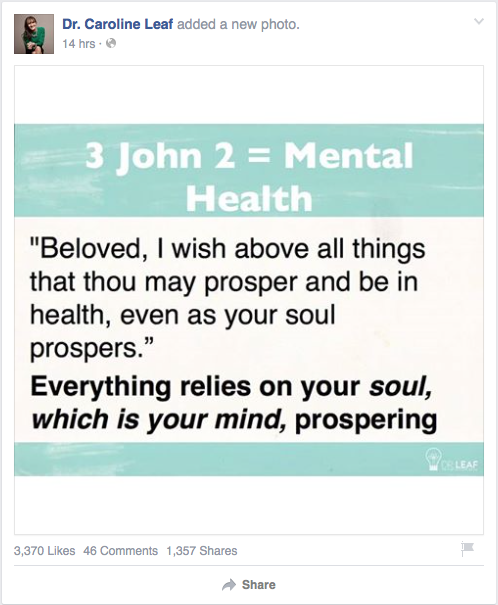
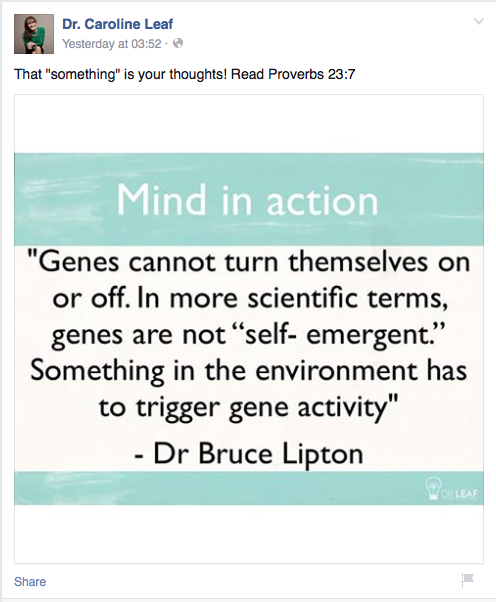
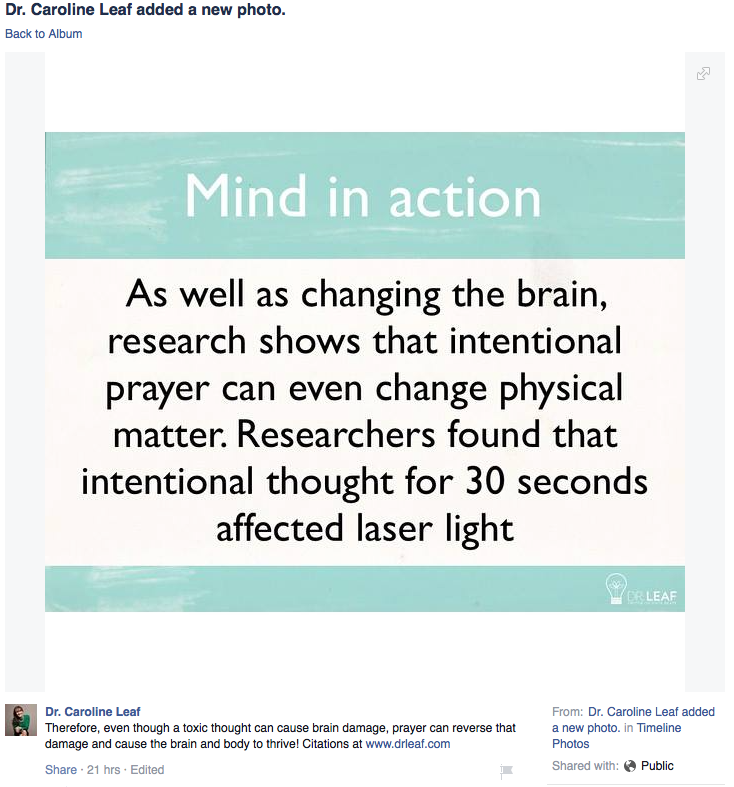


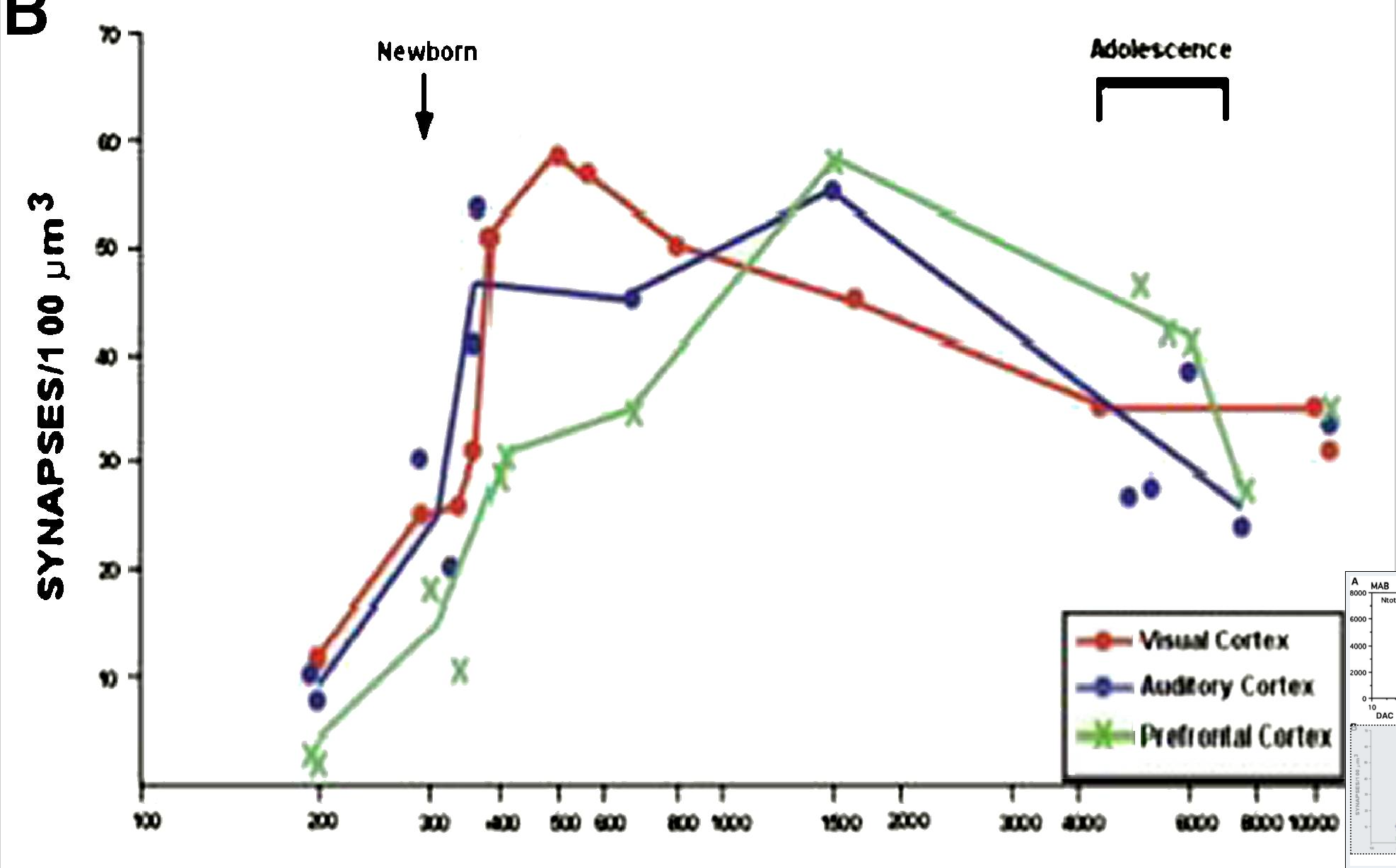


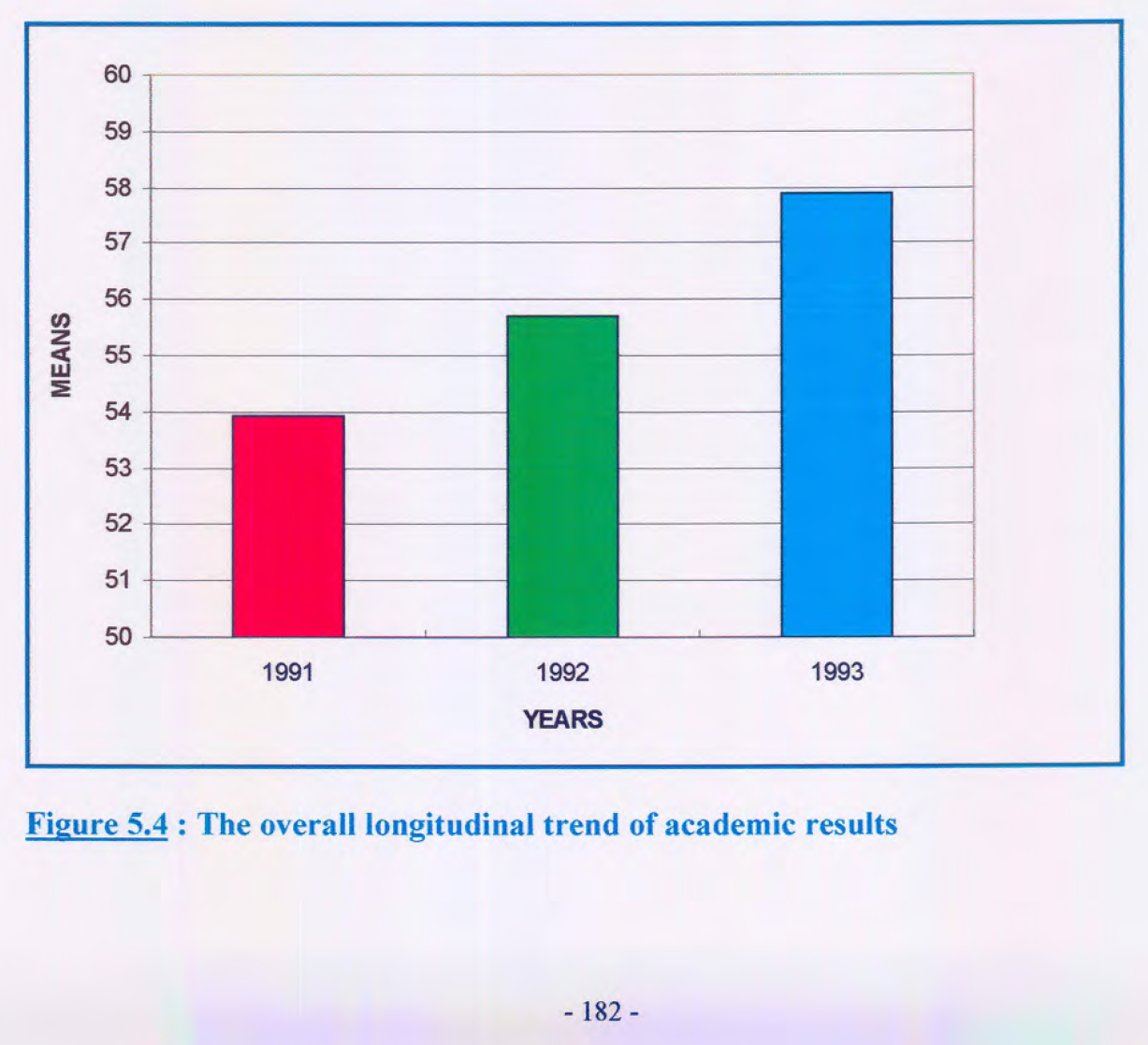


 Dr C. Edward Pitt