Mobile phone mothering – one more thing for mums to feel unnecessarily guilty about

Mothers.  They are probably the single most important group of people in the world.

It’s not that I’m belittling the role of fatherhood, or demeaning the amazing work that fathers do for their children, but simply put, we wouldn’t be here if it wasn’t for the tireless patience and sacrifice of our mums.  Nine months of nausea, sore breasts, swollen appendages and having your organs used as punching bags.  Then there’s the trauma of birth itself, which is rewarded with the full-time care of a screaming, incessantly ravenous alimentary canal which has taken the form of a baby.  Over the years, the screaming and the pooping become slightly more manageable, but most mothers remain the head chef, playmate, laundromat, ironing lady, teacher, taxi-driver, nurse and drill sergeant for their offspring.

Despite these daily feats of amazement, most mothers are haunted by this nagging sense of not being good enough – Mother Guilt.  As author Mia Redrick wrote,

“Mother’s guilt is real. Nearly all of us experience it. We are racked with guilt, feeling that our best isn’t good enough. We struggle when work commitments prevent us from attending school events and we are crushed by the looks of disappointment on our children’s faces. We wonder if choices we have made, such as what school to send our kids to, have not had far-reaching negative consequences, if a different path would have resulted in happier, more well-adjusted kids. We moms might feel guilty when we can’t afford something for our kids or are nagged by the feeling that we simply don’t spend enough time with them.”

Mothers seems to feel guilty about anything, and everything, for the whole day …

“The kids are in the bed again. I was sure I shushed them back to their beds at 2am, they must have snuck in during the wee hours. Tonight I will make sure they sleep all night in their own beds. How will they ever learn to sleep if I keep letting them come in to my bed?”
“Whose children get only eight hours of sleep a night? I am sure at this age they are meant to be getting 12 – 14 hours sleep. I am going to damage then for life. Maybe I should let them sleep in my bed so they get more sleep?”
“Oh so much sugar in EVERYTHING.  Don’t you read the articles? Don’t you hear the “experts”? Don’t you see those diagrams with spoonful upon spoonful of the deadly substance displayed, a visual representation of poison imprinted on your mind each and every time you take the bran flakes from the cupboard?”

And so it goes on.

Today, Dr Leaf added one more thing for mothers to feel guilty about – smartphones.

Screen Shot 2016-01-09 at 1.58.46 PM

“Mothers, put down your smartphones when caring for your babies! That’s the message from researchers, who have found that fragmented and chaotic maternal care can disrupt proper brain development, which can lead to emotional disorders later in life.”

She then exhorted her followers, “Lets get some real eye-to-eye contact going – dads included!”

Dr Caroline Leaf is a communication pathologist and self-titled cognitive neuroscientist.  Credit where credit’s due – in the past, Dr Leaf has pathologically avoided citing her references, but today, she cited the article itself and the news story that promoted it.

But again, like the meme she posted a couple of days ago about sadness making people sick, Dr Leaf has posted the opening paragraph of a promotional PR puff piece and made it sound like a scientific pronouncement.  When you actually read the journal article that the news story is promoting, it has nothing to do with smartphones.  Or indeed, human beings.

The research was performed entirely on rats.

The research itself, by Molet and colleagues [1], seemed entirely legitimate.  The rat pups raised in a more chaotic way appeared to have higher levels of anhedonia, because they didn’t engage as much in the things that rats normally find pleasurable, namely, drinking sugar water or playing with their rat buddies.

I’m not sure if you’ve ever seen a mother rat on a smartphone.  I certainly haven’t, which means that news article Dr Leaf took her meme from, the one published on Science Direct, made some pretty tenuous assumptions:

  1. Chaotic mothering to rat pups is the cause of rat anhedonia
  2. Rat mothering and human mothering have similar outcomes
  3. Smartphone use causes fragmented and chaotic maternal care
  4. Not using smartphones would improve outcomes.

There’s no evidence from this study, or any work that I know of, that definitively proves any one of these things.  There are a number of alternative explanations as to why those rat pups weren’t as happy as the control group, but even if the chaotic nurturing of the rat babies was THE cause of their unhappiness, human beings are completely different to rats in cages.  And there are many things, other than smartphones, that can strain the mother-baby relationship.  Excessive mother guilt for one.

Dr Leaf’s meme is a good example of just how misinformation can spread quickly through the internet.  The PR department of a university writes a puff piece on the article to promote the university and its research.  But no one wants to read about depressed rats – they need a better hook.  There’s a love-hate relationship with smartphones in our culture, and lots of Mommy-guilt, so they use a sentence about smartphones and mothering to grab people’s attention, even though the journal article had nothing to do with either.

Science Direct then simply republished the press release from the university without filtering it, where it’s then picked up by wannabe scientists and self-titled experts like Dr Leaf, who pass on the misinformation to hundreds of thousands of their followers.  Pretty soon, mothers everywhere are feeling guilty about looking at their phone instead of their children’s eyes, when it probably doesn’t make a blime bit of difference.

The take home messages:

  1. Unless you’re a rat, there’s no evidence that using your smartphone makes you a bad mother.
  2. Be wary of social media memes, and what you read on the internet.
  3. Dr Leaf is hurting her own credibility by reposting the opening paragraphs of sciencey promotional PR articles instead of reading the actual article first. We need experts to reduce the amount of misinformation clogging the internet, not increase it.

References

[1]        Molet J, Heins K, Zhuo X, et al. Fragmentation and high entropy of neonatal experience predict adolescent emotional outcome. Translational psychiatry 2016;6:e702.

Does sadness make you sick?

LeafMeme20160107

We’ve all heard of being “homesick”, or “heartsick”, or “lovesick”.   Sometimes when we’re extremely sad, we feel the knot in our stomachs, the pressure in our chests, or the confusion and distraction in our minds as the waves of sadness wash over and discombobulate us.

But can being sad really make you physically ill as well as emotionally distraught?

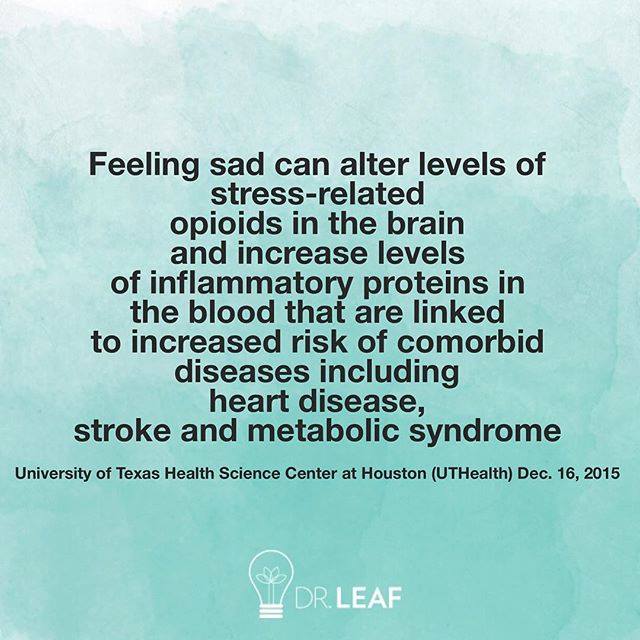
Dr Caroline Leaf declared today on her social media platforms that “Feeling sad can alter levels of stress-related opioids in the brain and increase levels of inflammatory proteins in the blood that are linked to increased risk of comorbid diseases including heart disease, stroke and metabolic syndrome.”

Dr Caroline Leaf is a communication pathologist and a self-titled cognitive neuroscientist.  She believes that our cognitive stream of thought determines our physical and mental health, and can even influence physical matter through the power of our minds.

She also added some further interpretation to her meme: “So this is more evidence that our thoughts do count: they have major epigenetic effects on the brain and body! We need to apply the principles in the Bible and listen to the Holy Spirit – no excuses this year!”

With all due respect to Dr Leaf, the study she quotes doesn’t prove anything of the sort.

Dr Leaf’s meme is a copy and paste of the opening paragraph of a news report published by the university’s PR people to promote their faculty.  This isn’t a scientific summary, it’s a hook to draw attention to an article which amounts to a PR puff piece.  If Dr Leaf had read further into the article, I don’t think she would have been quite so bold in claiming what she did.

The article discussed a study by Prossin and colleagues, published in Molecular Psychiatry [1].  You can read the original study here.  The study specifically measured the change in the level of the activity of the opioid neurotransmitter system and the amount of a pro-inflammatory cytokine IL-18 across two experimental mood states, and in two different groups of volunteers, people with depression, and those without.

For a start, it’s important to note that the study isn’t referring to normal day-to-day sadness.  This was an experimentally induced condition in which a sad memory was rehearsed so that the same feeling could be reproduced in a scanner, and the study was looking at the effect of this sad “mood” on people who were pathologically sad, that is, people diagnosed with major depression.

It’s well known that people with depression are at a higher risk of major illnesses, such as heart attacks, strokes and diabetes [2] The current study by Prossin et al looked experimentally at one possible link in the chain, a link between a neurotransmitter system that’s thought to change with emotional states, and one of the chemical mediators of inflammation.

They found that:

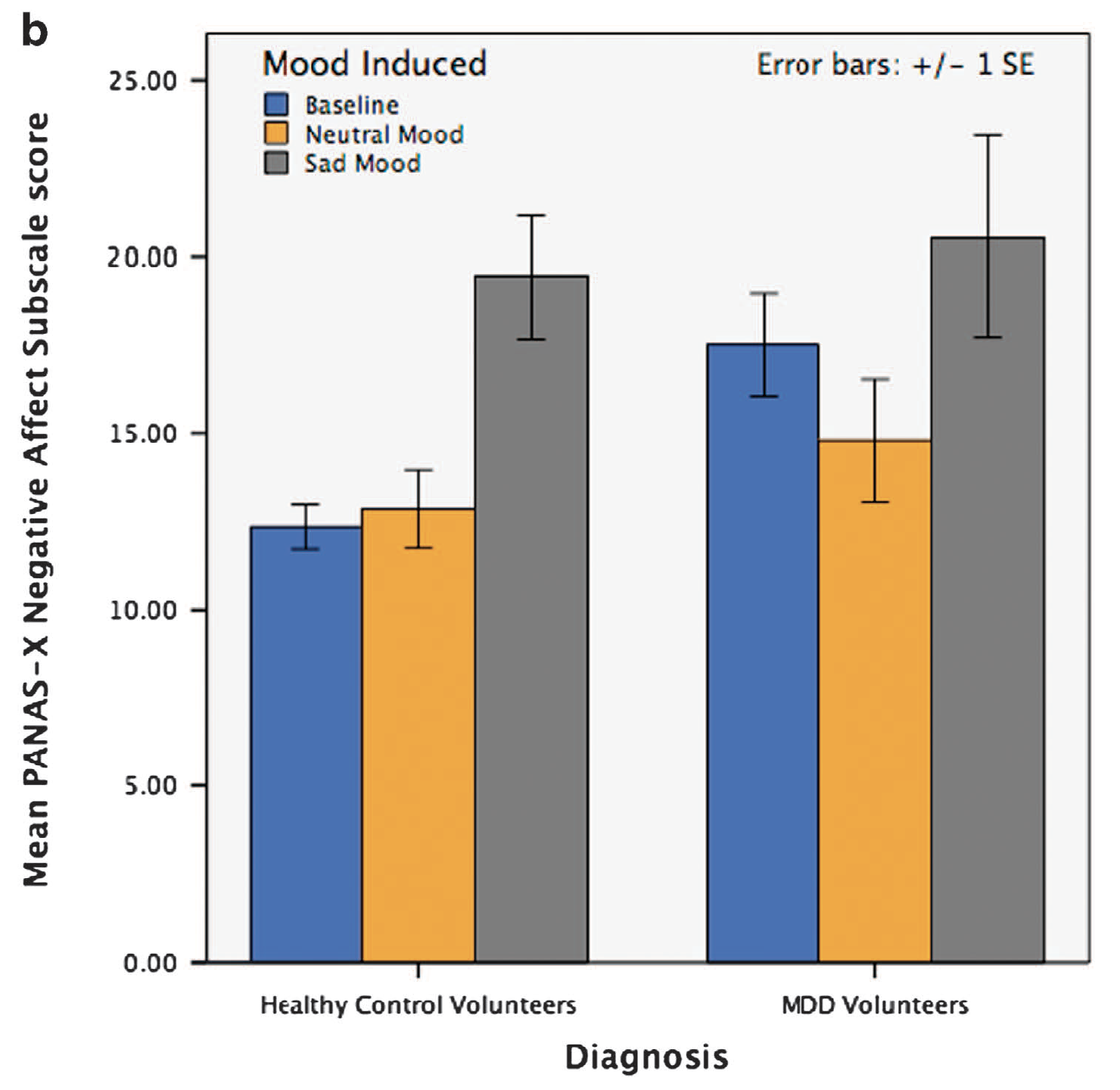
> Depressed people were much sadder to start with, and remained so throughout the different conditions.  The depressed people stayed sadder in the ‘neutral’ phase, and the healthy cohort couldn’t catch them in the ‘sad’ phase.
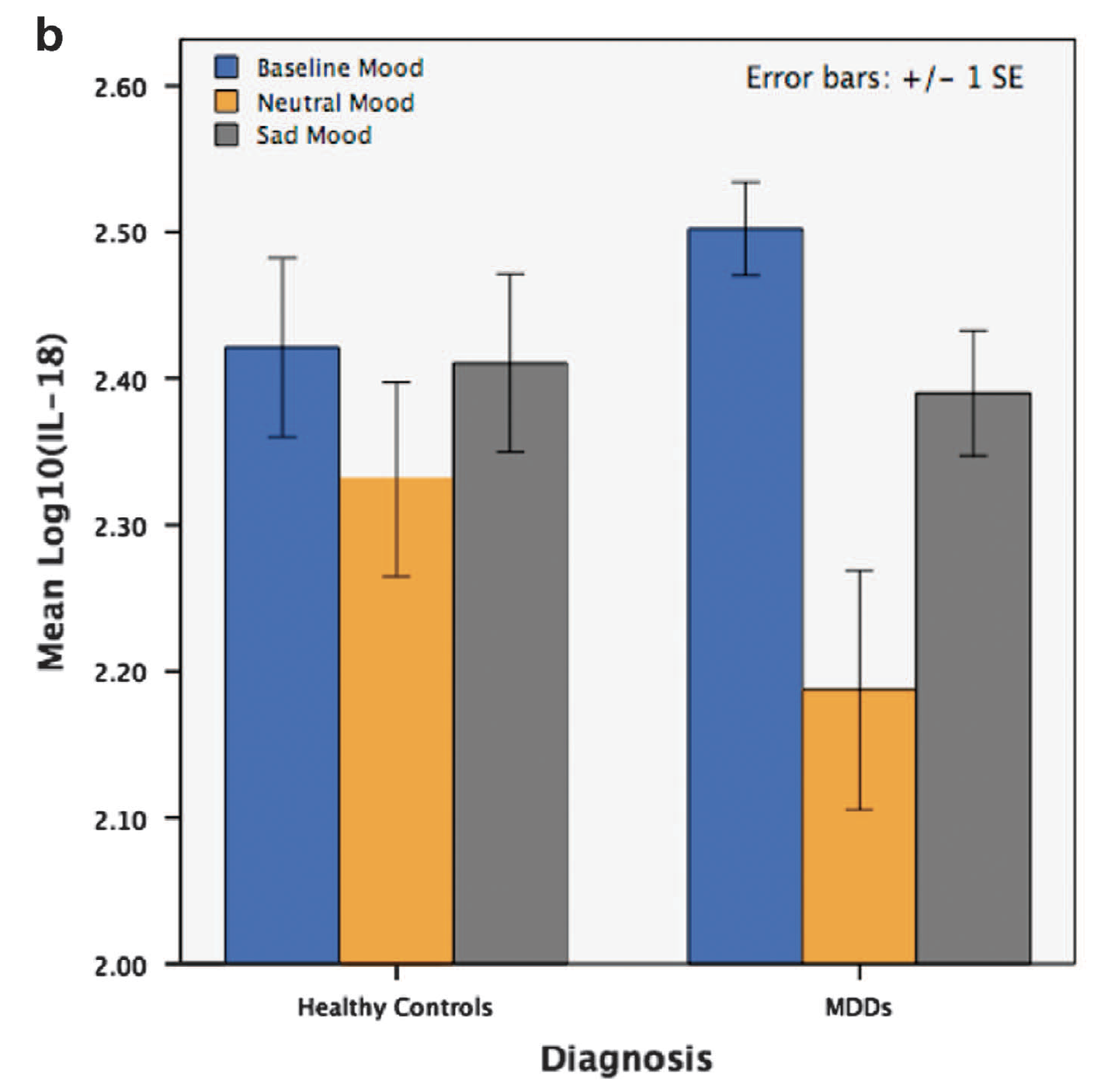
> Depressed people had a much higher level of the inflammatory marker to start with, and interestingly, this level dropped significantly with the induction of the neutral phase and the sad phase.  What was also interesting was that the level of the inflammatory marker was about the same in the baseline and the sad phase for the healthy volunteers.
> A completely different pattern of neurotransmitter release was seen in the two different groups.  People with depression had an increase in the neurotransmitter release over a large number of areas of the brain, whereas in the healthy controls with normal mood, the sad state actually resulted in a decreased amount of neurotransmitter release, and in a much smaller area within the brain.  This suggests that the opioid neurotransmitter system in the brains of depressed people is dysfunctional.

Affect/Sadness Scores - Prossin et al Molecular psychiatry 2015 Aug 18.

Affect/Sadness Scores – Prossin et al Molecular psychiatry 2015 Aug 18.

IL18 v Mood state/diagnosis - Prossin et al Molecular psychiatry 2015 Aug 18.

IL18 v Mood state/diagnosis – Prossin et al Molecular psychiatry 2015 Aug 18.

Effectively, the results of the study reflect what’s already known – the emotional dysregulation seen in people with depression is because of an underlying problem with the brain, not the other way around.  And, sadness in normal people is not associated with a significant change in the evil pro-inflammatory cytokine.

So, according to Prossin’s article,

  1. normal sadness in normal people is not associated with physical illnesses.
  2. sadness is abnormally processed in people who are depressed, which maybe related to an abnormal inflammatory response, which might explain the known link between depression and increased risk of illness

The article is not “more evidence that our thoughts do count.”  If anything, it shows that underlying biological processes are responsible for our thoughts and emotions and their downstream effects, not the thoughts and emotions themselves.

And unfortunately, it appears that Dr Leaf hasn’t got past the opening paragraph of a puff piece article before jumping to a conclusion which only fits her worldview, not the actual science.

References

[1]        Prossin AR, Koch AE, Campbell PL, Barichello T, Zalcman SS, Zubieta JK. Acute experimental changes in mood state regulate immune function in relation to central opioid neurotransmission: a model of human CNS-peripheral inflammatory interaction. Molecular psychiatry 2015 Aug 18.
[2]        Clarke DM, Currie KC. Depression, anxiety and their relationship with chronic diseases: a review of the epidemiology, risk and treatment evidence. Med J Aust 2009 Apr 6;190(7 Suppl):S54-60.

Should pregnant women still take antidepressants if they’re depressed? – SSRI’s and the risk of autism

As is my usual habit, I sat down tonight to do something useful and wound up flicking though Facebook instead.  Procrastination … avoidance behaviour … yeah, probably.  But at least this time it turned out to be rather useful procrastination, because I came across a science news story on Science Daily about a study linking the use of anti-depressants in pregnancy with an 87% increased risk of autism.

Actually, this is old news.  Other studies have linked the use of some anti-depressants with an increased risk of autism, such as Rai et al in 2013 [1].

The latest study to come out used data from a collaboration called the Quebec Pregnancy Cohort and studied 145,456 children between the time of their conception up to age ten.  In total, 1,045 children in that cohort were diagnosed with autism of some form, which sounds like a lot, but it was only 0.72%, which is actually lower than the currently accepted prevalence of autism in the community of 1%.

What the researchers got excited about was the risk of developing autism if the mother took an antidepressant medication at least at one time during her pregnancy.  Controlling for other variables like the age, wealth, and other health of the mothers, a woman who took an anti-depressant during pregnancy had a 1.87 times greater chance that her baby would end up with ASD, compared to women who did not take an anti-depressant [2].

An 87% increase sounds like an awful lot.  In fact, it sounds like another reason why anti-depressants should be condemned … right?

Well, like all medical research, you’ve got to consider it all in context.

First, you’ve always got to remember that correlation doesn’t always equal causation.  In this particular study, there was a large number of women being followed, and their children were followed for a long enough time to capture all of the likely diagnoses.  So that’s a strength.  They also tried to control for a large number of variable when calculating the risk of anti-depressants, which also adds more weight to the numbers.

Although the numbers are strong, studies like these can’t prove that one thing causes another, merely that they’re somehow linked.  It might be that taking anti-depressants causes the brain changes of autism in the foetus, but this sort of study can’t prove that.

Even if the relationship between anti-depressants and ASD was cause-and-effect, what’s the absolute risk?  Given the numbers in the study, probably pretty small.  With a generous assumption that ten percent of the study population was taking anti-depressants, the increase in the absolute risk of a women taking anti-depressants having a child with ASD is about 0.5%.  Or, there would be one extra case of autism for every 171 that took anti-depressants.

Hmmm … when you think of it that way, it doesn’t sound as bad.

You also have to consider the increase in risk to women and their offspring when they have depression that remains untreated, or in women that stop their anti-depressant medications.  There is some evidence that babies born to women with untreated depression are at risk of prematurity, low birth weight, and growth restriction in the womb, as well as higher impulsivity, poor social interaction, and behavioural, emotional and learning difficulties.  For the mother, pregnant women with depression are more at risk of developing postpartum depression and suicidality, as well as pregnancy complications such as preeclampsia, and an increase in high-risk health behaviour such as smoking, drug and alcohol abuse, and poor nutrition.  Women who discontinued their antidepressant therapy relapsed significantly more frequently compared with women who maintained their antidepressant use throughout pregnancy (five times the rate) [3].

So the take home messages:

  1. Yes, there’s good evidence that taking anti-depressants in pregnancy is linked to an increased risk of a child developing autism.
  2. But the overall risk is still small. There is one extra case of autism for every 171 women who take anti-depressants through their pregnancy.
  3. And this should always be balanced out by the risks to the mother and child by not adequately treating depression through pregnancy.
  4. If you are pregnant or you would like to become pregnant, and you are taking anti-depressants, do not stop them suddenly. Talk to your GP, OBGYN or psychiatrist and work out a plan that’s best for you and your baby.

References

[1]       Rai D, Lee BK, Dalman C, Golding J, Lewis G, Magnusson C. Parental depression, maternal antidepressant use during pregnancy, and risk of autism spectrum disorders: population based case-control study. Bmj 2013;346:f2059.
[2]       Boukhris T, Sheehy O, Mottron L, Bérard A. Antidepressant use during pregnancy and the risk of autism spectrum disorder in children. JAMA Pediatrics 2015:1-8.
[3]       Chan J, Natekar A, Einarson A, Koren G. Risks of untreated depression in pregnancy. Can Fam Physician 2014 Mar;60(3):242-3.

Dr Caroline Leaf’s war on drugs

Today, Dr Leaf posted this on her social media feeds.  It’s clearly meant to shock and enrage her followers.

Screen Shot 2015-12-12 at 11.56.44 AM

Dr Caroline Leaf is a communication pathologist and a self-titled cognitive neuroscientist.  She’s also cast herself as an expert on mental health.

To the detriment of her followers, and sadly, to the rest of the Christian church, most people believe her.

Her most recent book, and her social media memes for the last couple of months, have made it clear that Dr Leaf is pursuing her own personal war on drugs … but prescription psychiatric drugs not the illicit kind.

Unfortunately, her attacks on prescription psychiatric drugs have amounted to nothing more than a hysterically illogical smear campaign under the guise of her concern for public safety.

Today’s offering follows the same pattern of narrow-minded hysteria.

Her main quote from was from Robert Whitaker, “Twenty years ago, our society began regularly prescribing psychiatric drugs to children and adolescents, and now one out of every fifteen Americans enters adulthood with a ‘serious mental illness’.”

Whitaker, like Dr Leaf, is an outspoken critic of modern psychiatric treatment with a poor understanding of how psychiatric medications actually work.  The statement that Dr Leaf quotes is remarkable for it’s poor logic.  The quote implies that the rise in childhood mental health is because of the rise in psychotropic medication use in children.  But correlation does not equal causation.  Even if one in fifteen Americans enters adulthood with a ‘serious mental illness’, and twenty years ago our society began regularly prescribing psychiatric drugs to children and adolescents, there’s no evidence that the psychiatric medications are actually causing the psychiatric problems.

Then there’s Dr Leaf’s emotionally charged statement that “They are even prescribing these psychoactive substances to infants!”

The New York Times article that she linked to discusses the case of Andrew Rios, a child suffering from severe epilepsy, having his first seizure at 5 months.  Though it’s clearly more complicated than just “simple” epilepsy – he’s pictured wearing a helmet which suggests that he has myoclonic epilepsy which is clearly uncontrolled. It’s also clear from the article that the child was having mood swings and violent behaviour before the anti-psychotic was given. The history of early seizures with ongoing poor control and violent behavior means that this unfortunate young boy likely has a severe and complicated neurological syndrome, quite possibly because of an underlying abnormality of his brain. And the symptoms he had which the mother claimed were from the antipsychotic were just as likely to have been night terrors, a common problem in two year olds.

In the end, who really knows?  But there’s certainly not enough in this article to clearly convict antipsychotics of being toxic or evil.

Neither is the use of antipsychotics for infants widespread.  20,000 prescriptions for antipsychotic medications sounds like a travesty, but according to the article, the real numbers are probably much less, or about 10,000, since not every prescription is filled.  Even 10,000 sounds like a lot, but that represents 0.0002% of all prescriptions in the US, and most of those scripts are not actually being taken by the child, but by their uninsured parent(s).

Indeed, as the article itself said, “In interviews, a dozen experts in child psychiatry and neurology said that they had never heard of a child younger than 3 receiving such medication, and struggled to explain it.”

So the prescribing of antipsychotics to infants is extremely rare, almost unheard of, and is only likely to be done in extreme cases where all other options have been exhausted.

That’s certainly not the impression you get from Dr Leaf’s post, which is just another misinformed smear against anti-psychotic medications.

Dr Leaf’s war against psychiatric medications is reckless.  When people who need psychiatric medications don’t take them, suffering increases, as do suicides.

It’s time Dr Leaf stopped spreading needless fear about these medications.  They help more people than they harm, people who already suffer from the stigma of having a severe mental illness.  They don’t need any more suffering stemming from Dr Leaf’s so-called “expertise”.

Does our attitude towards aging increase Alzheimer Dementia?

“I think I’m forgetting something …”
Does our attitude towards aging increase Alzheimer Dementia?

For the last few years, I’ve worked as a doctor for a number of my local nursing homes.  On my morning rounds, I would literally reintroduce myself to every second patient, because even though I’d seen them every week for the previous few months, they still couldn’t remember who I was.

And it’s not just because I have a less than memorable face.  Most of my nursing home residents had dementia.

While there are many different causes for dementia, the one first described by Mr Alzheimer in the (early 1900’s) is the best known and most feared.  It is also the most common, and is a significant drain on the nation’s economy as well as the quality of life in the twilight of years.

Recently, an article was published by a group of researchers from Yale University in the US which claimed to show that the attitude a person had towards aging contributes to their chances of Alzheimer Disease.  I first saw it yesterday on the social media feed of Dr Caroline Leaf, communication pathologist and self-titled cognitive neuroscientist.  Dr Leaf is known for her scientifically dubious assumptions that the mind changes the brain, not the other way around, and has previously publically stated that dementia was caused by toxic thinking.  This article seems to vindicate her assumptions.

Screen Shot 2015-12-10 at 6.08.55 PM

However, this article also made it onto Facebook’s trending list ands was picked up by news site all over the world (such as this article in the Australian http://goo.gl/RavbMl), so the interest wasn’t just from Dr Leaf, but also from the broader public.  And I can understand why.  No one wants to ‘grow old and senile’, or to ‘lose our marbles’.  Any potential cure or prevention for Alzheimer Dementia is worth paying attention to.

I admit, the headline intrigued me too, both personally and professionally.  I wasn’t aware that one’s attitude towards aging would contribute to Alzheimers, since Alzheimers is predominantly genetic, and the other associated risk factors have more to do with physical health (like diabetes, high blood pressure etc).  Psychological stress is a risk factor for Alzheimers in mice, but good evidence in humans has been lacking [1].

So, does negative attitudes to aging really cause stress which then leads to Alzheimers as the report suggested, or is there a much better explanation?

The scientific article that the news reports were based on is A Culture-Brain Link: Negative Age Stereotypes Predict Alzheimer’s Disease Biomarkers [2].  This study was done in two stages.  Volunteers were recruited from a larger study called the Baltimore Longitudinal Study of Aging.  At entry point, the participants answered a questionnaire about their attitudes towards aging.  This was about 25 years before the participants were actively studied.

The first study examined the change in volume of a part of the brain called the hippocampus (which plays an essential part in our memory system).  The second part of the study examined the volunteers’ brains at autopsy for markers of Alzheimer Dementia, namely ‘plaques’ and ‘tangles’.  The number of plaques tangles were combined to form a single composite score, which was then compared to the baseline attitude towards aging score.

In the first study, the researchers reported that those people who held negative views of aging were more likely to have a smaller hippocampus which more rapidly decreased in size over time.

In the second study, the researchers reported that those people who held negative views of aging were more likely to have more plaques and tangles in their brain.

On the surface, this seems to suggest that people who hold negative views on aging contribute to the development of Alzheimer Dementia, and certainly this is how the different news agencies seemed to interpret the outcomes of the study.  Though on deeper palpation, a number of questions arise about how the researchers did the study and chose to interpret the results.

For example, the aging attitude survey was only done once, which means there’s a 25 year gap or longer between the questionnaire and the active studies. That’s a long time, and the attitudes of the volunteers may have improved or worsened in that time, but that doesn’t seem to have been considered

Levy and her researchers also report that the average size of the hippocampus changed significantly when they averaged the size of the left and the right hippocampus.  But when they analyzed the two sides separately, there was no significant change over time.  So this makes me wonder about the validity of their analysis too – if the volume of each side separately doesn’t change much at all, then how can the average volume of the two sides change so much?

I’m not much of a statistician, but I wonder if the secret’s in their modeling.  They used a linear regression model to compare their data to their hypothesis, a legitimate statistical method, but which involves adjustment for other variables.  If you do enough adjusting, you can get a significant result statistically, but according to their numbers, their Cohen’s d was 0.29, which is considered a weak effect overall.

Then there’s the question of clinical significance.  Even if the hippocampus did shrink in those who thought aging was negative two decades ago, was the shrinkage enough to contribute to the cognitive impairment seen in Alzheimer Dementia?  When compared to other studies, probably not.  Looking at Levy’s graph, the “negative” attitudes group changed about 150mm3 over the 10 year follow up period, or about 5%.  A recent study also showed that the the hippocampal size of subjects with mild memory loss is about 12% less than a healthy age matched control [3].

The same problems are seen in study 2 – Levy and her researchers reported an increase in the number of plaques and tangles in the “aging is bad” group.  But her numbers are small, and not statistically strong.  And again, the question of clinical significance arises.  Plaques and tangles represent biomarkers of Alzheimer Dementia, not necessarily a diagnosis.  Normal aging brains without dementia also have plaques and tangles, and it’s the number of tangles that seem more significant for developing cognitive impairment [4, 5], not the combined score that they used in this study.

And when all is said and done, all Levy and colleagues have shown is a correlation between attitude to aging and changes in the brain.  But correlation does not equal causation.  Just because two things are associated does not mean that one causes the other.  There maybe another variable or factor that causes both observations to co-occur.

In Levy’s case, the common connecting cause could easily be neuroticism, which they discussed as a co-variant but did not say if or how they corrected for it.  The other thing they did not examine in this study is the ApoE gene subtypes, which contribute significantly to the onset of Alzheimer Dementia [6].  The action of ApoE subtypes in the brain may contribute to both negative attitudes and Alzheimers changes?

The bottom line is that Levy’s study shows a weak correlation between a single historical sample of attitude towards aging, and some changes in the brain that are known to be markers for Alzheimer Dementia some three decades later.

They’ve certainly NOT shown that stress, or a person’s attitude to aging, in anyway causes Alzheimer Dementia.  They did not correct for genetics in this study which is the major contributor to the risk of developing Alzheimers.  So the results mean very little as it stands, and further research is required to delineate the cause and effect relationship here.

So don’t stress.  It’s not definitely proven that how you view the aging process determines your risk of dementia.  There will be those like Dr Leaf who will trot out this cherry-picked little titbit of information in the future to try and justify their pretense that thought can change our brain and impact our mental health, but what the press release says and what the study shows appear to be two different things altogether.

References

[1]       Reitz C, Brayne C, Mayeux R. Epidemiology of Alzheimer disease. Nat Rev Neurol 2011 Mar;7(3):137-52.
[2]       Levy BR, Slade MD, Ferrucci L, Zonderman AB, Troncoso J, Resnick SM. A Culture-Brain Link: Negative Age Stereotypes Predict Alzheimer’s Disease Biomarkers. Psychology and Aging 2015;30(4).
[3]       Apostolova LG, Green AE, Babakchanian S, et al. Hippocampal atrophy and ventricular enlargement in normal aging, mild cognitive impairment (MCI), and Alzheimer Disease. Alzheimer Dis Assoc Disord 2012 Jan-Mar;26(1):17-27.
[4]       Nelson PT, Alafuzoff I, Bigio EH, et al. Correlation of Alzheimer disease neuropathologic changes with cognitive status: a review of the literature. J Neuropathol Exp Neurol 2012 May;71(5):362-81.
[5]       Jansen WJ, Ossenkoppele R, Knol DL, et al. Prevalence of cerebral amyloid pathology in persons without dementia: a meta-analysis. JAMA : the journal of the American Medical Association 2015 May 19;313(19):1924-38.
[6]       Liu CC, Kanekiyo T, Xu H, Bu G. Apolipoprotein E and Alzheimer disease: risk, mechanisms and therapy. Nat Rev Neurol 2013 Feb;9(2):106-18.

Dr Caroline Leaf – The mystery of he said/she said is no longer a mystery

This weeks edition of New Scientist magazine carried an article entitled “Scans prove there’s no such thing as a ‘male’ or ‘female’ brain” [1].  The article was inspired by a journal article published in the PNAS last month [2], which reviewed the scans of 1400 different people to see if there were specific differences in the neuroanatomy of the brains of men and women (i.e., are there ‘male’ and ‘female’ brains, or are the commonly accepted male/female differences just a myth, or a cultural, not biological phenomenon?)

According to the article, there is an “extensive overlap between the distributions of females and males for all gray matter, white matter, and connections assessed. Moreover, analyses of internal consistency reveal that brains with features that are consistently at one end of the ‘maleness-femaleness’ continuum are rare. Rather, most brains are comprised of unique ‘mosaics’ of features.” [2]

So essentially, there’s no strong biological basis for gender differences after all.  “This means that, averaged across many people, sex differences in brain structure do exist, but an individual brain is likely to be just that: individual, with a mix of features. ‘There are not two types of brain,’ says Joel.” [1]

This news is a blow to one of Dr Leaf’s less renowned books, “Who switched off your brain? Solving the mystery of he said/she said” [3].

Dr Caroline Leaf is a communication pathologist and a self-titled cognitive neuroscientist.  Her ‘he said/she said’ book is based on the idea that there are definitive characteristics of the male and female brain which define each gender.  From her conclusion on page 211,

“Men and women are different.  Both the physical anatomy and functional strategy of our brains are different.  We can’t attribute this to social engineering, cultural norms or our up-bringing.  We’ve been created different – it’s in our fundamental design.  Our parents, our communities, and the cultural context of our childhood and adolescence certainly have a prominent developmental role in each of our lives.  But your brain has been fashioned in a specific way that shapes your ‘true you’ long before any of these other factors have had the opportunity to exercise their influence on you.”

As a quick aside, this quote shows the confusion in Dr Leaf’s teaching.  As I’ve discussed before in other blogs, Dr Leaf contradicts herself by claiming that our brain determines our gifts and our behaviours in some books (like ‘He said/she said’ and ‘The gift in you’) but then claims that our thought life controls our brains and our physical reality in the rest of her teaching.  So which is it?

But this quote also sounds the death knell for her book, in light of the recent scientific evidence to the contrary.  Which is a shame, since out of all of her books, this one initially seemed the most scientifically robust.
Even though the book is based on a now defunct theory, I wonder if the thrust of her book still holds true to a point.  We’ve all been created to be different, and we should celebrate those differences and how they complement other people around us.  It just so happens that those differences aren’t inherent to our gender, but to us as individuals, uniquely designed by God “for good works, which God prepared in advance for us to do” (Ephesians 2:10).

So, yes, the mystery of he said/she said has been solved, but not quite as Dr Leaf envisaged.

References

[1]        Hamzelou J. Scans prove there’s no such thing as a ‘male’ or ‘female’ brain. New Scientist. 2015 Dec 5.
[2]        Joel D, Berman Z, Tavor I, et al. Sex beyond the genitalia: The human brain mosaic. Proceedings of the National Academy of Sciences of the United States of America 2015 Nov 30.
[3]        Leaf CM. Who swithced off your brain: Solving the mystery of he said/she said. Texas, USA: Inprov, Ltd, 2011.

Ritalin may not help children with ADHD?

A few days ago, the media had a frenzy over a new study about the use of Ritalin (methylphenidate – a stimulant medication) for Attention Deficit Hyperactivity Disorder (ADHD) (http://goo.gl/Ht9GKF).

ADHD is always good for a headline grab because it is so polarizing. It’s like the new HIV – everyone’s got an opinion on ADHD, and most of them are facile or just plain ignorant. That doesn’t stop the armchair experts from sharing their opinions, and this new Cochrane review into the studies of Ritalin for ADHD just gives them another chance to vent their fatuous spleens.

Like a couple of the comments posted at the end of The Australian article. One suggested that ADHD was a disease invented so they could find another drug to treat it, and suggested that mobile phone games were the problem. Another thought he was rather humorous when he trotted out the tired old chestnut that it’s all the parents fault: “ADHD has been nicnamed {sic} ‘Absent Dad At Home’ syndrome!”  Sorry, but no one’s laughing. 

We need to take a step back from the uneducated and unwarranted opinion of the self-titled experts, and look at what the study actually said. To do that, lets have a look at what the study was, what it looked at, and what the results were. We’ll then compare the results with some of the other options available for treating ADHD, so we can make an informed decision about how to best manage ADHD.

First, what study are we talking about? The study in question is a Cochrane Review lead by Storebo, titled “Methylphenidate for children and adolescents with attention deficit hyperactivity disorder (ADHD)” [1]. (You can read the official press release here: http://www.cochrane.org/news/researchers-urge-caution-prescribing-commonly-used-drug-treat-adhd or the abstract here: http://onlinelibrary.wiley.com/doi/10.1002/14651858.CD009885.pub2/abstract)

Cochrane reviews are scientific works that pool the best research on a particular topic and combine it into a mega-study, to get the best results available for a particular topic. First, all the papers written about the topic in question are found. The poorest quality studies are discarded, leaving studies that are suitable quality and are fairly uniform in how they did their research, so that the results from each study can be combined into one uniform result.

This process of meta-analysis increases the statistical power of the results enormously. The Cochrane Collaboration has been at the forefront of meta-analysis and has developed specific rules about the quality of evidence it accepts for its reviews, making a Cochrane review as trustworthy as medical research can be.

So what did the meta-analysis of methylphenidate for children with ADHD actually show? In short,

  • A strong improvement in the Teacher-Rated Symptoms score,
  • A strong improvement in the Teacher-Rated Behaviour score,
  • Small-to-moderate improvement in the ADHD rating scale,
  • Small increase in minor side effects such as poorer sleep and appetite, and
  • No increase in serious harm from methylphenidate.

So … that sounds pretty positive overall. Why the big hullabaloo? Why are these experts supposedly urging caution?

The concerns the researchers had was with the quality of the studies. Overall, the research that’s been done thus far has been deemed low quality by Cochrane’s standards. So they were cautious about suggesting that the results were reliable given the quality of the studies they had to work with. And that’s fair enough. Better quality studies are required to confirm the findings of the current Cochrane review, and this should be done as a matter of priority.

Unfortunately, the reviewer’s cautious approach to the research has been misinterpreted as a concern about the drug itself.

There are two important points here: 1. Accepting the limitations of the quality of the research it’s based on, the review still found a moderate effect of methylphenidate, and 2. Other “treatments” for ADHD have been proven in separate meta-analyses to be wholly ineffective.

There’s a little bit of statistical interpretation required here, but the Standardised Mean Difference (SMD, or sometimes called Cohens d) for the Teacher-Rated Symptoms score and Teacher-Rated Behaviour score was -0.77 and -0.87 respectively. The negative value here doesn’t mean that it’s bad; it’s just the arbitrary direction the reviewers chose to show improvement favouring Ritalin. Then there’s the SMD itself. The SMD takes into account the variability of the results overall, using a specific formula to take that into account.

The SMD used here doesn’t equate to the other value the reviewers used for the side effect statistics, which they expressed as a relative risk. So you can’t look at the numbers given and directly equate the power of the improvements with the chance of side effects of the medication.

However, it’s been said that an SMD of 0.2 is a small effect size, 0.5 is moderate, and 0.8 is large [2], so the effect of Ritalin given by the study was actually a strong effect. In comparison, the relative risk of minor adverse effects given by the review was 1.29, or a 29% increased risk, which is relatively small.

Then there’s the important consideration of the effects of other treatments for ADHD. The effect of Ritalin maybe backed by low quality evidence, but there’s no evidence of any effect for the other so-called ‘treatments’ for ADHD. As per the review by Sonuga-Barke (2013), there is a tiny amount of evidence for supplementation with omega-3 and 6 fatty acids, but none for:

  1. Elimination diets (including those for ‘antigenic’ foods, specific provoking foods, general elimination diets and ‘oligoantigenic’ diets)
  2. Food colouring (including certified food colours, Fein-gold diets and tartarazine)
  3. Cognitive training (including working memory specific, and attention specific training)
  4. Neurofeedback, and
  5. Behavioural intervention [3]

So no matter how inane or facile the arm-chair experts may be, there is no evidence that Ritalin for ADHD is harmful. There is a small risk of minor effects such as reduced appetite and sleep, but there is evidence (albeit low quality evidence) that it has a strong positive effect. In comparison, there’s no evidence of improvement from any other treatment that’s been adequately studied.

No drug is perfect, and that includes Ritalin. But it’s certainly not the devil in pill form either. It’s time to stop demonizing it, and ignorantly criticizing those children and their families who need it.

References

[1]       Storebo OJ, Ramstad E, Krogh HB, et al. Methylphenidate for children and adolescents with attention deficit hyperactivity disorder (ADHD). The Cochrane database of systematic reviews 2015 Nov 25;11:CD009885.
[2]       Faraone SV. Interpreting estimates of treatment effects: implications for managed care. P & T : a peer-reviewed journal for formulary management 2008 Dec;33(12):700-11.
[3]       Sonuga-Barke EJ, Brandeis D, Cortese S, et al. Nonpharmacological interventions for ADHD: systematic review and meta-analyses of randomized controlled trials of dietary and psychological treatments. The American journal of psychiatry 2013 Mar 1;170(3):275-89.

Dr Caroline Leaf and the Me-Too approach to mental health

Screen Shot 2015-11-13 at 3.44.33 pm

Since her recent less-than-successful attempt at portraying herself as a mental health expert, Dr Leaf has been laying low on social media, sticking to bland, innocuous quotes or passages of scripture.

Today, she thought it was safe enough to pop her head up from the trenches to fire off another opinionated volley on mental well-being, with a quote from one of her favourite authors, Peter Kinderman:

“It’s our framework of understanding the world, not our brains and not even the events that happen to us – not nature and not nurture – that determines our thoughts, emotions, behaviours and, therefore, our mental health.”

Dr Leaf is a communication pathologist and self-titled cognitive neuroscientist. Without any training or professional experience in mental illness, she has also taken it upon herself to act as an expert on mental health within the Christian church.

Unfortunately, posting quotes like today’s offering only further destroys her flagging credibility among those with professional psychiatric experience, and adds to the confusion of the rest of the Christian church when it comes to understanding mental illness.

There are two main problems with Dr Leaf’s meme: the quote itself and it’s source.

The quote itself is wafer-thin, unable to stand up to even the most basic interrogation. For example, we know through basic common sense that the brain changes how we think, our moods, our emotions and our behaviours. We change our mood, our emotions and our alertness every time we have a cup of coffee, or a glass of wine. Hallucinogenic medications like LSD definitely change our framework of understanding the world. Coffee, alcohol, and illicit substances like LSD all change the mood or experience of the person using them because they all temporarily alter the function of the users brain.

Though it’s not just external substances that change how we experience our external and internal worlds, but our own internal hormonal ecosystem changes our emotions, our moods, our thoughts and our behaviours. This isn’t so obvious for most men as our hormones are fairly constant, though testicular failure is known to result in reduced energy, vitality, or stamina; depressed mood or diminished sense of well-being; increased irritability; and difficulty concentrating and other cognitive problems. For the female gender, monthly hormonal changes can sometimes result in sudden, marked changes in emotions, moods, thoughts and behaviours.

There are a lot of other reasons why the brain controls the mind, and our mental health, which I’ve also discussed numerous times in other blogs (here, here and here)

If you aren’t satisfied with a common sense approach, then consider the scientific evidence that personality, the name that we give to our inbuilt ‘framework of understanding the world’ is largely genetic, and dependent on the function of various neurotransmitter systems [1-4].

So to suggest that the brain is not responsible for our moods, our emotions, our thoughts and our behaviours isn’t supported by the weight of scientific evidence.

The quote by Kinderman doesn’t stop there, but suggests that “not even the events that happen to us … determines our thoughts, emotions, behaviours”, something that also flies in the face of current scientific evidence. For example, the other forty percent of personality is determined by our environment (specifically the ‘non-shared’ environment, the environment outside of our parental influence) [5, 6]. And common psychiatric illnesses are associated with early childhood adversity, such as schizophrenia [7] and ADHD [8]. So again, the quote is unscientific.

Who then is this Kinderman guy, and why does he disagree with the scientific literature?

Peter Kinderman is a Professor of Psychology at University of Liverpool, and the President-elect of the British Psychological Society. He’s a highly outspoken critic of modern psychiatry and what he perceives to be the medicalisation of normal moods and emotions and overuse of medications to treat these non-existent diagnoses. Kinderman believes that it’s our learning history that shapes the paths that our lives take, and so if we simply understand our personal models of the world and how they were shaped by the events and experiences to which we’ve been exposed, we can simply think our way out of any disease process [9].

Kinderman has come out in favour of talking treatments for psychosis in schizophrenia instead of medication, when there’s no scientific proof of benefit for psychosocial therapies in schizophrenia [10, 11] (and here).

This, and his staunch opposition of the DSM5 as invalid, makes me concerned about his bias against modern psychiatry, despite it’s many advances, scientifically and clinically.

However, I’m surprised that Kinderman would make such a statement because it’s such an asinine argument, I find it hard to believe that it came from a professor of psychology. Kinderman would surely recognise the role of biology in our mental health and wellbeing, even if he doesn’t agree with how it’s managed. Perhaps there’s an alternative explanation. Perhaps Kinderman didn’t say what Dr Leaf has claimed?

The answer is, he does, and he doesn’t.

Dr Leaf has quoted Kinderman correctly. Today’s quote is taken directly out of Kindermans 2014 book, “The New Laws of Psychology” [9], on the penultimate page of his introduction. So he does say that our brains and our experiences aren’t relevant for our mental health. But then again, in a blog on the militant anti-psychiatry blog ‘Mad in America’, Kinderman wrote this:

“I’ve spent much of my professional life studying psychological aspects of mental health problems. Inevitably, this has also meant discussing the role of biology. I hope I’ve made some progress in understanding these issues, in working out how the two relate to each other, and the implications for services. That’s my academic day-job. But it’s not just academic for me. I’m probably not untypical of most people reading this; I can see clear examples of how my experiences may have affected my own mental health, but I can also see reasons to suspect biological, heritable, traits. As in all aspects of human behaviour, both nature and nurture are involved and they have been intimately entwined in a complex interactive dance throughout my childhood and adult life.” http://www.madinamerica.com/2015/03/brain-baked-beans/

So he seems confused, both recognising that biological traits influence psychiatric illness, then denying it.

Personally, I disagree with the quote from his book, although I’m just a suburban GP from Australia, so what would I know, right? Though I think the evidence I’ve cited is on my side, and Kinderman is not without his critics who are more than his academic equal.

It also concerns me because the logical conclusion of this line of thinking is that psychiatric illnesses have no biological basis, and therefore psychiatric medications have no place in treatment of them. But as I outlined previously, there is good evidence for the beneficial effects of medications for schizophrenia and ADHD amongst other mental health disorders.

Dr Leaf continues to ignore the scientific evidence for the biological basis for mental ill-health, medications for their treatment, and even the most basic of all that our mind is a product of our brain. Instead, she’s nailed her colours to her mast and aligned herself with outspoken authors on the fringe of modern neuroscience. Rather than addressing the science behind her opposition to modern psychiatry and neuroscience, she has resorted to hiding behind their quotes, a ‘me-too’ commentator, rather than an actual expert.

Of more importance is the confusion that this brings to the vulnerable Christians who follow her social media “fan sites”. The more Dr Leaf criticises psychiatric medications and condemns their prescription and usage, the more likely it is that someone will come to serious harm when they inappropriately cease their medications. And if Dr Leaf won’t come to her senses, our church leaders are going to have to take action, before it’s too late.

References

[1]        Vinkhuyzen AA, Pedersen NL, Yang J, et al. Common SNPs explain some of the variation in the personality dimensions of neuroticism and extraversion. Translational psychiatry 2012;2:e102.
[2]        Chen C, Chen C, Moyzis R, et al. Contributions of dopamine-related genes and environmental factors to highly sensitive personality: a multi-step neuronal system-level approach. PloS one 2011;6(7):e21636.
[3]        Caspi A, Hariri AR, Holmes A, Uher R, Moffitt TE. Genetic sensitivity to the environment: the case of the serotonin transporter gene and its implications for studying complex diseases and traits. The American journal of psychiatry 2010 May;167(5):509-27.
[4]        Felten A, Montag C, Markett S, Walter NT, Reuter M. Genetically determined dopamine availability predicts disposition for depression. Brain and behavior 2011 Nov;1(2):109-18.
[5]        Krueger RF, South S, Johnson W, Iacono W. The heritability of personality is not always 50%: gene-environment interactions and correlations between personality and parenting. Journal of personality 2008 Dec;76(6):1485-522.
[6]        Johnson W, Turkheimer E, Gottesman, II, Bouchard TJ, Jr. Beyond Heritability: Twin Studies in Behavioral Research. Current directions in psychological science 2010 Aug 1;18(4):217-20.
[7]        Howes OD, Murray RM. Schizophrenia: an integrated sociodevelopmental-cognitive model. Lancet 2014 May 10;383(9929):1677-87.
[8]        Thapar A, Cooper M, Eyre O, Langley K. What have we learnt about the causes of ADHD? Journal of child psychology and psychiatry, and allied disciplines 2013 Jan;54(1):3-16.
[9]        Kinderman P. The New Laws of Psychology: Why Nature and Nurture Alone Can’t Explain Human Behaviour: Robinson, 2014.
[10]      Buckley LA, Maayan N, Soares-Weiser K, Adams CE. Supportive therapy for schizophrenia. The Cochrane database of systematic reviews 2015;4:CD004716.
[11]      Jones C, Hacker D, Cormac I, Meaden A, Irving CB. Cognitive behaviour therapy versus other psychosocial treatments for schizophrenia. The Cochrane database of systematic reviews 2012;4:CD008712.

The Prospering Soul – Christians and Anxiety

When you say the word “anxiety”, it can mean different things to different people. To a lot of people, anxiety is the same as being a little frightened. To others, it’s being really scared, but with good reason (like if you have to give a speech and you’re afraid of public speaking).

Medically speaking, anxiety isn’t just being frightened or stressed. After all, it’s normal to be frightened or stressed. God made us so that we could experience fear, because a little bit of fear is actually protective. There are dangers all around us, and if we had no fear at all, we’d end up becoming lunch for a wild animal, or road-kill. So there’s nothing wrong with a little bit of anxiety – in the right amount, for the right reason.

But anxiety in the wrong amount or for the wrong reason, can disrupt our day-to-day tasks and make it hard to live a rich and fulfilling life. That’s the anxiety that we’ll be talking about today.

The official description of anxiety reflects this idea of the wrong amount of anxiety about the wrong things: “… marked symptoms of anxiety accompanied by either general apprehension (i.e. ‘free-floating anxiety’) or worry focused on multiple everyday events, most often concerning family, health, finances, and school or work, together with additional symptoms such as muscular tension or motor restlessness, sympathetic autonomic over-activity, subjective experience of nervousness, difficulty maintaining concentration, irritability, or sleep disturbance. The symptoms are present more days than not for at least several months and result in significant distress or significant impairment in personal, family, social, educational, occupational, or other important areas of functioning.” (This is taken from the beta-version of the latest WHO diagnostic guidelines, the ICD-11, but has yet to be formally ratified).

There are six main disorders that come under the “anxiety disorders” umbrella, reflecting either an abnormal focus of anxiety or an abnormal intensity:
1. Panic Disorder (abnormally intense anxiety episodes)
2. Social Anxiety Disorder (abnormal anxiety of social interactions)
3. Post-traumatic Stress Disorder (abnormally intense episodes of anxiety following trauma)
4. Obsessive-Compulsive Disorder (abnormally intense and abnormally focussed anxiety resulting in compulsive behaviours)
5. Specific phobias (abnormally focussed anxiety on one particular trigger), and
6. Generalised Anxiety Disorder (abnormal anxiety of everything)

The common underlying theme of anxiety is uncertainty. Grupe and Nitschke wrote, “Anxiety is a future-orientated emotion, and anticipating or ‘pre-viewing’ the future induces anxiety largely because the future is intrinsically uncertain.” [1]

The dysfunctional approach to uncertainty that underlies anxiety is in turn related to genetic changes which affect the structure and function of the brain, primarily in the regions of the amygdala and the pre-frontal cortex, which then alters the processing of our brain in five different areas:
> Inflated estimates of threat cost and probability
> Hypervigilance
> Deficient safety learning
> Behavioural and cognitive avoidance
> Heightened reactivity to threat uncertainty

In simpler language:
> the brain thinks that threats are more likely and will be worse than they are
> the brain spends more time looking for possible threats
> the brain fails to learn what conditions are safe, which is aggravated by
> the brain over-using avoidance as a coping mechanism, and
> the brain assumes that unavoidable uncertainty is more likely to be bad.

It’s important to understand at this point that anxiety disorders aren’t the result of poor personal choices. They are the result of a genetic predisposition to increased vulnerability to early life stress, and to chronic stress [2].

The other way of looking at it is that some people are blessed with amazing tools for resilience [3, 4].

It’s not to say that our choices have no impact at all, but we need to be realistic about this. Everyone will experience stressful situations at some point in their lives, and everyone will also make dumb choices in their lives. Some people are naturally better equipped to handle this, whereas some people have genes that make them more vulnerable. It’s wrong to blame yourself, or allow other people to blame you, for experiencing anxiety, just as it’s wrong for other people to assume that if one person can cope with the same level of stress, then everyone else should too.

It’s not to say that you shouldn’t fight back though. Just because your facing a mountain doesn’t mean to say you can’t climb it. It will be hard work, and you’ll need good training and support, but you can still climb that mountain.

Managing anxiety is very similar to managing depression like we discussed in a previous post. Following the tap model, there’s overflow when there is too much going into the system, the system is too small to handle it, and the processing of the input is too slow. So managing anxiety involves reducing the amount of stress going into the system, increasing the systems capacity through learning resilience and coping skills, and sometimes by improving the systems processing power with medications.

Reducing the input – stress management

Sometimes the best way of coping with anxiety is to reduce the stress that’s fanning the flames. It mightn’t seem to come naturally, but as we discussed in the last chapter, there are a few basic skills that are common to all stress management techniques that can form the platform of ongoing better skills in this area.

Engaging the “vagal brake” as proposed by the “Polyvagal Theory” [5] is as important in anxiety as it is in depression. By performing these techniques, the activity of the vagus nerve on the heart via the parasympathetic “rest-and-digest” nervous system is increased, which not only slows down the heart, but enhances the activity of other automatic parts of our metabolism. Some of the techniques allow a relaxed body to have a relaxed brain which can cope better with whatever is confronting it. The full list will be a blog for another time, but the simplest technique is to breathe!

It’s really simple. Sit in a comfortable position. Take slow, deep breaths, right to the bottom of your lungs and expanding your chest forward through the central “heart” area. Count to five as you breathe in (five seconds, not one to five as quickly as possible) and then count to five as you breathe out. Keep doing this, slowly, deeply and rhythmically, in and out. Pretty simple! This will help to improve the efficiency of your heart and lungs, and reduce your stress levels.

Remember, B.R.E.A.T.H.E. = Breathe Rhythmically Evenly And Through the Heart Everyday.

Increasing capacity – coping and resilience

Like with depression, anxiety responds well to psychological therapies which help to increase coping skills and enhance our innate capacity for resilience. And like depression, anxiety improves with CBT and ACT [6, 7], which enhance the activity of the pre-frontal regions of the brain [8]. For anxiety, CBT teaches new skills to handle uncertain situations, and to re-evaluate the chances of bad things happening and what would happen if they do. ACT puts the train of anxious thoughts and feelings in their place, and teaches engagement with the present moment, and a future focusing on values, and accepting the discomfort of uncertainty by removing the distress associated with it.

Practicing each of these skill sets is like practicing any other skill. Eventually, with enough practice, they start to become more like a reflex, and we start to cope with stress and anxiety better automatically.

Increased processing – Medications

Sometimes, to achieve long-term successful management of anxiety, a little extras help is needed in the form of medication. Like depression, the main group of medications used are the Selective Serotonin Reuptake Inhibitors (or SSRI’s for short). Medications appear to reduce the over-activity of a number of brain regions collectively called the limbic system [8], which are involved with many innate and automatic functions, but in its simplest form, the limbic system controls many of our emotions and motivations, including fear, anger and certain aspects of pleasure-seeking [9]. So essentially, SSRI’s help the anxious brain to make better sense of the incoming signals.

There are other medications commonly used for anxiety treatment, collectively called benzodiazepines. Most people wouldn’t have heard that term before, but would have heard of the most famous member of the benzo family, Valium. Benzos are like having a bit too much alcohol – they slow down the activity of the brain, and induce a feeling of relaxation. When used appropriately (i.e.: in low doses and in the short term), they can be helpful in taking the edge off quite distressing feelings of anxiety or panic. But benzos are not a cure, and after a while, the body builds a tolerance to them, where a higher dose is required to achieve the same effect. Continued long term use eventually creates dependence where a person finds it difficult to cope without them.

The final way to help manage anxiety is prayer. Like for depression, there is limited scientific information on the effects of prayer on, although a small randomised controlled trial did show that prayer with a prayer counsellor over a period of a number of weeks was more effective than no treatment [10].

Though given that anxiety is a future orientated emotion, excessively anticipating possible unwelcome scenarios and consequences, it’s easy to see why prayer should work well for anxiety. Trusting that God has the future in hand and knowing “that in all things God works for the good of those who love him, who have been called according to his purpose” (Romans 8:28) means that the future is less uncertain. The Bible also encourages us, “Do not be anxious about anything, but in every situation, by prayer and petition, with thanksgiving, present your requests to God. And the peace of God, which transcends all understanding, will guard your hearts and your minds in Christ Jesus.” (Philippians 4:6-7) When we give the future to God, he will give us peace in return.

Again, like in the case of depression, it’s sometimes hard for Christians to understand how strong Christians can suffer from anxiety in the first place. After all, we’ve just read how God gives us peace. And the Bible says that the fruit of the Spirit is peace (Galatians 5:22).

So when you’re filled with the opposite, when all you feel is overwhelming fear, it makes you feel like a faithless failure. Christians without anxiety assume that Christians with anxiety aren’t living in the Spirit. And it’s the logical conclusion to draw after all – if the fruit of the Spirit is peace, and you’re not filled with peace, then you mustn’t be full of the Spirit.

But like depression, when you look through the greatest heroes in the Bible, you see a pattern where at one point or another in their lives, they went through physical and emotional destitution, including mind-numbing fear … Moses argued with God about how weak and timid he was (Exodus 3 and 4), Elijah ran for his life in panic and asked God to kill him, twice, over the period of a couple of months after Queen Jezebel threatened him (1 Kings 18 and 19). Peter had spent three years with Jesus, the Messiah himself, hearing him speak and watching him perform miracle after miracle after miracle. But Peter denied his Messiah three times when he was confronted with possible arrest (John 18).

For the same pattern is also seen in King David, Gideon, and a number of other great leaders through the Bible. The take home message is this: it’s human nature to suffer from disease and dysfunction. Sometimes it’s physical dysfunction. Sometimes it’s emotional dysfunction. It’s not a personal or spiritual failure to have a physical illness. Why should mental illness be treated any different?

As the stories of Moses, Elijah and Peter testify, being a strong Christian doesn’t make you impervious to fear and anxiety. Hey, we’re all broken in some way, otherwise why would we need God’s strength and salvation? Having anxiety simply changes your capacity to experience God’s peace. As I said in the last chapter, closing your eyes doesn’t stop the light, it just stops you experiencing the light. Being anxious doesn’t stop God’s peace, it just makes it harder to experience God’s peace.

In summary some anxiety, at the right time and at the right intensity, is normal. It’s not unhealthy or sinful to experience some anxiety. Anxiety at the wrong time or at the wrong intensity, can disrupt our day-to-day tasks and make it hard to live a rich and fulfilling life. Anxiety related to a dysfunctional approach to uncertainty, and is a future-orientated emotion because anticipating or ‘pre-viewing’ the future induces anxiety largely because the future is intrinsically uncertain. Anxiety disorders can be debilitating.

Like depression, anxiety disorders can be managed in four main ways, by reducing the amount of stress coming in with stress management techniques, by increasing capacity to cope with psychological therapies like CBT and ACT, and sometimes by using medications, which help the brain to process the uncertainty of each situation more effectively. Prayer is can also useful to helping to manage anxiety.

Christians are not immune from anxiety disorders, and it’s important for the church to understand that Christians who suffer from anxiety are not weak, backsliding or faith-deficient. Having anxiety is not because of making poor choices. Though if you have anxiety, trust in the promises of the Bible, that God has the future under control.

References

[1]        Grupe DW, Nitschke JB. Uncertainty and anticipation in anxiety: an integrated neurobiological and psychological perspective. Nature reviews Neuroscience 2013 Jul;14(7):488-501.
[2]        Duman EA, Canli T. Influence of life stress, 5-HTTLPR genotype, and SLC6A4 methylation on gene expression and stress response in healthy Caucasian males. Biol Mood Anxiety Disord 2015;5:2.
[3]        Wu G, Feder A, Cohen H, et al. Understanding resilience. Frontiers in behavioral neuroscience 2013;7:10.
[4]        Russo SJ, Murrough JW, Han M-H, Charney DS, Nestler EJ. Neurobiology of resilience. Nature neuroscience 2012 November;15(11):1475-84.
[5]        Porges SW. The polyvagal perspective. Biological psychology 2007 Feb;74(2):116-43.
[6]        James AC, James G, Cowdrey FA, Soler A, Choke A. Cognitive behavioural therapy for anxiety disorders in children and adolescents. The Cochrane database of systematic reviews 2013;6:CD004690.
[7]        Swain J, Hancock K, Hainsworth C, Bowman J. Acceptance and commitment therapy in the treatment of anxiety: a systematic review. Clinical psychology review 2013 Dec;33(8):965-78.
[8]        Quide Y, Witteveen AB, El-Hage W, Veltman DJ, Olff M. Differences between effects of psychological versus pharmacological treatments on functional and morphological brain alterations in anxiety disorders and major depressive disorder: a systematic review. Neuroscience and biobehavioral reviews 2012 Jan;36(1):626-44.
[9]        Sokolowski K, Corbin JG. Wired for behaviors: from development to function of innate limbic system circuitry. Frontiers in molecular neuroscience 2012;5:55.
[10]      Boelens PA, Reeves RR, Replogle WH, Koenig HG. A randomized trial of the effect of prayer on depression and anxiety. Int J Psychiatry Med 2009;39(4):377-92.

If you’re suffering from anxiety or any other mental health difficulties and if you want help, see your GP or a psychologist, or if you’re in Australia, 24 hour telephone counselling is available through:

 Lifeline = 13 11 14 – or – Beyond Blue = 1300 22 4636

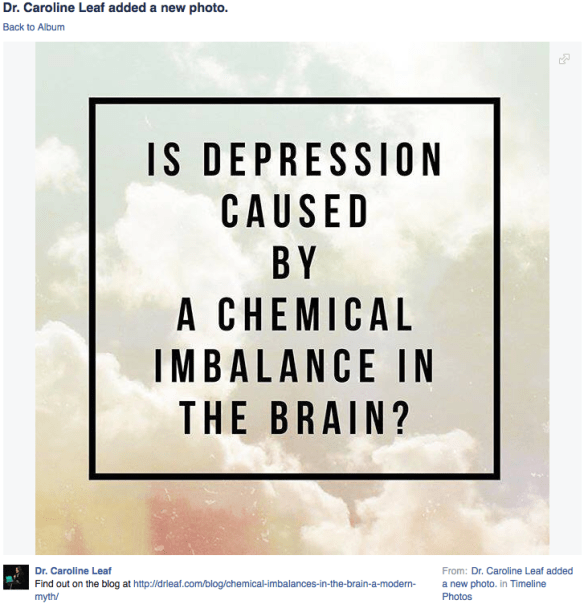
Dr Caroline Leaf and the Myth of the Chemical Imbalance Myth

Screen Shot 2015-10-27 at 2.49.38 am

There are lots of medical myths that people believe.

“I have acne because I eat too much chocolate, or my face isn’t clean enough”

“Stomach ulcers are because of stress”

“I coughed up some yellow phlegm, so I must need antibiotics right?”

“My baby’s fevers are because of teething.”

Is the “chemical imbalance” theory one of them?

Dr Leaf is a communication pathologist and self-titled cognitive neuroscientist. A couple of weeks ago she opened a proverbial can of worms by quoting the out-spoken Peter Gøtzsche, claiming that psychiatric drugs are the third leading cause of death after heart disease and cancer. This did not go down well, and Dr Leaf had to issue three separate statements on social media to try and justify herself and attempt to rescue her rapidly deteriorating credibility.

Not that she issued an apology, mind you, or retracted her statement.

Today, Dr Leaf published a blog on psychiatric medications … but again, not to apologise but to further justify why she’s right, and nearly every other doctor and scientist in the world is not. Worse than that, she went so far as to accuse doctors of deliberately prescribing “clearly dangerous” drugs, which she claims have no therapeutic effects, just because of some overcooked drug-company sponsored dinner and a few pens. More on that later.

Her post is a defiant deflection, a logically flawed and factually inaccurate criticism of modern psychiatry and psychopharmacology – not fueled by research, but largely based on the books of disgruntled fringe psychiatrists and researchers with an axe to grind.

Dr Leaf doesn’t discuss the actual science of the medications that she’s so against, but simply tries to create a smokescreen of distrust.

A good example of all that is wrong with this post is contained in the opening paragraph.

Today, it has become commonplace to say that people have chemical imbalances in their brain, most notably a disruption in the proper production of dopamine (for “diseases” like ADHD) and serotonin (for “diseases” like depression). These people, it is supposed, need drugs to “cure” these chemical imbalances, hence the terms “antipsychotics” or “antidepressants”.

The first thing to note is how Dr Leaf uses the term “cure”. No doctor ever uses the word “cure”, especially when talking about complex diseases. This is a pejorative term implying that modern medicine is only interested in permanently fixing things. But it’s a straw man fallacy, a false premise that Dr Leaf then uses to cast the medical model as impotent and futile. Nice try, but no one in medicine ever promises cure, and no doctor in their right mind would ever be so narrow-minded as to suggest that drugs are the only treatment for every condition. That doesn’t mean that drugs aren’t useful, nor that the medical model is broken. As we’ll discuss soon, medications are extremely helpful for certain conditions, when used carefully, as are non-drug treatments like CBT.

Dr Leaf also puts inverted commas around the word “diseases” as if to suggest that ADHD and depression aren’t diseases, an act which smacks of petulance and willful ignorance, and is insulting to those who have or who have ever suffered from ADHD and depression.   Last week, Dr Leaf was happy to share that her eldest daughter suffered from bulimia and depression, but now she’s suggesting that depression isn’t really a disease. So what is it then? Malingering? Personal weakness? Bad parenting?

It’s really surprising that someone claiming to be a cognitive neuroscientist would ignore strong scientific evidence.  For example, ADHD is associated with dopamine dysfunction as well as the dysfunction a number of other neurotransmitters [1-3]. And depression is associated with a decrease in the growth factor BDNF, (known as the neurotrophic hypothesis of depression) [4-6]. Schizophrenia, which Dr Leaf conveniently failed to mention, is clearly related to dopamine dysfunction in nerve cells of the pre-frontal cortex and the striatum, two parts of the brain that are incredibly important for how your brain processes incoming and outgoing signals [7-9].

There’s nothing to suppose here .. there’s ample evidence that psychiatric diseases are related to dysfunction within the brain, commonly with the function of neurotransmitters among other things. Call it whatever you like, the truth doesn’t change. “Chemical imbalance” is just an easy phrase for the general public to remember.

Dr Leaf then tries to suggest that psychiatric drugs don’t fix chemical imbalances but create them, citing the 1950’s observations of French researchers Deniker and Delay who noted that the first anti-psychotic, chlorpromazine, caused symptoms of Parkinson’s Disease. And indeed it did, but this wasn’t a new disease, just evidence that it worked.

Psychosis, a pathological state involving hallucinations and delusions, is because of an excess of the neurotransmitter called dopamine. Dopamine is the neurotransmitter that’s used by the nerve cells deep in the brain in a part called the basal ganglia, which acts like a central mail delivery centre for incoming and outgoing signals from other parts of the brain. The function of the nerves in one part of the basal ganglia are responsible for sending sensory signals to the frontal lobes of the brain. In another part, the signals are important for smooth movements of our muscles. Proper function depends on just the right amount of dopamine – too much and you get psychosis. Not enough and you get Parkinson’s disease symptoms.

The French researchers were simply noting the side-effects of too much medication blocking the action of dopamine in the basal ganglia – the psychosis had improved, but the blockade of dopamine was just too much in some patients, who had the opposite symptoms.

Again, Dr Leaf’s position is diametrically opposed to the published science [10, 11], and if anything, her claim contradicts her fundamental argument. After all, if chemical imbalances are myths, then how can chlorpromazine create a “new neurological syndrome” because of a chemical imbalance?

Dr Leaf then launches into a discussion on the history of the DSM and psychiatric medications. This is just the first in her ad hominem attacks on the medical profession –  playing the man, not the ball if you will. If she can discredit the doctors that prescribe the medication, then she indirectly discredits the medications.  This appears desperate and ultimately serves to weaken her case.

“It was just assumed that since these drugs affected brain chemistry in a certain way, the opposite reaction must be the result of the disease, notwithstanding the fact that this has never been adequately proven.”

The history of medicine is littered with cures being found without the disease being fully understood. Take Edward Jenner, for example, who is the founder of the modern technique of vaccination. He didn’t know why his smallpox vaccine worked, only that it did. Electron microscopes and a modern understanding of the immune system were centuries away, but Jenner saved billions of lives through his observation that prior vaccination with a small sample of cowpox virus would protect against smallpox [12].

When amphetamines, known to increase dopamine concentrations in the brain, caused psychotic symptoms and reserpine, a dopamine blocker, improved psychosis, it stood to reason that dopamine was a good candidate as a cause of psychosis and schizophrenia. Decades of research have gone on to further confirm and delineate the link [7]. Again, this is not “an overly simplistic explanation of chemical imbalances”. It is well proven, and rather complex.

Dr Leaf also makes the astounding accusation that psychiatrists inflicted suffering and caused “a public health disaster” by creating the DSM. The DSM, the ‘Diagnostic and Statistical Manual’ is an agreed-upon standard classification for psychiatric diagnoses. It is nothing more than a system of classification. It allows psychiatrists and researchers to speak a common language and attempt some coherence among their diagnoses.

Dr Leaf wrote, “… institutions like the American Psychiatric Association and the DSM would define what is normal, in turn telling us what it means to suffer and, essentially, what it means to be human. They medicalized misery, and today millions are suffering because of their actions, creating a public health disaster.”

That’s like saying that classifying the different types of cancer causes cancer. And that millions of people are suffering from cancer because doctors know to call it ‘cancer’. People have been suffering long before the DSM came along. The DSM doesn’t tell people they’re suffering, and it certainly doesn’t define what it is to be human. Such statements are disingenuous and melodramatic.

But wait, there’s more. “Today a psychiatrist can be praised for drugging a depressed person with mind-altering substances and, if these do not work, institutionalizing them and shocking their brain with ECT (electroconvulsive therapy). It is even an acceptable and commonplace practice to imprison mentally ill persons, drug them and lock them in solitary confinement, compelling them to live their days marinating in their own excrement.”

Dr Leaf is again playing to the fears of the public who have watched too many movies and only think of ‘One Flew Over the Cuckoo’s Nest’, ‘Shutter Island’ or scenes from ’12 Monkeys’. There are more oversight boards and lawyers than there are psychiatric patients, and the only people who are institutionalised are those who are clearly a danger to themselves or others. And while institutionalised, they are not subjected to random bouts of electrical shock as if some doctor is wandering around with a medical grade cattle prod, zapping people and laughing maniacally. Nor is anyone locked in solitary confinement and forced “to live their days marinating in their own excrement”.

The paranoid accusations continue some more. Dr Leaf accuses all psychiatrists of ignorance, and then accuses primary care physicians of negligence, by claiming that we prescribe medications that we do not understand because of the bribes and a pretty smile from a pharmaceutical rep.

Again, Dr Leaf contradicts her own argument:

Despite the recognition amongst many psychiatrists and medical health professionals that the chemical imbalance theory is not valid, drug companies like Eli Lilly still claim that ‘antipsychotic medicines are believed to work by balancing the chemical found naturally in the brain’.

Except that antipsychotic medications DO balance the naturally occurring chemical in the brain (dopamine) as we discussed earlier. What the … a drug company telling doctors how their drug works! How dare they tell the truth!

I find it disturbing that Dr Leaf would stoop so low as to insult the entire medical profession, especially every GP and family physician the world over.

Hey, I’m not above criticism. It’s important to have a good long look at ourselves from time to time, to review our practice, and make sure we’re treating our patients in the best possible way. The RACGP, the peak body of Australian GP’s, invited Prof Gøtzsche to present his opinions on anti-depressant medications so that GP’s could decide for themselves if they should adjust their prescribing.

But to suggest that primary care physicians are stupid, ignorant, incompetent and money hungry … that we would sell our soul for a drug company branded pen … is insulting. Though the irony of her statement, “we do not ask ourselves if these doctors really understand all the implications of using these substances. Not even the psychiatrists understand these drugs” is clearly lost on Dr Leaf.  It’s certainly clear from the rest of her essay that Dr Leaf has no idea how these medications work or what benefits they have for those who suffer from mental ill-health.

There’s a lot more to discuss in response to Dr Leaf’s diatribe, but for the sake of brevity, I’ll try and discuss just a couple of other important themes.

Dr Leaf continues to try to make the medications sound useless and poisonous. She has several paragraphs on the placebo effect, making the false argument that the effect of the medications is just because someone tells you it will work. Of course, the placebo effect is part of the therapeutic effect, but that’s the same for all treatments, even Dr Leaf’s programs … “So, if the pastor or cell-group leader says that these programs are safe and will fix your toxic thinking, even though they get most of their information from the author, we believe wholeheartedly in what he or she may say and are more inclined to believe the program will work for us. These beliefs, which ignore actual scientific results, are buttressed by a flood of distorted and biased news reports, press releases and scientific journal articles on supposed toxic thoughts, and have transformed the theory into church dogma. So, obviously, if we experience negative side effects and do not feel the program is working, it must be something wrong with us, not the program.” Is that a fair statement?

Dr Leaf then plays the fear card again by listing all of the potential side effects from psychiatric medications. Dr Leaf is right in saying that psychiatric medications have serious proven long term side effects, and we should be careful.

For instance, if you knew that thrombocytopenia, anaphylaxis, cutaneous hypersensitivity reactions including skin rashes, angioedema and Stevens Johnson syndrome, bronchospasm and hepatic dysfunction were the potential side effects for a medication, would you take it? Most people wouldn’t.  Reading the list makes that drug sound really dangerous.  We should be up in arms about such a potentially harmful drug being put up for sale … except that this list of side effects isn’t a psychiatric drug at all, but’s actually the side effect profile of paracetamol (acetaminophen in the US). People take paracetamol all the time without even thinking about it.

Saying that we shouldn’t take medications because of potential side effects is a scarecrow argument, a scary sounding straw man fallacy. All drugs have serious proven long term side effects. Licencing and prescribing a medication depends on the overall balance of the good and the harm that a medication does. And no one has ever hidden these side effects from the public as if there is a giant conspiracy from the doctors and the pharmaceutical companies. They’re right there in the product information (here is the product information for fluoxetine. See for yourself).

Whilst it’s true that these side effects do happen, we know that they happen infrequently, just like we know that people win lotteries infrequently. Even so, the medications are not just doled out like sweets at a candy store. You require a minimum of ten years of university level education to be able to prescribe them.

Patients ALWAYS have a right to ask questions about possible benefits and side effects, and in my practice, I tell my patients the pros and the cons before prescribing, and I give them the choice of whether they want them or not. No one is ever forced into taking them.

Finally, Dr Leaf makes a number of irrational statements and flawed arguments in her final page of ranting. Let me quickly go through some of the honourable mentions:

* “Most people recover from depression without antidepressants” – true, because most cases of depression are mild. That doesn’t mean to say that antidepressants shouldn’t be used for severe depression, just like most people recover from upper respiratory infections without antibiotics, but that doesn’t mean that we shouldn’t use antibiotics for severe tonsillitis or pneumonia.
* “Antidepressants are no better than placebos” – It’s a controversial topic right now. There are many pushing the barrow that SSRI medications are no better than a sugar pill. But Dr Leaf has conveniently ignored several Cochrane reviews (the best of medical evidence) that shows anti-depressants work for a variety of disorders [13-15], but that psychological therapy might not [16].
* Equating antidepressants and antipsychotics with illicit drugs, and claiming that “more people die from overdoses of psychiatric drugs than illicit drugs” – This is Reductio ad absurdum – the logical conclusion from this argument is that illicit drugs are safer than psychiatric drugs. And therefore we should not give people psychiatric drugs since we don’t give people the ‘safer’ illicit drugs. But that conclusion is absurd, and when you think about it, the whole thing is based on hidden false premises – people rarely die of illicit drug overdoses because they’re illegal and are hard to come by. And also, people who use illicit drugs are not usually suicidal, whereas those given psychiatric medications sometimes are suicidal, and sometimes use them to try and commit suicide. But modern psychiatric drugs are much less dangerous in overdose than their old counterparts.  It should also be noted here that more overdose suicide attempts are with paracetamol or ibuprofen than with psychiatric medications [19], but I don’t see paracetamol or ibuprofen being demonised.
* Psychiatric medications are part of a neo-liberal capitalist plot to keep the rich, richer and the poor, poorer – To me, this looks like Dr Leaf clutching at straws. Her statement, “By emphasizing that the problem lies within an individual’s biology, we are less inclined to look at their experiences and the social context of why they are feeling the way they feel. We look at the mythical chemical imbalance instead of economic exploitation, violence and inept political structures” is false.   Schizophrenia is often seriously discussed in terms of neurodevelopment and not just ‘chemical imbalances’ [17, 18]. So it’s just plain wrong to suggest that researchers don’t look at the “economic exploitation, violence and inept political structures”. Oh, and Dr Leaf suggests that foster children are abused because they’re all forced to take psychiatric medication, and implies that ADHD children are abused by being force-fed Ritalin because they “move a lot in class”. Again, these are emotional over-generalisations that have no basis in reality.

Dr Leaf seems lost.  She’s ignored solid published medical and scientific evidence in coming to an opinion based on the discontented rumblings of a few vocal but outspoken critics. In order to make her arguments, she has had to resort to borderline-slanderous ad hominem attacks on scientists and the medical profession, and purely emotional arguments based on fear and mistrust.

And this was only part one.  If Dr Leaf’s promised second part is anything like the first, we’re in for a real treat.

Though as if that wasn’t enough, by suggesting that psychiatric drugs cause changes in your brain, cause chemical imbalances, and cause that slew of negative side effects, Dr Leaf is admitting that it’s your brain that changes your thought life, which directly contradicts her most recent teachings. After all, if thought was the dominant force in your neurology and your mind controlled your brain, then the medications would have no effect since they’re physical and aren’t connected to our mind.

So which is it? Because if the brain controls our mind, then her best-seller needs to be pulped and refunds offered to the hundred of thousands of people who bought it. But on the other hand, if the mind really does control the brain, then her entire argument against psychiatric medications implodes.

Dr Leaf has painted herself into a corner and there’s still part two to come.

References

[1]        Prince J. Catecholamine dysfunction in attention-deficit/hyperactivity disorder: an update. J Clin Psychopharmacol 2008 Jun;28(3 Suppl 2):S39-45.
[2]        Del Campo N, Chamberlain SR, Sahakian BJ, Robbins TW. The roles of dopamine and noradrenaline in the pathophysiology and treatment of attention-deficit/hyperactivity disorder. Biological psychiatry 2011 Jun 15;69(12):e145-57.
[3]        Cortese S. The neurobiology and genetics of Attention-Deficit/Hyperactivity Disorder (ADHD): what every clinician should know. European journal of paediatric neurology : EJPN : official journal of the European Paediatric Neurology Society 2012 Sep;16(5):422-33.
[4]        Haase J, Brown E. Integrating the monoamine, neurotrophin and cytokine hypotheses of depression–a central role for the serotonin transporter? Pharmacol Ther 2015 Mar;147:1-11.
[5]        Bus BA, Molendijk ML, Tendolkar I, et al. Chronic depression is associated with a pronounced decrease in serum brain-derived neurotrophic factor over time. Molecular psychiatry 2015 May;20(5):602-8.
[6]        Sousa CN, Meneses LN, Vasconcelos GS, et al. Reversal of corticosterone-induced BDNF alterations by the natural antioxidant alpha-lipoic acid alone and combined with desvenlafaxine: Emphasis on the neurotrophic hypothesis of depression. Psychiatry research 2015 Sep 1.
[7]        Howes OD, Fusar-Poli P, Bloomfield M, Selvaraj S, McGuire P. From the prodrome to chronic schizophrenia: the neurobiology underlying psychotic symptoms and cognitive impairments. Curr Pharm Des 2012;18(4):459-65.
[8]        Williams GV, Castner SA. Under the curve: critical issues for elucidating D1 receptor function in working memory. Neuroscience 2006 Apr 28;139(1):263-76.
[9]        Der-Avakian A, Markou A. The neurobiology of anhedonia and other reward-related deficits. Trends Neurosci 2012 Jan;35(1):68-77.
[10]      Leucht S, Tardy M, Komossa K, et al. Antipsychotic drugs versus placebo for relapse prevention in schizophrenia: a systematic review and meta-analysis. Lancet 2012 Jun 2;379(9831):2063-71.
[11]      Torniainen M, Mittendorfer-Rutz E, Tanskanen A, et al. Antipsychotic treatment and mortality in schizophrenia. Schizophrenia bulletin 2015 May;41(3):656-63.
[12]      Riedel S. Edward Jenner and the history of smallpox and vaccination. Proc (Bayl Univ Med Cent) 2005 Jan;18(1):21-5.
[13]      Arroll B, Elley CR, Fishman T, et al. Antidepressants versus placebo for depression in primary care. The Cochrane database of systematic reviews 2009(3):CD007954.
[14]      Soomro GM, Altman D, Rajagopal S, Oakley-Browne M. Selective serotonin re-uptake inhibitors (SSRIs) versus placebo for obsessive compulsive disorder (OCD). The Cochrane database of systematic reviews 2008(1):CD001765.
[15]      Kapczinski F, Lima MS, Souza JS, Schmitt R. Antidepressants for generalized anxiety disorder. The Cochrane database of systematic reviews 2003(2):CD003592.
[16]      Jakobsen JC, Lindschou Hansen J, Storebo OJ, Simonsen E, Gluud C. The effects of cognitive therapy versus ‘treatment as usual’ in patients with major depressive disorder. PloS one 2011;6(8):e22890.
[17]      van Os J, Linscott RJ, Myin-Germeys I, Delespaul P, Krabbendam L. A systematic review and meta-analysis of the psychosis continuum: evidence for a psychosis proneness-persistence-impairment model of psychotic disorder. Psychological medicine 2009 Feb;39(2):179-95.
[18]      Howes OD, Murray RM. Schizophrenia: an integrated sociodevelopmental-cognitive model. Lancet 2014 May 10;383(9929):1677-87.
[19]     Prescott K, Stratton R, Freyer A, Hall I, Le Jeune I. Detailed analyses of self-poisoning episodes presenting to a large regional teaching hospital in the UK. Br J Clin Pharmacol 2009 Aug;68(2):260-8.

Disclaimer

  1. Do not abruptly stop any medications that you are taking. Talk to your licenced physician first. They’re not all money-hungry, imbecilic drug-company bitches. Most of them actually know what they’re talking about.
  2. For the record, I declare that I have no connection with any pharmaceutical company. I do not accept gratuities of any form from any sales representative. I don’t eat their food, I don’t take their pens, and I don’t listen to their sales pitches

Update – 8 August 2016.

Dr Leaf has since taken the offending post from her blog page, and re-gifted it as an answer on her “Scientific” FAQ page (“Chemical Imbalances and Mental Health” http://drleaf.com/about/scientific-faqs/).  It remains as unbalanced and inaccurate as it’s former iteration.  It’s unfortunate that Dr Leaf continues to make such preposterous claims in the face of overwhelming scientific evidence to the contrary.