The lost art of joy – Life-life balance

It’s all about balance …

Balance. It’s an interesting concept. We see it all the time, all around us, because nearly everything around us relies on some form of balance to function properly. Indeed, we need a particular form of balance, called homeostasis, in order for our bodies to keep functioning at their optimum level.

That’s no different for our schedule. If we don’t get our schedule right, if our priorities are out of kilter, then our lives fail to perform at their optimum level, and we open the door to the joy-thief of excessive stress.

The prevailing concept of optimised priorities in our society since the 70’s and 80’s is “work-life balance” – the idea being that work (career and ambition) and lifestyle (health, pleasure, leisure, family) are different and separate.

Though as one of my very clever, slightly workaholic friends says, it’s a bit of a false dichotomy. People can get immense pleasure from their careers as much as people can find ‘lifestyle’ activities distinctly un-pleasurable. What we need is a life-life balance.

The problem lies in how we define ‘work’ and ‘life’. Work and leisure can both bring pleasure. So we just need to redefine what ‘work’ and ‘life’ consist of, and we can have a meaningful conversation.

There are probably lots of ways of conceptualising this, but for me, I think of ‘work’ as ‘anything that makes you feel less refreshed than you felt before you started’. And, ‘Rest and recreation’ is the opposite of work. Rest and recreation is ‘anything that makes you feel more refreshed at the end than you felt at the beginning’.

As an example, some people love gardening. They love being outside in the fresh air, on their knees in the dirt, weeding and fertilizing, knowing that come spring they will have a lawn like a carpet framed by a floral tapestry. Despite it being physically demanding, they feel more relaxed and invigorated for their few hours in the garden. For them, gardening is rest and recreation. Personally, I hate gardening. I could think of nothing worse. I’m a Darwin-style gardener … it’s survival of the fittest for the plants in my garden! Gardening would suck the life out of me, so for me, gardening would be work.

For most people, paid and unpaid work and study would be considered ‘work’, but for my hyper-intelligent, slightly workaholic friend, work and study stimulate her. She loves being productive, learning new things and challenging herself. Her work and her study are not ‘work’ for her. They are for me though. I like learning, to a point, but for me, “much study is a weariness unto the flesh”. I would much rather be having a massage than reading a textbook.

So what is the optimum balance of work and R&R to have the best life-life balance? Again, there are no hard and fast rules here. The key is learning your limits and sticking to them. More about this in future blog posts. But as a general guide, I have three main rules:

1. The Triple-8 Rule
The Triple-8 Rule is: “8 hours work, 8 hours sleep, and 8 hours rest and recreation make up the 24 hour day.”

2. The Sabbath Rule
The Sabbath Rule is: “If God rested on the seventh day, then so should you.”

Whatever your schedule, make sure you abstain from work at least one day a week.

3. The Holiday Rule
The Holiday Rule is: “Take at least two weeks holiday every year.”

We have the Holiday Rule because we need extended R&R to further refresh our bodies and minds.  A study of more than 12,000 middle-aged men over the course of a decade showed that annual vacations were associated with a decrease risk of death, especially from heart attacks. When we have an extended time of rest and recreation, our stress hormones have a chance to rebalance.

To achieve this state of renewal, we need at least 10 days of R&R in a row, but a full 14 days is better. So having a few four-day weekends scattered throughout the year isn’t enough – you need two weeks as a block (and more if you can!) Two weeks off a year still gives you fifty weeks to be productive, and if you have those two weeks off, you’ll find that your fifty weeks will be more productive than a full year without a break.

Balance is the key. When you have balance, you have life. When you have life, joy can flourish.

The lost art of joy – Friendship

Last night, my family and I had dinner with an old friend.

I should clarify … by ‘old’, I don’t mean ‘geriatric’. I mean that I have known this friend for a long time. She is the person I have been friends with the longest, having first met her in early medical school nearly a quarter of a century ago. It’s a friendship that survives despite geographical, logistical and theological differences, because it’s built on the deepest mutual respect and care. I don’t have many friends, but this friend is definitely a keeper.

Friendships mean different things to different people. Some friends are gregarious, a source of instant joy, that person that always makes you laugh even when life makes you want to cry. Then there are those friends who enkindle that deeper sense of joy, because they are steadfast through the tough times.

In the 21st century, our concept of friendship has undergone some pretty radical changes. Before 2004, ‘social networks’ were the people you physically hung out with. Now when you talk about ‘social networks’, people assume you’re referring to Facebook.

Is physical social networking better than virtual? Everyone has their own opinion. We know that humans are wired for social interaction, with specific areas of the brain devoted to social behaviour, such as the orbitofrontal cortex. There are also neurotransmitters and hormones that are strongly associated with bonding and maintenance of social relationships, like oxytocin and β-endorphins. Research has shown that both humans and other primates find social stimuli intrinsically rewarding—babies look longer at faces than at non-face stimuli.

We also know that people who engage in social relationships are more likely to live longer, and that loneliness predicts depressive symptoms, impaired sleep and daytime dysfunction, reductions in physical activity, and impaired mental health and cognition. At the biological level, loneliness is associated with altered blood pressure, increased stress hormone secretion, a shift in the balance of cytokines towards inflammation and altered immunity. Loneliness may predict a shortened life-span.

It’s important to understand what loneliness is, and conversely, what defines good social relationships? Fundamentally, good or bad social relationships are related to the quality of the social interaction. This rule applies equally to real social networks and their on-line equivalents. So quality is fundamentally more important than quantity in terms of friendships, with that quality strongly determined by the connection within those social relationships. For example, loneliness “can be thought of as perceived isolation and is more accurately defined as the distressing feeling that accompanies discrepancies between one’s desired and actual social relationships”.

The corollary is that friendship can be thought of as perceived connection within social relationships, or the comforting feeling that accompanies the match between one’s desired and actual social relationships.

So healthy social relationships aren’t defined by the size of your network, but by the strength of the connections that your network contains, relative to what’s important to you. Just because you’re not a vivacious extrovert who is friends with everyone doesn’t mean that your social network is lacking. It also means that you can have meaningful connections to friends through social media, just as much as you can have meaningful connections through face-to-face interactions. It’s not the way you interact, but the quality of the connection that counts.

One way to increase the quality of your social connections is to enjoy your friendships mindfully. Mindfulness is being fully engaged in the present moment. So mindful friendships is to be fully engaged with the other people around you, to use all your senses to connect with those around you. To ignore the other social networks around you on your phone or tablet, keeping them out of sight and out of mind until afterwards.

Try it. At the next Christmas party, or when you’re with your loved ones on Christmas Day, turn off the phone and engage with the people around you as mindfully as you can, and see if you experience a new and improved form of Christmas joy.

The lost art of joy – Joy blindness

Light at the end of the tunnel …

Joy is a ubiquitous human experience, almost an innate function of the human brain.

Joy is a bit like vision for the soul.

Writing an entire months worth of blog posts on joy, then, is a little writing series of blog posts on art appreciation. The readers of a blog on art appreciation will be able to see the art, the blog helping them to better understand the art. The vast majority of people who will be reading these blogs on joy will be able to experience joy and (hopefully) the posts will help them better understand joy.

But what happens if you can’t experience joy in the first place? What about those people who have ‘joy blindness’, so to speak?

As I’ve been writing this blog every day, I’ve been mindful of those people who struggle to experience joy. For the most part, growing joy in our life is related to our actions or decisions, such as learning acceptance, aligning our direction in life with our values, forgiving ourselves and others etc. Hence why I have been exploring these concepts in my blogs thus far. But there are some people who will read these blogs and say, “But I’ve tried to do all these things, and nothing has worked. I want to experience joy like everyone else but all I have is sadness, anger, loneliness, mourning … I must be doing something wrong … it’s all my fault that I can’t experience joy … I don’t deserve to be happy.”

Remember yesterday when I talked about the work of Sonja Lyubomirsky and her colleagues who estimated that that intentional actions can contribute as much as 40% to a person’s feeling of happiness, where as circumstances could only contribute 10%? In their estimates, our genetics contributed to the other 50% of our overall happiness. Yesterday I made the comment that, even allowing for the generous estimations that were used to come to those final numbers, our actions were of much greater importance in our overall level of happiness than our circumstances.

But there was a second point to come out of the work of Lyubomirsky et al, that our happiness is related to factors beyond our control more than it is related to factors within our control.

For the vast majority of people, our genes, the biggest contributing factor to our joy, work fine. But there are some people whose genes do not work the same way, which makes them much more vulnerable to the effects of circumstances or personal actions. These are the people with major depression, who do not feel joy like the everyday person. There may be sources of joy all around them, but try as they might, they can not perceive it. They have ‘joy blindness’.

Depression is an abnormally low mood for an abnormally long time. Major depression sucks. Major depression is not just letting yourself feel miserable. So often, those without depression think that those with depression are weak, malingering, or wallowing in child-like self-pity. Despite the enormous strides in mental health education and awareness that have been made in the last couple of decades, there’s still a strong current of stigma that flows through our society, adding an additional barrier to improvement for anyone living with or recovering from depression.

Depression affects a lot of people too. About one in ten people will suffer from an episode of major depression in their lifetime.

There’s a lot of good and easily accessible information already available about depression, from organisations like Black Dog Institute or Beyond Blue. I’ve also written about depression and Christianity (Part 1 and Part 2). I don’t want to try and repeat all of that information here.

Rather, I wanted to say just a couple of things. Firstly, if you’re suffering from ‘joy blindness’ – if you long to experience joy in your life but all you feel is sadness, please don’t blame yourself or beat yourself up. It’s not your fault.

And you’re not alone. The depth of despair is so lonely, so isolating. But there are others out there who have gone what you’re going through and have come out the other side. And there are people around you to help you through – whether they’re friends, family, or professionals who can help, like your GP or a psychologist. Those suffering from depression benefit from specific counselling, or talking therapies, and occasionally those suffering from depression might need medication to assist them in their recovery.

For most people who suffer it, ’joy blindness’ isn’t permanent. It’s more like walking through a long dark tunnel rather than being trapped in a cave. If you can keep moving forward, you will eventually get through the other side. I know it’s hard, because I’ve been there myself. I know that in the middle of the tunnel, it feels like there is no end, that you’ll never experience joy again.

The key is hope. Hope keeps us moving forward. If you can keep moving forward, you will overcome the joy blindness of major depression and you will experience joy again.

Don’t lose hope, and you will experience joy again.

If you are struggling with mental illness and you need urgent assistance, please talk to someone straight away:

In Australia:
Lifeline ~ 13 11 14
BeyondBlue ~ 1300 22 4636 or https://www.beyondblue.org.au/about-us/contact-us
Suicide Callback Service ~ 1300 659 467 or https://www.suicidecallbackservice.org.au

USA:
National Suicide Prevention Lifeline ~ 1-800-273-TALK (8255)

New Zealand:
Lifeline Aotearoa 24/7 Helpline ~ 0800 543 354

UK:
Samaritans ~ 116 123

For other countries: Your Life Counts maintains a list of crisis services across a number of countries: http://www.yourlifecounts.org/need-help/crisis-lines.

The lost art of joy – Adversity

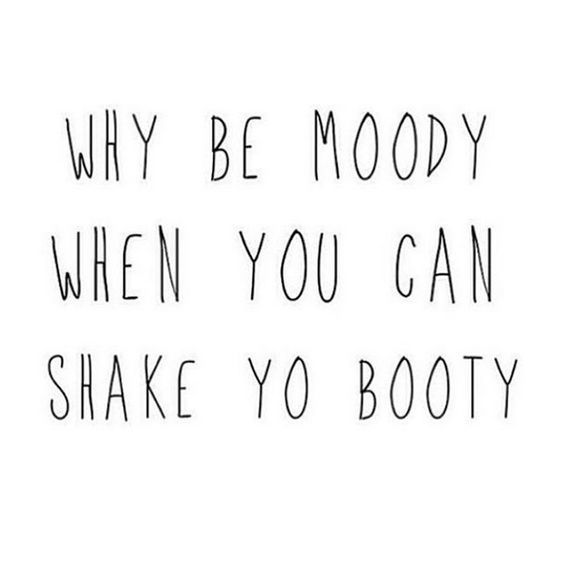
If we were to believe the average Pinterest quote, it’s easy to be happy.

“Positive mind, Positive Vibes, Positive Life”.
“I choose to be happy”.
“Why be moody when you can shake yo booty”.

Yep, easy right. Positively choose to turn on the light and shake yo booty, and you will have joy.

But we know from life experience that it isn’t always easy to have joy. It’s easy when times are good, when things are going in your favour.

It’s not so easy when things are difficult or times are tough – when you’re sick, when you’re broke, when you’re alone, when you’re stressed and stretched to your limit.

We all encounter adversity at some in our lives, and it’s through those times of personal difficulty that we usually grow the most, although it never feels like that at the time.

When times are difficult, we can still experience joy. Occasionally Pinterest has some pertinent quotes – “Happiness can be found even in the darkest of times if one only remembers to turn on the light”. It might be hard to see the joy in times of darkness and difficulty, and sometimes we just need to shine a little bit of light into the situation to see some of the joy around us.

One of the most profound examples of this was that of Viktor Frankl, an Austrian neurologist and psychiatrist who survived three years in Nazi concentration camps. He lived through some of the most inhumane depravity that a human being could be forced to endure, and that experience helped him understand that circumstances did not necessarily determine someone’s experience of joy, but that even in the midst of suffering, a person could still find beauty and meaning.

In “Man’s search for meaning”, he wrote:

We stumbled on in the darkness, over big stones and through large puddles, along the one road leading from the camp. The accompanying guards kept shouting at us and driving us with the butts of their rifles. Anyone with very sore feet supported himself on his neighbor’s arm. Hardly a word was spoken; the icy wind did not encourage talk. Hiding his mouth behind his upturned collar, the man marching next to me whispered suddenly: “If our wives could see us now! I do hope they are better off in their camps and don’t know what is happening to us.”

That brought thoughts of my own wife to mind. And as we stumbled on for miles, slipping on icy spots, supporting each other time and again, dragging one another up and onward, nothing was said, but we both knew: each of us was thinking of his wife. Occasionally I looked at the sky, where the stars were fading and the pink light of the morning was beginning to spread behind a dark bank of clouds. But my mind clung to my wife’s image, imagining it with an uncanny acuteness. I heard her answering me, saw her smile, her frank and encouraging look. Real or not, her look was then more luminous than the sun which was beginning to rise.

A thought transfixed me: for the first time in my life I saw the truth as it is set into song by so many poets, proclaimed as the final wisdom by so many thinkers. The truth – that love is the ultimate and the highest goal to which Man can aspire. Then I grasped the meaning of the greatest secret that human poetry and human thought and belief have to impart: The salvation of Man is through love and in love. I understood how a man who has nothing left in this world still may know bliss, be it only for a brief moment, in the contemplation of his beloved. In a position of utter desolation, when Man cannot express himself in positive action, when his only achievement may consist in enduring his sufferings in the right way – an honorable way – in such a position Man can, through loving contemplation of the image he carries of his beloved, achieve fulfillment. For the first time in my life I was able to understand the meaning of the words, “The angels are lost in perpetual contemplation of an infinite glory.”

Even in the midst of hostility, hate and hardship, Frankl and those around him engaged in unity, comradery, understanding of beauty and the memory of love. The human spirit can not be suppressed by external conditions. As Frankl also wrote,

Everything can be taken from a man but one thing: the last of the human freedoms—to choose one’s attitude in any given set of circumstances, to choose one’s own way.

Modern psychology has helped to explain what it is that contributes to happiness and joy. Sonja Lyubomirsky and her colleagues once published that intentional actions can contribute as much as 40% to a person’s feeling of happiness, where as circumstances could only contribute 10%.

This work wasn’t without it’s criticism, but it does make two pertinent points.

The first thing and most important for today is that our happiness is less about what’s going on around us and more about what we do.

Yes, adversity does make joy more difficult to experience, but not impossible.

Don’t allow life to beat you down. See the joy that is beyond your circumstances.

The second point? Even accounting for their generous assumptions, if up to 40% of our happiness is related to our actions, then more of our happiness is dependent on things beyond our control, like our genes and our circumstances.

What happens when you’ve done everything you can to maximise your joy and you’re still struggling? We will discuss this in more detail tomorrow.

The lost art of joy – Thanks

“Gratitude is one of those rare things you get more of by giving it away” ~ John Kralik

What’s the first thing you do when you get a Christmas present? Do you try and guess what’s inside by tapping it, feeling it, weighing it in your hands or shaking it? Or do you excitedly rip it open without stopping to think?

Usually at some point, either before or after the ceremonial mutilation of wrapping paper, there would be a ‘thank you’ to the person who gave it to you. Saying thank you is second nature to most of us. It’s a social norm, a sign of good manners.

We may say thank you fairly often, but are we practicing gratitude?

As I was randomly trawling the internet one day, I read this: “Have I always been thankful for everything in my life? Of course. But I never practiced gratitude until then.” I hadn’t thought about it quite like that before. The article was about John Kralik, whose story has inspired many in the business world. He was a lawyer in LA who was struggling. It wasn’t that Kralik was impolite and never said thank you, but he decided to make a deliberate effort to practice gratitude, so he made a resolution to send one handwritten thank you card to a different person every day for a year. As all good stories go, this simple act helped to turn around his business and his relationships.

Kralik’s story demonstrates that expressing our thanks is one part of the greater whole of gratitude.

Gratitude is a broad behavioural skill which has a number of different aspects, including:
(1) understanding individual differences in the experience of gratitude
(2) appreciation of others
(3) a focus on what you have
(4) feelings of awe when encountering beauty
(5) behaviours to express gratitude
(6) appreciation rising from understanding that life is short
(7) a focus on the positive in the present moment, and
(8) positive social comparisons

The research suggests that people who are naturally grateful tend to be less angry and hostile, less depressed, less emotionally vulnerable, and experienced positive emotions more frequently. Gratitude also correlates with traits like positive social functioning, emotional warmth, gregariousness, activity seeking, trust, altruism, and tender-mindedness. Grateful people also had higher openness to their feeling, ideas, and values, and greater competence, dutifulness, and achievement striving.

Like mindfulness, these effects may be simply an association of gratitude with other personality traits. In other words, people who are naturally optimistic or conscientious are also more likely to be thankful, rather than the thankfulness causing someone to be more optimistic or conscientious. There are a few studies that show that gratitude interventions improve self-worth, body image, and anxiety, although the evidence is that while gratitude was better than doing nothing, it was equal to, not superior to, currently accepted psychological interventions.

What gratitude does do is open you up to joy by intentionally drawing your focus on to the enriching elements in your life. And, if you express your gratitude to others through things like Thank You cards, then other people will reciprocate! Gratitude is joy gone viral.
It’s easy to start practicing gratitude. You can do what Kralik did and write a thank you note. Of you can do a gratitude journal, which is the best studied gratitude intervention. A gratitude journal simply involves writing something down every day that you’re thankful for. It doesn’t have to be long. A single sentence or phrase is good enough.

It doesn’t even have to be written, if that’s not your thing. I had a friend who was determined to do a gratitude journal, but she also had a love of and a knack for photography. So, she decided to take a photo a day of something that she was grateful for, and then post it on Facebook. She had her moments when she doubted herself, when she struggled to find a subject of her gratitude, or struggled to find something unique (especially after day 300), but the end result was amazing. She grew in her gratitude and her photographic skill, and I often found myself blessed by her beautiful images and insights.

So, grow in gratitude and express it in your own unique way, maybe even spreading the joy of gratitude to those around you.

The lost art of joy – Forgiveness

Even suits like this can be forgiven …

Fun movie fact – The phrase “Revenge is a dish best served cold” was first said, in those exact words, in the Star Trek movie, Star Trek II, The Wrath of Kahn in 1982.

Revenge is one of the most classic of all movie plot lines. According to the Oxford Research Encyclopaedia of Criminology, there are over 1000 catalogued films that are specifically “revenge” films. It sort of makes sense … imagine if the protagonist was decisively wronged, and instead of embarking on a convoluted scheme of vengeance, they just got on with their lives. Cue theme music, roll credits, yawn … not a particularly exciting movie.

And lets face it, we like movies with a theme of vengeance because no one likes being maligned or abused. It’s human nature to repay wrong with another wrong. Eye for an eye, tooth for a tooth. If you hurt me, natural justice is fulfilled if I make you feel the same pain in return.

Revenge might make for a good movie plot, but does it make for a good life? As the old proverb goes, “Two wrongs don’t make a right.” If you hurt me, hurting you back doesn’t make my pain go away. It just adds more pain to the world, because I’m still in pain and now you’re in pain. Then you’ll want to hurt me back, and the cycle escalates.

Francis Bacon said, “A man that studieth revenge keeps his own wounds green, which otherwise would heal and do well.” In other words, you may be able to bring about retribution, but during the process, you’ll end up keeping your own wounds open and festering, instead of letting them close and heal. It’s like someone cut you with a knife, and in order to show them what damage they did to you, you keep reopening the wound every few days. The wound may look open and fresh should they ever care to notice, but you’re the one who had to put up with an open wound for an extended time, and re-live the pain every time you reopened it.

Douglass Horton wrote, “While seeking revenge, dig two graves – one for yourself.” Vengeance rarely ends well.

Interestingly, research has shown how the desire for revenge can affect you mentally and physically. One study showed that when subjects were asked to think of reacting aggressively to a given scenario, parts of the limbic system in their brains increased in activity. This isn’t unsurprising, given that our brain subconsciously prepares us all the time for fight or flight responses when it starts to sense danger, in preparation for possible action.

What was more interesting is that angry rumination also reduced the activity of the subject’s frontal lobes as well, which is really important for reasoning. So it might be that reasoning is disrupted by anger, and that rehearsing angry and aggressive mental scenarios shuts down the brains problem solving approach and calm emotions.
The other alternative to nursing the grudge is forgiveness. Forgiveness is a particular form of acceptance. It’s the act of moving on from insult or injustice. It isn’t saying that what was done to you was ok, but rather, that you aren’t going to be held captive by it.
There have been lots of studies looking at different aspects of forgiveness, but without getting bogged down in details, forgiveness helps to rebalance things. People who forgive habitually tend to also have lower blood pressure, while individual acts of forgiveness and lower hostility predict lower stress levels, which in turn predicts lower self-reported illness. The reduction of negative affect (a “bad mood”) was the strongest mediator between forgiveness and physical health symptoms, although the study authors noted other variables such as spirituality, social skills, and lower stress also had a role in the forgiveness-health relationship.

Forgiveness is a complex psychological process, but it is primarily built on acceptance, another practical example of the serenity prayer. Forgiveness involves letting go of those things that can not be changed. You can’t change the past. Old wrongs will still be old wrongs, no matter what happens to the perpetrator in the future.

Like so many examples of acceptance, by letting go of the old hurts, you free up room for new joy. You’re no longer bound by the painful past, which means you can move forward into a joyous future. In this sense, think of revenge and forgiveness in terms of gifts. Specifically, those awful gifts that you accept under obligation from distant relatives. You know, stuff you might get from your great aunt, like a pair of festive Christmas crocs three sizes too small, or a Meowy Christmas suit and tie. Imagine your great aunt accidentally got the decimal place on the order form wrong and she sent you 1000 of them, making your house look like Santa’s workshop on acid.

Revenge would be keeping all 1000 pairs of Christmas crocs and Meowy Christmas suits in your house, waiting for the chance to show your great aunt what a terrible thing she did and how she’s filled your house with ugly Christmas-themed draff. Forgiveness is to send it all back to the manufacturer, every single last croc and tie, so that once again you have room for what’s important to you.

I don’t know if there is any one particular method to forgive. Apologies help, but they aren’t necessary to be able to forgive someone. Sometimes people find actually saying the words “I forgive you” to be a powerful release. That can be to a person directly, although that may not always go down so well. Saying it internally is valid. Sometimes writing it in a letter, and then tearing it up as an act of finality, can be useful.

This Christmas, if you’re hanging on to the festive crocs and Meowy suits of past hurts, let them go and fill your life with joy instead.

Post-script:

I understand that talking about forgiveness can bring up some deep and difficult feelings in some people. Just like physical wounds, some traumas are shallow and heal quickly, but others are inflicted so deep that they are hard to heal, like rape, childhood abuse, domestic violence and other deep psychological insults. It’s important to clarify here that memories of such traumatic events often intrude into your conscious awareness, where it takes over and replays in your memory. That’s different to unforgiveness and rumination, which are memories that we foster and encourage by actively rehearsing them. Forgiveness is still a part of the healing process of severe psychological trauma, but the healing process may take longer, and the process of finding that forgiveness may require a professional to help walk through the process. If you’ve been the victim of a severe trauma, you don’t need to go it alone. Find a psychologist or talk to your doctor if you’re not sure.

The lost art of joy – Loving yourself again

How many doctors does it take to change a lightbulb?

That depends on whether it has health insurance.

None of the lightbulbs in my house have health insurance, but that’s not why I don’t like changing them. I’m just not the handy-man type, that likes to climb around on ladders, pulling off light covers, changing the bulbs and putting everything back together. It’s not that it’s particularly difficult, but unless all of the lightbulbs in a room are broken, I’m not going to go through all of the bother. I would much rather have lightbulbs that never die.

Of course, lightbulbs inevitably burn out. Some will work for an hour and then stop, others will last for years before finally giving out. An engineer who designed the light bulb would have an idea about how long the light bulb should work, and according to their tests, the light bulb would be expected to work for a certain time. For instance, say that I put a light bulb into my office lamp that is rated to last for 2500 hours, and it lasts for 2600 hours before it finally gives out. It’s lasted 100 hours longer than it’s rated for, and so to the engineer who designed it, the bulb is a success. But it’s still stopped working, and I’m in the dark. To me, it has still failed.

It’s interesting that failure is as much about the standards that people set, either individually or collectively, than anything else. My standards for light bulbs are probably unrealistic – I want them to work forever because I hate replacing them.

Sometimes we judge ourselves by an unrealistic standard, or we allow others to judge us by an unrealistic standard.

It’s easy to look at the people on magazine covers or on TV who look so perfect, and use that as our yardstick for self-comparison. We yearn for their perfect figure, or their talent, or their business acumen.

We compare ourselves to our ‘friends’ on social media and wonder why our lives aren’t as good.

We remember the criticism from our parents or our teachers – who wanted us to be skinnier, or smarter, or stronger – and strive to please them.

There’s nothing wrong with striving with the right motivation, but when our goal is unattainable or unrealistic, the energy we expend for no perceived gain just sucks the life from our soul, resulting in cognitive overload, resentment, anger and despair. None of these things helps us build joy in our lives.

The antidote is to love yourself again. We need to forgive ourselves and set goals that are realistic and attainable.

Setting realistic and attainable goals first comes from understanding our values and living by them, sailing in the direction that our particular breeze is taking us, not fighting against it.

We also need to understand our own capacity based on our own particular skills and talents. If you’re a Ferrari, you’re not going to be driving up rough mountain tracks, through rivers and around sand dunes. If you’re a Land Rover, you’re not going to be carving up a race track. Use the talents that you have to set your own course, not try to drive someone else’s.

It’s also ok to fail. We succeed because we fail. It’s ok to set some seemingly attainable goals and still not attain them. Beating yourself doesn’t help anyone, all it does is leave you bruised and bloodied. Love yourself even when you fail, and forgive yourself. Remember, “To forgive is to set a prisoner free, and discover that the prisoner was you.” (Lewis B. Smedes)

This Christmas, love yourself.  Don’t try to live up to the unrealistic standards of others, but set your own goals based on your values, even if you don’t always attain them.  And, forgive yourself. That will allow joy to flourish.

The lost art of joy – The freedom of now

How do drive your car?

We all have our own particular styles – cautious, sedate, zippy, or kamikazi. There are some drivers that drive like a tortoise on tranquillisers. I always seem to get stuck behind them at traffic lights. I would describe my driving style as ‘confident’, though when I quickly nip around them at the lights, I’m sure they would think I’m in too much of a hurry.

Whether we’re on a perpetual Sunday drive or we go like a bat out of hell, there are some commonalities to how we all drive. No one drives the whole journey looking in the rearview mirror and no one crawls along in first gear all the way just in case there might be a red light or a stop sign up ahead. When we’re in control of our car, we drive according to the conditions around us at the time.

In the first two posts of this series, we looked at acceptance and values, or as the Serenity Prayer says, “give me grace to accept with serenity the things that cannot be changed, Courage to change the things which should be changed, and the Wisdom to distinguish the one from the other.” Acceptance and values intersect in the present moment, the ‘now’.

We can’t change what has happened in the past, and we can’t control what is going to happen in our future. We can advance in the direction set by our values and embrace the freedom of living in the now.

Living in the now is just like driving. There’s no point looking in the rearview mirror the whole way. We can’t change the past. Getting lost in the if-only’s of the past means we don’t get to experience what is going on around us, and it effectively stops us moving forward because we’re looking the wrong way. We become stagnant and the lack of lack of forward progress makes it hard for joy to flourish. Neither can we control the future. Sometimes we allow the what-if’s of the inherently uncertain future to slow our progress and hold us back. We don’t know what’s around the bend, and after a while we prefer the familiarity of our rut.

When we move beyond the past and leave the future to our destiny, we can focus on the richness of the present moment. Living in the present moment is both liberating and invigorating – we are no longer being held captive by what has been or what might be, and we can allow our attention to absorb all of the plentiful and pleasing details that are going on all around us, every moment of our lives.

Living in the now is part of the practice of mindfulness. Mindfulness is a skill, and like every other skill, it takes some practice to get good at it. But the practice is worth it, as mindfulness is associated with higher levels of life satisfaction, agreeableness, conscientiousness, vitality, self esteem, empathy, sense of autonomy, competence, optimism, and pleasant affect.

There are many ways to practice mindfulness, but if you’re a novice, then a good place to start is through some apps like Smiling Mind or Headspace.  As you get better at living in the present moment, you will start to enjoy the richness and freedom that comes with it. If you start now, you won’t have to live haunted by the ghosts of Christmas-Past or Christmas-Future, but can have a marry and a mindful Christmas, living in the freedom of now.

The lost art of joy – Just what is joy?

Robin Williams is my favourite all time comedian. At his best, his jokes would come flying out faster than what my brain could process them, but I still found myself laughing pre—cognitively and only understanding why I was laughing once my brain had a chance to catch up. He was famous for his talent for improvisational comedy, something he demonstrated one night for a group of budding actors, using nothing but a pink scarf.

And yet, despite being one of the funniest people in history, he was plagued by depression and drug abuse and died by suicide in 2014.

In an interview after his death, James Lipton poignantly described Robin Williams,

“In the end, Robin is Pagliacci. He is Pagliacci, the cliche of the clown who cries – that was there every single minute, every single minute of his life, and what he did was he spared us the hard part, and he gave us the joy. What an extraordinary gift that was.”

It’s hard to understand how someone can be so seemingly full of joy, or at the very least, give so much joy to others, and still be so plagued with melancholy and psychological pain. The life and death of Robin Williams certainly challenges our understanding of the true meaning of joy.

So it’s pertinent to ask: What is joy?

Is joy laughter? Is it pleasure? Is joy the same as happiness? Is joy the absence of sadness? Is it the absence of suffering? Is joy within us, or outside our control? The answer is probably a combination of all of these things.

My dictionary explains that joy is “a feeling of great pleasure and happiness”. The ancient Greeks considered that joy had two different parts – physical pleasures associated with biological needs, and feelings of higher pleasure. Physical pleasures, such as eating and sex, are known as ‘hedonia’ while the higher feelings of pleasure, associated with the appreciation of art, music, et cetera, as ‘eudaimonia’ (‘a life well lived’) after the distinction that Aristotle made in his writings on the subject.

Is joy the same as happiness or pleasure? C. S. Lewis didn’t think so, “I call it Joy, which is here a technical term and must be sharply distinguished both from Happiness and Pleasure. Joy (in my sense) has indeed one characteristic, and one only, in common with them; the fact that anyone who has experienced it will want it again … I doubt whether anyone who has tasted it would ever, if both were in his power, exchange it for all the pleasures in the world. But then Joy is never in our power and Pleasure often is.”

George Bernard Shaw considered joy to be something greater than oneself, “This is the true joy in life, the being used for a purpose recognized by yourself as a mighty one; the being thoroughly worn out before you are thrown on the scrap heap; the being a force of Nature instead of a feverish selfish little clod of ailments and grievances complaining that the world will not devote itself to making you happy.”

It’s certainly true that depressed people can still laugh, and like Robin Williams, can make others laugh, so joy can certainly be both superficial and deep, and neither are mutually exclusive.

To add something else into the mix, the Christmas message of joy comes from the birth of the Saviour (Luke 2:10-12), so one of the Biblical meanings of joy stems from hope.

So the single definitive concept of true joy is elusive. Perhaps trying to define joy is like trying to define the ocean. We have all experienced the ocean and its beauty, and many of us have felt the coolness on our bodies as we have swam in it, or felt the awesome power of its currents and waves. Yet the ocean is so deep, so powerful and so mysterious that no one can ever truely comprehend it for itself.

We have all experienced the wonder and beauty of joy, although it is so deep, so powerful and so mysterious that no one can ever truely comprehend joy.

Not that it will every stop us from trying.

~~~
If you are struggling with mental illness and you need urgent assistance, please talk to someone straight away:

In Australia:
Lifeline ~ 13 11 14
BeyondBlue ~ 1300 22 4636 or https://www.beyondblue.org.au/about-us/contact-us
Suicide Callback Service ~ 1300 659 467 or https://www.suicidecallbackservice.org.au

USA:
National Suicide Prevention Lifeline ~ 1-800-273-TALK (8255)

New Zealand:
Lifeline Aotearoa 24/7 Helpline ~ 0800 543 354

UK:
Samaritans ~ 116 123

For other countries: Your Life Counts maintains a list of crisis services across a number of countries: http://www.yourlifecounts.org/need-help/crisis-lines.

The lost art of joy – Values

“Wait … what are you doing?”

There’s a deep part of our consciousness that acts as our inner emergency brake. You know, when you’re about to call your boss a jerk, or drunk text someone, or post something narky on social media, there’s that little voice inside your head that says, “Uh, do you really think that’s a good idea?”

Thankful most of us don’t end up drunk-texting our boss and would never let ourselves get in a position to do so. Still, it’s a good idea every now and then to reevaluate our general day-to-day decisions, our routines and patterns, to say to ourselves, “Wait … what are you doing?”

Yesterday we talked about the Serenity Prayer – “grace to accept with serenity the things that cannot be changed, Courage to change the things which should be changed, and the Wisdom to distinguish the one from the other”. We talked about acceptance – accepting the things we can not change because fighting with things we can’t change wastes our energy and gets us nowhere. We can also waste a lot of energy and not get to where we want to go by using all our energy going to the wrong place – either we drift on autopilot, doing what we’ve always done because, you know, it’s what we’ve always done, or we can deliberately set sail in the wrong direction, thinking that we’re doing the right thing.

One way that we can build our joy is to live rich and meaningful lives in service of our values. In knowing our values, we can know ourselves, and engage in life in its fullness. ’Values’ can mean different things to different people, but in the Acceptance and Commitment framework, values refer to “Leading principles that can guide us and motivate us as we move through life”, “Our heart’s deepest desires: how we want to be, what we want to stand for and how we want to relate to the world around us.”

Values help define us, and living by our values is an ongoing process that never really reaches an end. Living according to your values is like sailing due west. No matter how far you travel, there is always further west you can go. While travelling west, there will be stops along the way, stopovers along our direction of travel like islands or reefs. These are like our goals in life.

The difference between goals and values is important. You could set yourself a whole list of different goals, and achieve every one of them, but not necessarily find meaning or fulfilment if they all go against the underlying values that you have. So goals are empty and unfulfilling if they aren’t undergirded by your deeper values.

How can you understand your values? There are a couple of ways. Ask yourself: “What do I find myself really passionate about? What things irk me? If I could do anything I wanted, and money was no object, what would I do?” Is there a recurrent theme running through your answers?

There are other ways to discover what your values are. Some people have suggested writing your own eulogy (the speech someone gives about you at your funeral). It sounds a bit morbid, and it’s only a figurative exercise, but it tends to sharply clarify what you want your life to be like. What do you want your legacy to be? Think about the things that you want to be known for at the end of your life, and see if there’s a word that best describes those desires.

Understanding our values can help us to navigate the seasonal madness without becoming overwhelmed. When you understand what’s truly important to you, it’s much easier to focus on what’s really important and say no to the things that aren’t. For example, Your boss invites you to exclusive Christmas drinks are her house, with some of the regional executives. It’s on at the same time as the Christmas Carols concert your sister is performing in. If your core values are career success, then the choice is easy. If you know your values are family first, then the choice is easy. You can make the choice that will bring you the most joy, and enrich your life.

So before the malaise of merriment takes hold, say to yourself, “Wait … what are you doing?” Ensure that what you’re doing is aligned with your deepest values to maximise your joy this Christmas season, and beyond.